Movement and everyday activity
General education about building activity into routines, choosing a comfortable starting point, and knowing when individualized professional guidance is appropriate.
Read the walking-group guideHealthy aging • Accessible education • Community connection
Practical wellness education works best when older adults help shape it. Unified Wellness Project invites Virginia community organizations, caregivers, and residents to explore accessible, nonclinical learning and outreach that respects people’s goals, choices, and lived experience.
Unified Wellness Project is an education and community-wellness nonprofit, not a medical clinic, home-care provider, benefits agency, or emergency service.
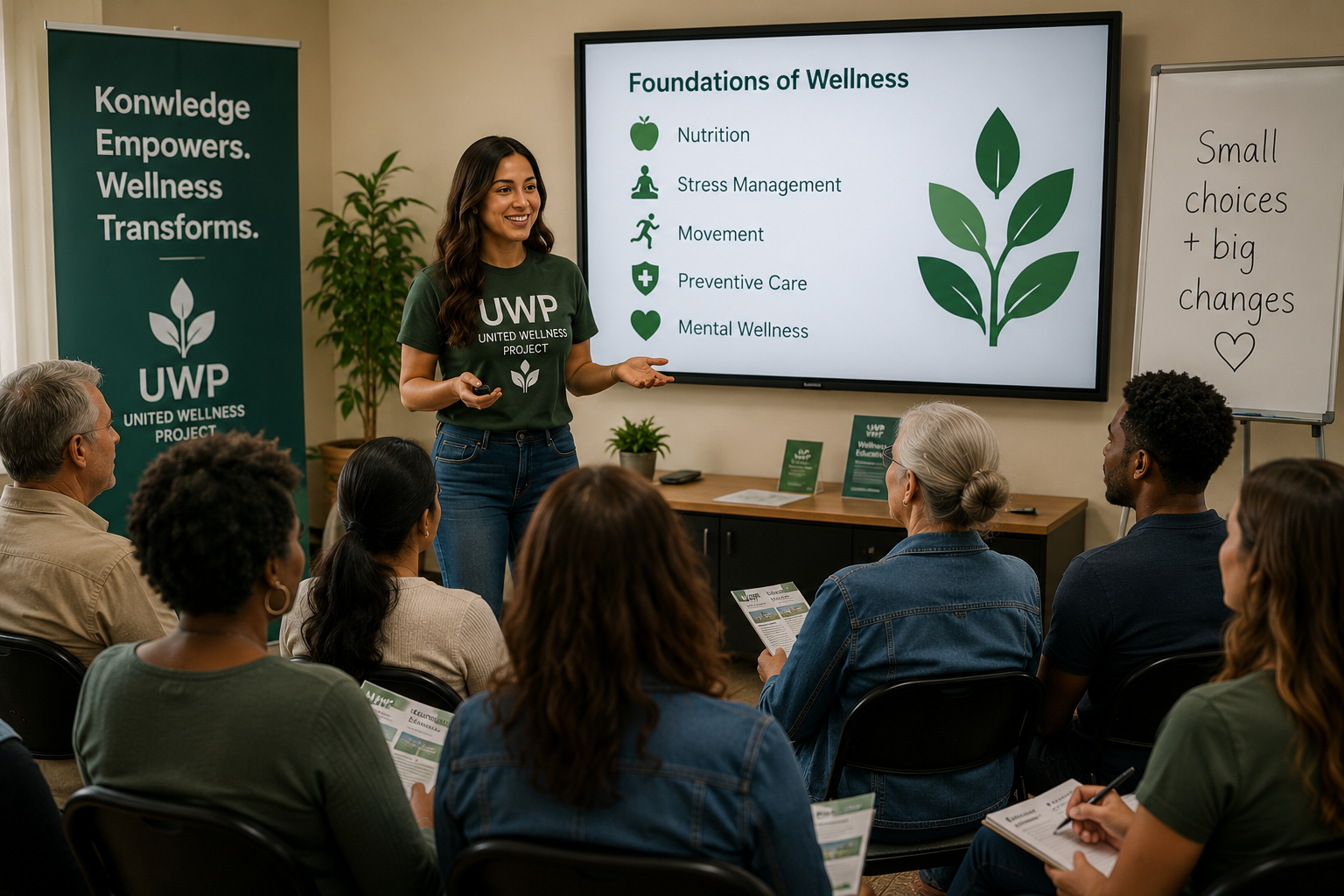
A respectful starting point
“Older adults” describes people with different interests, cultures, abilities, schedules, health experiences, family roles, and access needs. A useful program does not assume everyone wants the same topic or format. It asks what matters, offers meaningful choices, and makes participation possible without requiring people to disclose private health information.
That may mean a plain-language workshop, a small-group discussion, a printable resource, an accessible virtual session, or a community event where education is one part of a wider gathering. The format should follow the audience and purpose.
Virginia’s Department for Aging and Rehabilitative Services coordinates aging resources and community supports across the Commonwealth. UWP’s role is different: mission-aligned education and outreach should point people toward established public systems when they need services, eligibility help, clinical advice, or case-specific support.
Possible education themes
The right mix depends on community input, scope, and qualified source material. These examples are educational starting points, not a promise that every topic or format is available.
General education about building activity into routines, choosing a comfortable starting point, and knowing when individualized professional guidance is appropriate.
Read the walking-group guideAwareness about lighting, pathways, emergency contacts, and ways to identify hazards without turning education into a home inspection.
Use the fall-prevention checklistLow-pressure ways to strengthen regular contact and create accessible opportunities for meaningful participation.
Build a connection planHow to check a source, date, evidence, and purpose, and prepare useful questions for a qualified professional.
Evaluate online informationFood labels, safe handling, hydration awareness, and budget-conscious planning without prescribing diets.
Explore Healthy LivingOrganizing contacts, medication lists, communication preferences, transportation options, and official local resources before a disruption.
Visit community resourcesSeven-step planning process
1
Describe who the intended participants are, where they already gather, and what participation barriers may exist. Age alone is not a complete audience profile.
2
Use a short conversation, survey, listening session, or partner feedback process. Ask what people want to learn and which formats feel comfortable.
3
Choose a practical goal, such as knowing where to find a verified resource or leaving with a simple checklist. Do not promise health outcomes.
4
Consider readable type, contrast, sound, captions, interpretation, mobility, seating, breaks, transportation, digital access, and a non-digital option.
5
Build materials from public agencies and qualified guidance. Date resources and distinguish general education from individualized advice.
6
Document who handles outreach, space, facilitation, follow-up, and urgent concerns. Identify where clinical or service-navigation questions should go.
7
Ask whether material was clear, relevant, and accessible. Track process measures rather than unsupported claims about medical outcomes.
Access is part of quality
An accessible program considers the whole experience: how someone hears about it, registers, arrives, navigates the space, receives information, asks questions, and follows up.
Review UWP’s accessibility commitment and Wellness Education approach when planning a community conversation.
Build on the community already present
Libraries, housing communities, faith communities, aging organizations, caregiver groups, recreation programs, and nonprofits may each understand a different part of the audience’s experience. A responsible collaboration starts by mapping those strengths and gaps.
One organization may have trusted relationships and an accessible meeting space. Another may contribute education design or outreach capacity. Public aging agencies may provide service navigation or evidence-based programs outside UWP’s scope. A written plan should name responsibilities, decision points, and follow-up.
Virginia residents can locate the agency serving their locality through the state’s Area Agency on Aging directory. The federal Eldercare Locator also connects older adults and families with local resources. These public directories are referral tools; listing them does not imply an organizational partnership with UWP.
Prepare a useful inquiry
A short, specific note helps UWP understand whether an educational or outreach conversation fits its mission and current scope. An inquiry is a starting point, not a confirmation of availability.
Who do you hope to reach, and how have older adults helped identify the need?
What practical question or learning goal should the initiative address?
Where would participation happen—in person, online, or in a hybrid format?
What communication, mobility, language, sensory, transportation, or technology needs are known?
Which organizations are involved, and what can each responsibly provide?
Is there a preferred planning window, and which details remain flexible?
Frequently asked questions
They are activities, education, or community supports intended to help older adults make informed choices, stay connected, and participate in daily life. Some are educational; others may be clinical, recreational, benefits-based, or delivered by public aging agencies. Confirm each provider’s role.
A strong plan starts with participant priorities, a clear purpose, accessible communication, trustworthy sources, defined roles, and a referral path for needs outside the program’s scope.
Plan for readable materials, clear speech, captions or interpretation when needed, navigable spaces, comfortable pacing, transportation considerations, and non-digital alternatives.
Not necessarily. UWP’s work is educational and community focused; it does not diagnose, treat, prescribe, or replace individualized advice from licensed professionals.
Begin with a defined audience and a listening process. Choose one practical question that fits the organization’s role, has authoritative support, and does not duplicate an existing local service.
Organizations may contact UWP to discuss a mission-aligned idea. UWP can review the audience, goals, roles, accessibility needs, timing, and fit. An inquiry does not guarantee a program, event, schedule, funding, or partnership.
Start with Virginia DARS and the Area Agency on Aging serving your locality. Those public systems can explain available services, eligibility, and local contacts. Call emergency services for immediate danger or urgent medical needs.
A clearer next step
Tell UWP what your community is exploring. A focused inquiry can help determine whether education, outreach, a resource connection, or another next step makes sense.