
Use a respectful room-by-room checklist to improve paths, lighting, stairs, bathrooms, storage, and follow-up without reducing independence.
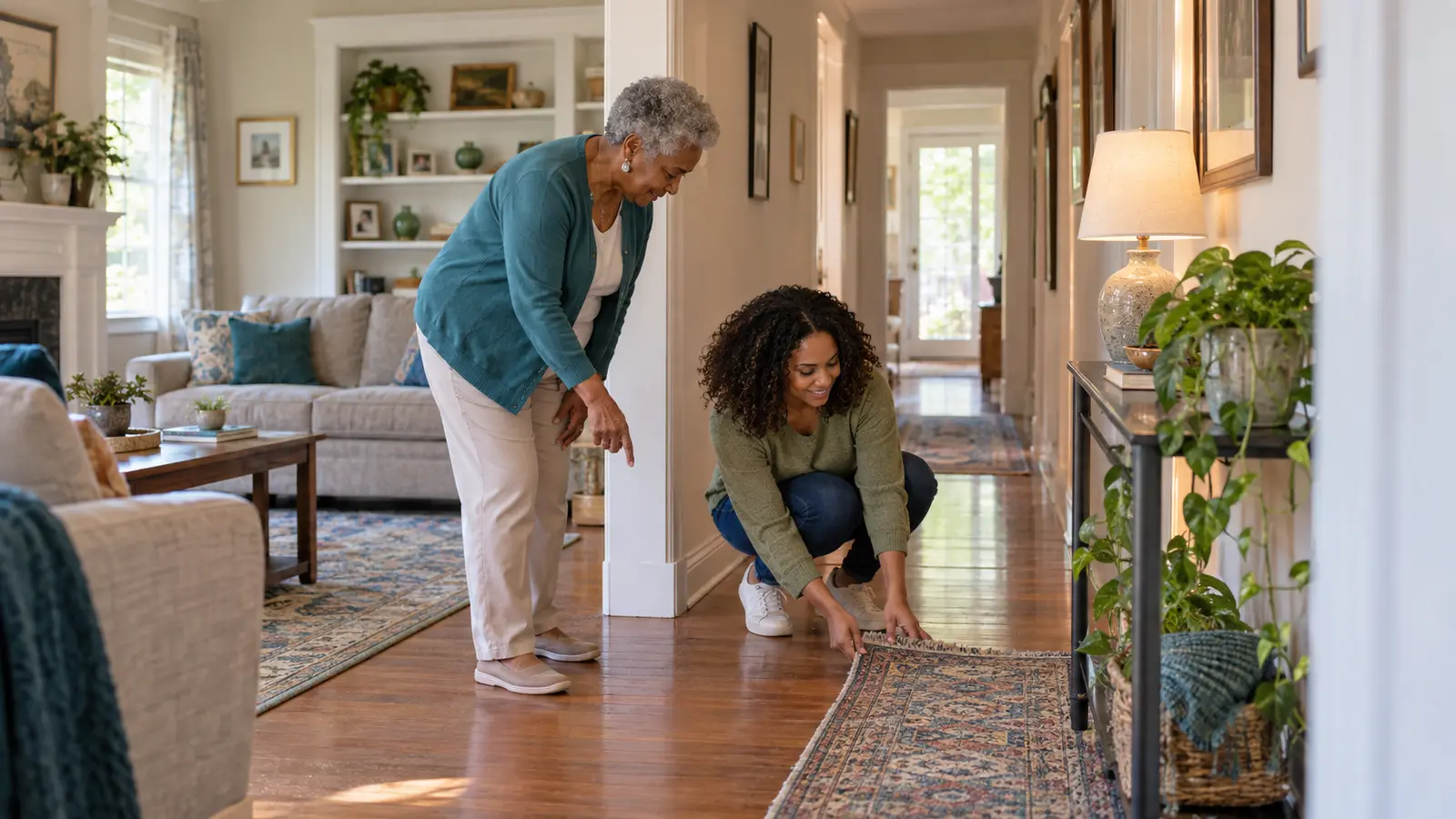
A safer home is not about removing independence or making every room look clinical. It is about noticing small conditions that can make a routine step less predictable: a rug that shifts, a dark hallway, a cord across a path, a missing handrail, or a frequently used item stored out of reach.
This room-by-room guide explains how to prevent falls at home with a practical review that an older adult, family member, caregiver, or trusted neighbor can do together. The person who lives in the home should lead the decisions. A change is only useful when it supports that person’s routines, preferences, access needs, and dignity.
Choose a time when no one is rushed. Walk the routes used most often: bed to bathroom, favorite chair to kitchen, entrance to living area, and home to mailbox or vehicle. Notice what happens in ordinary conditions, including at night or while carrying something.
The CDC’s Check for Safety home fall-prevention checklist organizes common hazards by room. Use it as a prompt, not as a substitute for individual professional advice.
Clear walking routes should be wide enough for the person and any mobility aid they use. Move packages, shoes, baskets, and small furniture out of the path. Secure cords along a wall rather than underfoot.
On stairs, check that steps are even, visible, and free of stored objects. Handrails should be secure and usable. Lighting should cover the full route, including landings. If a repair or new rail is needed, ask a qualified contractor to evaluate the structure and applicable requirements.
Outdoor entrances deserve the same attention. Look for loose boards, cracked pavement, leaves, ice, poor drainage, or a transition that becomes slippery when wet. A porch light should make the lock, threshold, and first steps easy to see.
Arrange furniture around the way people actually move. Keep a direct route between the main seat, doorway, telephone, and light switch. Coffee tables, plant stands, and pet items can create unexpected obstacles.
Loose rugs may slide or curl. Removing one is often the simplest option. If a rug remains, use an appropriate non-slip backing and inspect the edges regularly. Improvised fixes can wear out or create a raised edge.
Choose seating that feels stable when sitting down and standing up. Furniture that is too low, too soft, or able to roll may be difficult for some people to use safely.
Store everyday food, dishes, cookware, and cleaning supplies between comfortable waist and shoulder height when possible. Reaching from a stable position is safer than climbing on a chair. If a step stool is used, it should be appropriate for the user, stable, and in good condition.
Wipe spills promptly and keep a light available for late-night visits. Avoid carrying so much that the route or floor becomes hard to see. A small cart, two trips, or asking for help can be practical adaptations.
Use a non-slip surface inside and outside the tub or shower, keep the route clear, and place towels and toiletries within easy reach. Grab bars must be installed into appropriate structural support; a towel bar is not a substitute. A qualified professional can help determine placement and installation.
The National Institute on Aging’s room-by-room fall-prevention guidance offers additional questions for living areas, bathrooms, bedrooms, and stairs.
Make sure the path from bed to bathroom is clear and visible. Place a lamp, phone, glasses, and other essentials within reach. A night-light can help, but it should not create glare or confusing shadows. Keep blankets and charging cords out of the walking path.
Home changes are one part of fall prevention. Dizziness, weakness, vision changes, hearing changes, pain, illness, dehydration, and medication effects can also matter. Do not stop or change a medication based on a checklist. Ask a healthcare professional or pharmacist to review concerns, especially after a new symptom, medication, or fall.
Ask a qualified professional about movement or balance activities that match the person’s health and abilities. Avoid assigning exercises from social media without knowing whether they are appropriate.
Write who will handle each step and when it will be reviewed. Renters should speak with the property owner or manager before structural changes and can ask about applicable reasonable-modification processes.
Community groups can share reliable checklists, host non-clinical safety-education sessions, help residents find qualified resources, or organize voluntary neighbor check-ins. They should not diagnose fall risk, prescribe equipment, or imply that a checklist guarantees safety.
Explore UWP’s Healthy Living program, Community Outreach, and Resources hub. People interested in practical community support can also review ways to volunteer.
Common concerns include cluttered paths, loose rugs, poor lighting, cords, uneven steps, missing or loose handrails, slippery bathroom surfaces, and frequently used items stored out of reach.
Removing loose rugs is often the simplest option. If a rug stays, it needs an appropriate non-slip backing, flat edges, and regular inspection.
Placement should fit the person and bathroom layout, and bars must be anchored into suitable structural support. Ask a qualified installer or relevant professional.
Some medications or combinations can contribute to dizziness or drowsiness. A pharmacist or healthcare professional can review concerns. Do not stop a medication without professional guidance.
Seek emergency help for severe pain, head injury, inability to get up, loss of consciousness, or other urgent symptoms. Even without an obvious injury, tell an appropriate healthcare professional.
Repeat it when health, vision, mobility, medications, furniture, flooring, lighting, or routines change—and after any fall or near fall.
Many non-structural changes are simple, but structural work usually requires permission. Contact the property owner or manager about applicable processes.
This article provides general wellness education, not medical diagnosis, treatment, occupational-therapy advice, or a guarantee that falls will be prevented. Seek individualized guidance for health, mobility, equipment, or home-modification decisions.