Build respectful, accessible social connection with regular contact, meaningful choices, practical supports, and a plan shaped by the older adult.
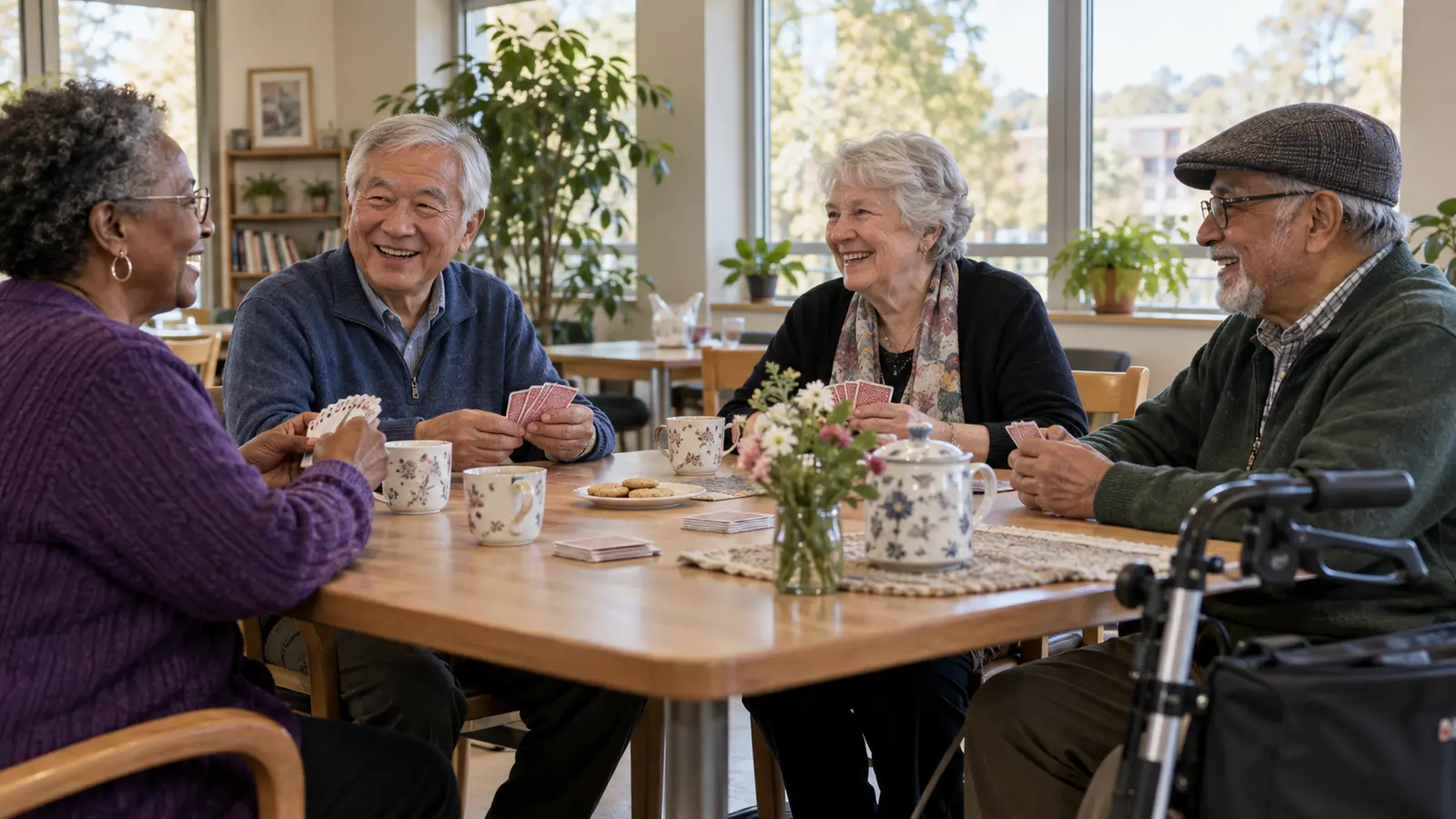
Social connection is not measured only by how many people someone sees. A person can live alone and feel connected, or be surrounded by people and still feel lonely. A useful response begins by listening to what the older adult wants, what gets in the way, and which relationships or activities feel meaningful.
This guide explains how to reduce social isolation in older adults without treating aging as a problem or assuming that one activity will fit everyone. It is designed for family members, neighbors, volunteers, community groups, and older adults building their own connection plan.
Loneliness is the distressing feeling of being alone or disconnected. Social isolation means having few social contacts or limited interaction. They are related but not identical, so the same response will not work for every person.
The National Institute on Aging's guide to loneliness, social isolation, and staying connected describes common barriers such as mobility changes, hearing or vision loss, transportation, caregiving, bereavement, retirement, finances, language, and living in a hard-to-reach area.
Ask rather than diagnose: “Would you like more contact with people?” “Which relationships do you miss?” “What makes participation difficult?” Respect “no” as an answer.
A busy calendar is not the same as a meaningful connection plan. Some people enjoy a large group; others prefer one familiar person, a quiet hobby, a faith community, an intergenerational activity, or contact from home.
Make the plan with the older adult. Do not enroll someone in an activity, share their information, or arrange visitors without consent.
One dramatic visit followed by weeks of silence may be less useful than brief, reliable contact. Choose a pattern that can be sustained: a Tuesday phone call, a weekly walk, a monthly meal, or a regular ride to a familiar activity.
Write down who will make contact, how, and what happens if that person is unavailable. A shared calendar can help families or volunteers avoid both long gaps and an overwhelming cluster of calls.
Quality matters. Ask open questions, allow time for answers, and listen without rushing to fix every concern. A relationship should not feel like a checklist.
Before suggesting that someone “get out more,” look at the route between interest and participation. Barriers may include:
A ride, a reminder call, a large-print agenda, a listening device, a first-visit companion, or a phone-in option may make an existing activity more reachable.
Connection can grow when a person has a genuine role. Invite older adults to teach a skill, mentor, welcome newcomers, review a resource, garden, prepare materials, make calls, or serve on a planning group. The task should be real, bounded, and matched to the person's interests.
Avoid assigning symbolic roles or assuming that unpaid work is always welcome. Explain expectations, time, access, support, and the option to stop. UWP's guide to finding a volunteer role that fits and Volunteer page offer useful next steps.
Phone calls, video chats, group messages, online classes, and smart speakers can help when distance or mobility limits in-person contact. Ask which tool the person wants to use and offer practice without taking control.
Use large text, clear buttons, captions, good lighting, and written step-by-step instructions when helpful. Discuss privacy, scams, and who can see a message or meeting link. Never pressure someone to share passwords or financial information.
Keep a low-tech route available. A printed schedule, landline number, mailed note, or in-person sign-up may be more accessible than an app.
Shared movement can create conversation without making conversation the only purpose. Options might include a short walk, seated movement, gardening, or an accessible class. Choose a pace and location that fit the person's ability, weather, and comfort.
UWP's community walking group guide covers route checks, pace choices, access, and group expectations. Movement is optional; connection should not depend on physical ability.
Public libraries, parks and recreation programs, senior centers, faith communities, neighborhood groups, volunteer organizations, and Area Agencies on Aging may offer activities or practical supports. Confirm current hours, eligibility, cost, transportation, and accessibility directly with the provider.
The federal Eldercare Locator connects older adults and families with state and local aging resources. A listing is a starting point, not a guarantee that a service is available or appropriate.
Organizations can reduce isolation by improving how people enter and participate:
The CDC's social connection overview emphasizes both supportive relationships and community places where people can connect.
Persistent loneliness, major changes in sleep or appetite, worsening mood, withdrawal, confusion, safety concerns, or difficulty with daily tasks can warrant a conversation with a qualified healthcare professional. If someone talks about self-harm or is in immediate danger, contact emergency or crisis services.
Do not promise confidentiality you cannot keep in a safety emergency. Volunteers and neighbors should know whom to contact and stay within their role rather than attempting diagnosis or counseling.
Explore UWP's Community Outreach program, Get Involved, and Resources hub for more ways to build accessible community connection.
Loneliness is a distressing feeling of disconnection. Social isolation is limited contact or a small social network. Someone can experience one, both, or neither.
Possible factors include transportation and mobility barriers, hearing or vision changes, bereavement, retirement, caregiving, finances, inaccessible programs, discrimination, language, or living far from services.
There is no universal schedule. Agree on a pattern that the person wants and that others can sustain, then adjust it when health, weather, travel, or preferences change.
Volunteering may create contact, purpose, and routine when the role is meaningful and accessible. It should be chosen by the older adult and should not be presented as a guaranteed health intervention.
Respect that choice. One-to-one visits, calls, letters, a shared hobby, neighborhood contact, or a small familiar gathering may fit better.
It can help when it matches the person's preferences and access. Provide patient instruction, privacy safeguards, and a non-digital option.
Consider professional support when loneliness is persistent, worsening, connected with major mood or behavior changes, or affecting daily life. Seek urgent help for immediate safety concerns.
This article offers general education and community-planning ideas. It is not medical advice, diagnosis, treatment, or a promise that an activity will change health outcomes.