Listen • include • explain • follow through
Community Engagement Strategy in Virginia
A useful community engagement strategy turns participation into a clear, accessible process—not a one-time invitation. Unified Wellness Project helps Virginia organizations think through nonclinical wellness education, outreach, and partnership planning so community members can understand the decision, choose how to participate, and see what happened next.
Scope matters: Unified Wellness Project is a nonprofit education and community-outreach organization, not a medical clinic, public-health authority, research institution, government agency, polling firm, or legal-compliance consultant. UWP does not diagnose communities, certify engagement, guarantee participation, promise funding, or claim health outcomes.
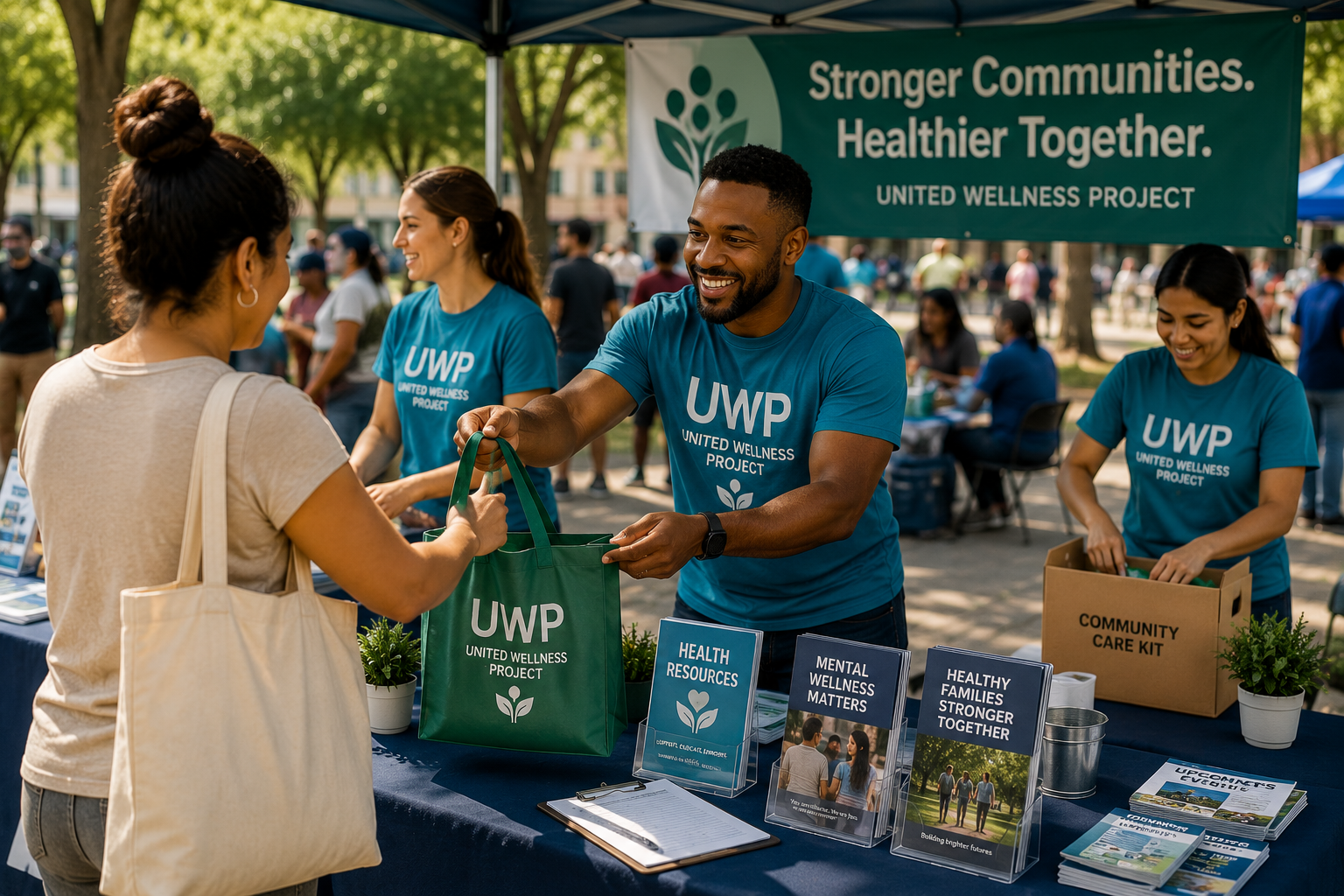
Good engagement makes the decision, participation options, access supports, limits, and follow-through visible from the beginning.
Invite before deciding
Ask for community knowledge while there is still a meaningful choice to shape.
Offer more than one path
Combine formats, times, locations, and communication methods when capacity allows.
Close the loop
Explain what was heard, what changed, what did not, and what happens next.
A practical definition
What a community engagement strategy should do
A community engagement strategy is a written plan for involving people who are affected by a decision, program, resource, or community issue. It connects a defined purpose to the people who should have a voice, the choices they can influence, the ways they can participate, and the organization’s responsibility to respond.
Engagement is more than communication
Communication shares information. Engagement creates a two-way process in which people can ask questions, describe lived experience, surface strengths and barriers, and influence a decision within clear limits. A flyer, post, or email may support engagement, but reach alone does not show that people could participate meaningfully.
The newest federal Principles of Community Engagement builds on guidance from ATSDR, CDC, NIH, and collaborators. It emphasizes clarity of purpose, knowledge of the community, relationships, trust, shared power, and sustained commitment.
Strategy prevents avoidable confusion
Without a plan, organizations may ask broad questions after major choices are already fixed, rely on the same familiar voices, collect input they cannot use, or disappear after a listening session. A strategy names the decision, the audience, the participation level, the access plan, the response process, and the review date before outreach begins.
For wellness work, this also protects nonclinical boundaries: community education and resource navigation should not be described as diagnosis, treatment, individualized medical advice, regulated public-health work, or a promise of improved outcomes.
Before outreach begins
Four questions that make participation meaningful
What decision is open?
State what is being decided, who has authority, which choices are genuinely open, and which constraints are already fixed. “Help choose the format and topics for a neighborhood wellness workshop” is clearer than “Tell us what the community needs.”
Who is affected?
Identify people likely to use, deliver, host, fund, refer to, or be excluded from the work. Go beyond a generic public audience. Ask which voices are routinely present, which are missing, and whether another organization already has trusted relationships.
How can people participate?
Consider timing, transportation, disability access, language, literacy, technology, childcare, privacy, compensation, and the energy required to participate. Not every project can remove every barrier, but the plan should acknowledge barriers and choose realistic supports.
What will happen afterward?
Decide who will review input, how it will be summarized, when participants will hear back, and where the response will live. If an idea cannot be adopted, explain why. Honest follow-through is part of the engagement—not an optional final message.
Seven planning stages
How to build a community engagement strategy
Define the decision, purpose, and boundary
Write one sentence that names the decision and why community knowledge is needed. List what participants can influence, what is already decided, who makes the final call, and the date by which input must be used. This avoids asking for open-ended labor when the organization only has a narrow choice available.
Learn the community context
Review existing information before asking people to repeat it. Combine public data, prior feedback, local history, and community knowledge. U.S. Census data can help describe population patterns, but numbers should not substitute for listening or be treated as a complete picture of a community.
Map strengths, relationships, and trusted messengers
Identify resident leaders, mutual-aid networks, schools, libraries, faith communities, service organizations, local businesses, and informal groups that may already connect people. Use UWP’s community asset mapping guide to document strengths without presenting every relationship as a formal partnership.
Choose the right level of participation
Be explicit about whether the activity will inform, ask for feedback, involve people in shaping options, collaborate on decisions, or support community leadership. The appropriate level depends on the decision, capacity, risk, and relationship. Do not label a one-way presentation as co-design.
Design accessible participation routes
Offer practical options such as a short survey, phone response, small-group conversation, accessible virtual session, one-on-one interview, or facilitated meeting. The U.S. Department of Justice advises covered organizations to consider the nature, length, complexity, and context of communication and the person’s usual communication method. Build accommodation requests and accessible materials into planning early.
Record input responsibly and respond
Tell participants what will be recorded, how it will be used, who can see it, and whether comments may be quoted. Collect only what is needed. Summarize themes without erasing disagreement, distinguish community input from organizational decisions, and publish or share a plain-language response.
Measure the process and improve it
Review who was invited, which channels were used, which access supports were delivered, where participation dropped off, what participants understood, and whether the promised follow-through occurred. Use the findings to adjust the next cycle rather than claiming the process represented everyone.
Participation by design
Make the path easier to understand and use
Use plain invitations
- Name the topic and decision in the first sentence.
- Say why the person’s perspective is relevant.
- List the time required, location, format, deadline, and access options.
- Explain what will happen with the information.
- Give a contact method for questions or accommodation requests.
Link to UWP’s accessible wellness education planning page for more communication and participation considerations.
Use multiple listening formats carefully
A public meeting may work for some people and exclude others. A survey can widen reach but may not capture context. Interviews can provide depth but require time and trust. Small-group conversations may reduce speaking pressure but need skilled facilitation. Choose a mix that matches the decision instead of collecting the most responses possible.
Where disability communication access is relevant, review the DOJ’s effective-communication guidance. Legal obligations depend on the organization and situation; UWP does not determine compliance.
Use the right tool
How this page differs from nearby planning resources
Needs assessment
A community health needs assessment organizes information to identify and prioritize needs. An engagement strategy defines how people will influence that work and how the organization will respond.
Asset mapping
Asset mapping documents strengths, resources, relationships, and local knowledge. Engagement planning decides who should participate, in what way, and at which decision points.
Program planning
Community health promotion planning focuses on goals, education, roles, access, and review. Engagement strategy is the participation framework that can inform those choices.
Partnership development
A partnership formalizes work between organizations. Engagement may include residents, participants, volunteers, informal groups, and organizations without assuming that every contributor becomes a partner.
Measure without overclaiming
A small, useful engagement scorecard
Attendance is only one signal. A responsible review looks at whether the process worked as promised.
Process checks
- Were the decision and limits clear?
- Were invitations sent through more than one relevant channel?
- Were promised formats and access supports delivered?
- Could participants ask questions and understand how input would be used?
- Did organizers document disagreement and uncertainty?
Follow-through checks
- Was a response shared by the promised date?
- Did the final decision identify what community input influenced?
- Were limits and rejected options explained respectfully?
- Were participants offered a next step without pressure?
- Was the process reviewed for changes before the next cycle?
Counts and demographic information can be useful, but collect only what is necessary, protect privacy, and avoid describing a limited sample as representative of an entire community.
Useful public resources
Evidence and planning references
These sources can support planning. They do not replace community knowledge, professional advice, legal review, or the responsibilities of public agencies.
Frequently asked questions
Questions about community engagement strategy
What is a community engagement strategy?
It is a written plan for involving people affected by a decision, program, resource, or issue. It defines the purpose, participants, open decisions, participation methods, access supports, response process, responsibilities, and review measures.
Why is community engagement important?
People closest to an issue often understand barriers, strengths, history, relationships, and practical constraints that an organization may miss. Engagement can make planning more informed and transparent, but it does not guarantee consensus, participation, funding, or outcomes.
How do you create a community engagement strategy?
Start with the decision and its limits, learn the community context, identify affected groups and trusted relationships, choose an honest level of participation, design accessible ways to contribute, plan how input will be used, and set a deadline for responding and reviewing the process.
How can an organization engage diverse communities?
Avoid treating any population as a single voice. Work through relevant relationships, offer more than one participation route, use understandable language, plan for disability and language access, reduce practical barriers where possible, and show how different viewpoints affected the decision.
How do you increase community engagement?
Make the purpose specific, ask while decisions are still open, reduce the time and access burden, use trusted channels, explain how input will be used, respond by the promised date, and build relationships between projects. More promotion alone may not solve unclear purpose or low trust.
How do you measure community engagement?
Review reach, participation routes, access supports, comprehension, quality of discussion, follow-through, and whether input influenced the stated decision. Interpret counts carefully and do not claim that participants represent everyone unless the method supports that conclusion.
What can Unified Wellness Project help with?
UWP can consider mission-aligned conversations about nonclinical wellness education, outreach, resources, volunteers, and partnership planning. It is not a clinic, public-health agency, polling firm, research institution, or compliance provider, and it does not promise availability, participation, funding, or health outcomes.
Begin with one real decision
Describe the community voice your project needs
Share the wellness or outreach context, the decision ahead, who is affected, what is already fixed, the participation barriers you recognize, and the smallest useful next step. Unified Wellness Project can review whether an educational, outreach, resource, volunteer, or partnership conversation fits its mission and current capacity.
Explore partnership pathways or visit the Resources hub before reaching out.