Listen
Invite community members to define what matters, what already helps, and what makes participation difficult.
Community voice • useful data • accessible participation
A community health needs assessment can help an organization understand what people identify as important, what strengths already exist, and where education or outreach may be useful. This practical Virginia planning guide focuses on listening, accessible participation, careful use of public information, and a realistic next step—without treating community members as data points or promising health outcomes.
Important boundary: Unified Wellness Project is not a hospital, medical clinic, public-health agency, or compliance consultant. UWP does not conduct regulated hospital CHNAs, provide legal advice, diagnose needs, deliver clinical care, or guarantee a program, partnership, funding decision, or health result.
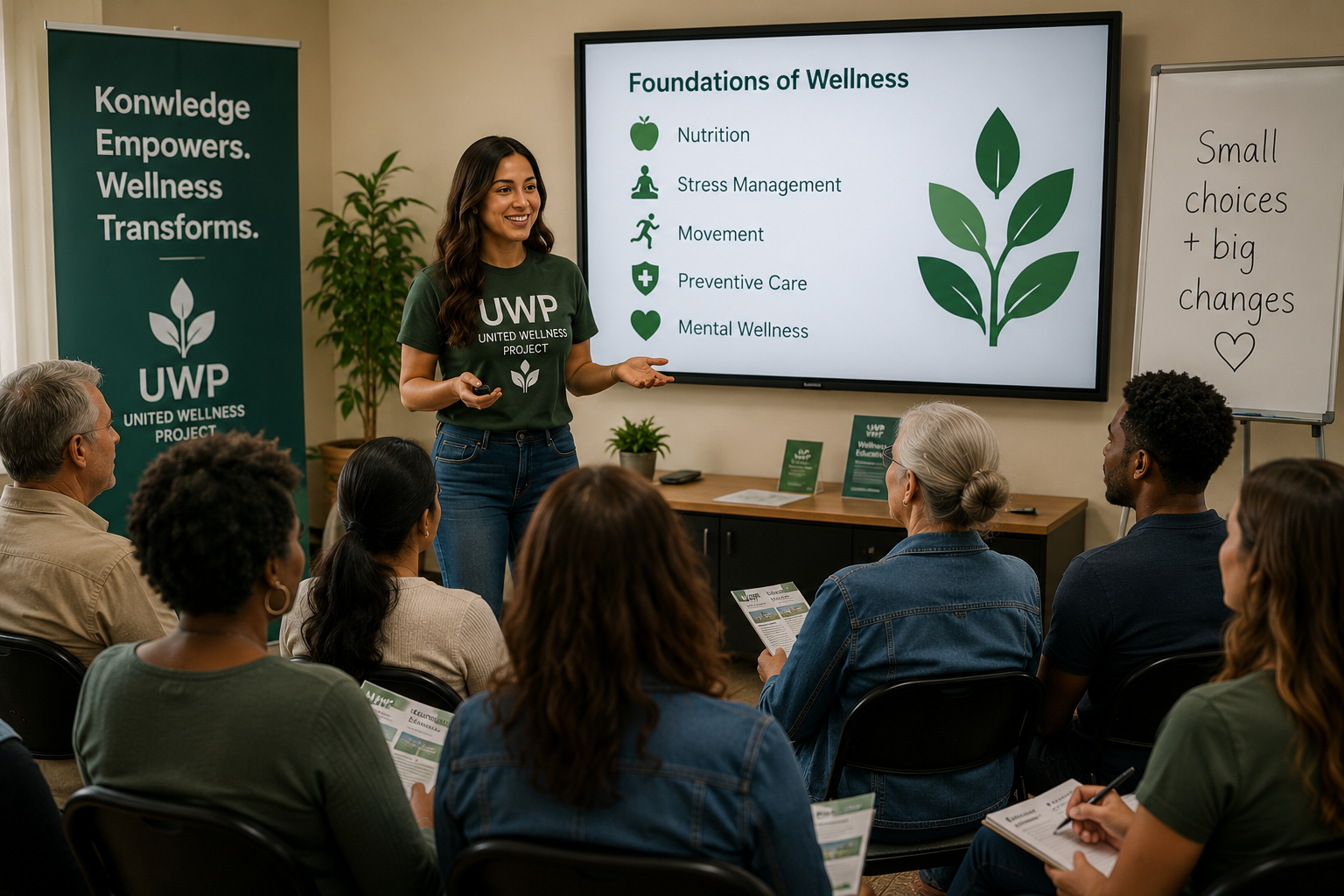
Invite community members to define what matters, what already helps, and what makes participation difficult.
Review public data, current resources, lived experience, and the limits of every information source.
Choose a transparent, manageable next step instead of turning every concern into a broad promise.
A practical definition
In plain language, a community health needs assessment is an organized process for describing a community, gathering information about priorities and conditions, listening to people with different experiences, identifying existing strengths, and deciding which needs deserve attention. The result should support decisions—not label a community, replace local knowledge, or imply that one organization can solve every issue.
Write down why the assessment is being considered and which decision it should inform. A neighborhood group exploring educational topics has a different scope from a hospital completing a federal requirement. A clear purpose keeps questions relevant and helps people understand how their input may be used.
A community may be geographic, connected through a school or organization, or united by a shared experience. Describe who is included, who may be missing, and which boundaries are practical. Avoid assuming that everyone within a ZIP code, age group, workplace, or congregation has the same priorities.
An assessment is a snapshot shaped by the questions, sources, participation methods, timing, and people reached. It should document gaps and uncertainty. It should not be presented as a diagnosis, a guarantee of services, or proof that a proposed activity will improve health.
Scope before surveys
A short planning conversation can prevent a vague survey, inaccessible meeting, or report that no one can use. Ask these questions before choosing methods.
Identify whether the goal is to select an education topic, improve outreach, understand access barriers, prepare for a partnership conversation, or review an existing activity. If the decision is unclear, the assessment is likely too broad.
Include people who experience the issue, trusted community messengers, organizations already doing related work, and people who can identify access or implementation constraints. Participation should be voluntary, respectful, and clear about what can and cannot follow.
Before asking people to repeat information, review public demographic and community data, existing local reports, current resource directories, prior feedback, and related plans. Record the date, source, geography, definitions, and missing context for each item.
Consider physical access, effective communication, language, reading level, technology, transportation, schedules, caregiving, sensory needs, privacy, and more than one way to respond. The UWP accessibility page explains the organization’s broader commitment to access.
Collect only what is necessary for the stated purpose. Explain whether responses are anonymous or confidential, who can access raw information, how notes will be stored, when they will be deleted, and how findings will be shared. Do not request private medical details when general planning does not require them.
Decide in advance how findings will be reviewed, how priorities will be chosen, who will communicate back to participants, and what happens if the organization lacks capacity. Closing the feedback loop matters even when the next step is small or a proposed activity will not move forward.
A community-centered process
Name the decision the assessment should support, the people or area it concerns, the time available, and the organizations responsible. Write a short public description that avoids promises and explains the nonclinical purpose.
Begin with what already works: trusted relationships, accessible meeting places, local knowledge, volunteer capacity, educational materials, transportation options, and organizations with relevant experience. A needs-only view can overlook the people and assets already supporting community well-being.
Use current primary sources when possible and compare more than one measure. Public data can show patterns, but it may lag, combine very different neighborhoods, exclude people, or use definitions that do not match the local question. Keep a source list and describe limitations plainly.
Use methods that fit the community: small conversations, listening sessions, brief surveys, interviews, paper forms, phone options, or feedback collected through trusted partners. Do not rely only on the easiest people to reach. Explain the purpose, privacy approach, and realistic range of next steps.
Look for repeated concerns, existing strengths, barriers, and differences between groups. Avoid turning a small number of comments into a community-wide conclusion. Note what is strongly supported, what is uncertain, and whose perspective may be underrepresented.
Use written criteria such as community importance, alignment with the organization’s mission, potential for an accessible educational response, existing partner roles, available capacity, urgency, and risk. Explain why some priorities move forward and others require a different organization or more information.
Return a short, readable summary to participants. Separate what was heard from what has been decided. A next step may be refining educational materials, improving outreach, convening a partner conversation, updating a resource list, or testing one small activity. Set a date to review what was learned.
Know which process you are describing
The phrase “community health needs assessment,” often shortened to CHNA, also has a specific federal meaning for charitable hospital organizations. The IRS describes requirements under Section 501(r)(3), including a three-year cycle, community input, a written report, public availability, and an implementation strategy. A nonprofit listening project, educational needs review, or partnership discussion should not be represented as satisfying those legal requirements unless the responsible hospital and qualified advisers determine that it does.
Follow current legal, regulatory, governance, documentation, and public-availability requirements. Consult qualified legal or compliance professionals. This UWP page is educational and is not a substitute for those responsibilities.
Use clear language about the scope: community listening, educational needs planning, outreach review, or a preliminary assessment. Explain who owns the process and avoid implying official authority that the organization does not have.
Confirm roles before collecting information. A partner may contribute community relationships, public data, accessibility knowledge, meeting space, or subject-matter review. Participation should not be described as endorsement, funding, or a formal partnership until responsibilities are agreed.
Evidence-informed planning
These primary sources help planners distinguish formal requirements, find public information, select evidence-informed ideas, and plan communication access.
Current federal information for charitable hospital organizations, including the three-year requirement, community input, reporting, and implementation strategy.
A federal collection of published reviews organized by conditions, behaviors, population groups, settings, systems, and social determinants of health.
Official demographic, social, economic, and housing data. Review each table’s geography, date, definitions, and margins of error before drawing local conclusions.
Official guidance on communication access and appropriate auxiliary aids and services for covered organizations.
From findings to a practical response
An assessment is useful when people can see how their input informed a decision. Unified Wellness Project focuses on accessible, nonclinical wellness education and community connection. UWP can review whether an educational or partnership conversation fits its mission, but an inquiry does not create a service, formal assessment engagement, or guarantee of availability.
Review Wellness Education, Healthy Living, and Community Outreach to understand the nonprofit’s educational focus and nonclinical boundaries.
Browse the Resources hub and Community Wellness Journal for plain-language educational material. The related community health promotion planning page can help turn one well-supported priority into a manageable activity.
Review partnership information, then use the contact form to describe the community, planning purpose, people already involved, access considerations, available information, and desired next conversation.
Frequently asked questions
It is a structured process for describing a community, reviewing available information, listening to people with different experiences, identifying strengths and needs, prioritizing issues, and connecting findings to decisions. The exact scope depends on the organization and purpose. A formal hospital CHNA also has specific federal requirements.
Begin with a clear purpose and community definition. Map existing strengths, review credible public information, gather accessible community input, compare themes and limitations, prioritize with transparent criteria, share findings, and choose a realistic next step. Regulated organizations should also follow all applicable legal and governance requirements.
Useful information may include public demographic and community indicators, existing local reports, service and resource information, prior feedback, community strengths, and direct input from people affected by the issue. The best mix depends on the decision being made. Every source should be dated and its limits documented.
Include community members with varied experiences, trusted local messengers, organizations already working on related issues, accessibility perspectives, and people responsible for decisions or implementation. Avoid relying only on organizational leaders or the people who are easiest to reach.
Federal CHNA requirements apply to charitable hospital organizations under Internal Revenue Code Section 501(r)(3). Other requirements may apply depending on the organization, funder, jurisdiction, or project. This page is general education, so organizations should consult qualified legal or compliance professionals about their obligations.
The IRS requires charitable hospital organizations subject to Section 501(r)(3) to conduct a CHNA every three years. A community organization’s listening or planning process may use a different schedule based on its purpose, changes in the community, the age of available information, and the decisions ahead.
Organizations use the terms differently. “Community health assessment” may emphasize a broad picture of conditions, resources, strengths, and needs, while “needs assessment” may focus more narrowly on gaps related to a particular question. Define the term, purpose, community, methods, and limits in every project rather than assuming the label is self-explanatory.
Start with one clear planning question
Tell UWP what decision the organization is considering, who should be heard, what information already exists, what access needs are known, and what role each participant can responsibly take. UWP can review whether a mission-aligned educational or partnership conversation makes sense.