
Prepare for a power outage with a household plan for alerts, lighting, food, communications, medical needs, backup power, and safe recovery.
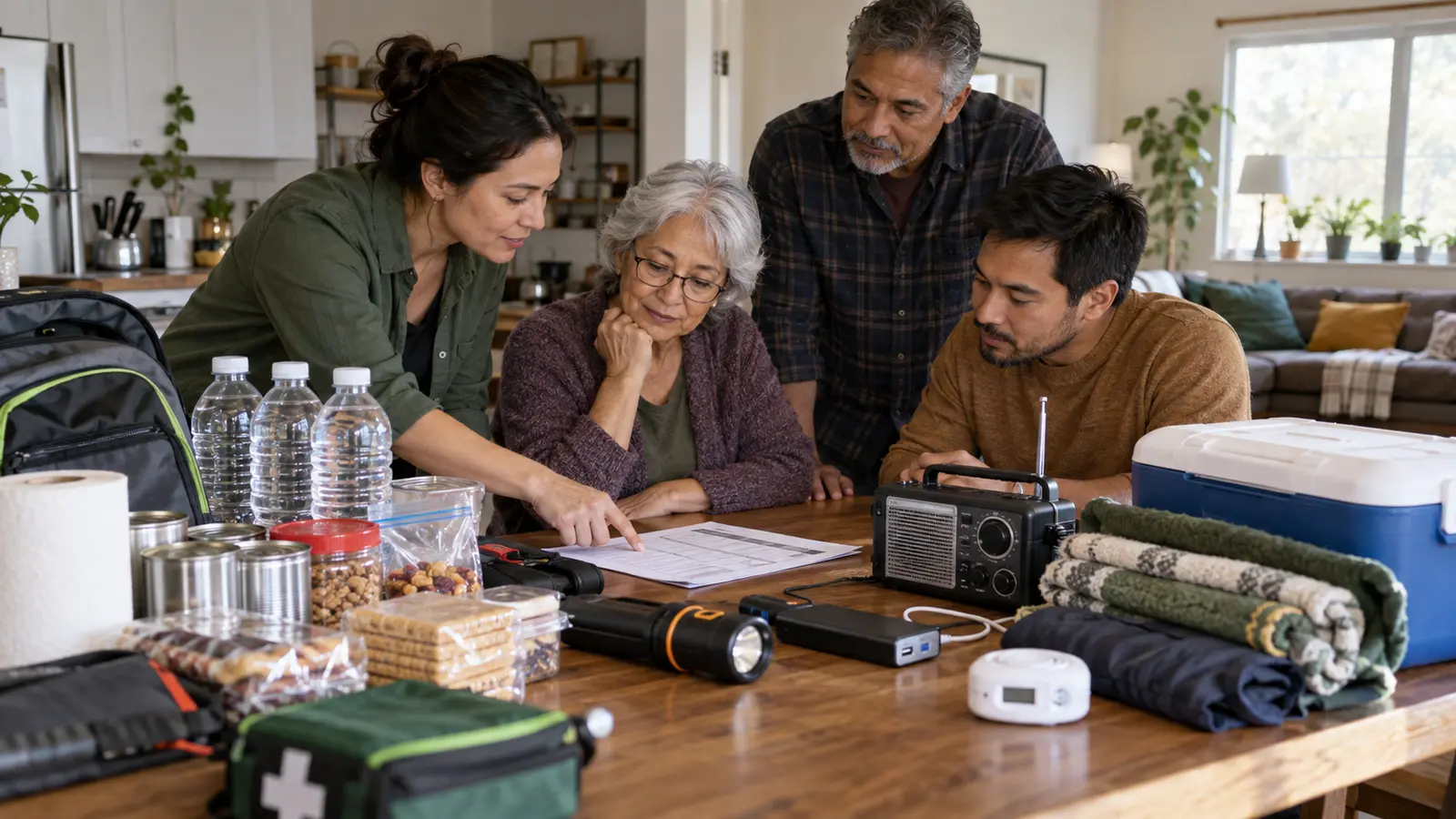
Power outage preparedness starts before the lights go out. A useful household plan covers more than flashlights. It considers alerts, safe lighting, food and water, communication, temperature, electrically powered medical needs, mobility, pets, neighbors, and what to do when service returns.
Ready.gov’s power outage guidance recommends planning for outages that can disrupt communication, water, transportation, stores, fuel, food refrigeration, and medical equipment. Build a plan that fits your household, building, local hazards, and utility—not a generic shopping list that leaves important needs unaddressed.
Walk through an ordinary day and list what stops working without power. Include lights, cooking, refrigeration, well pumps, elevators, garage doors, heating or cooling controls, internet, landline phones, security systems, chargers, mobility-device charging, medication refrigeration, and medical equipment.
Mark which items are conveniences and which are essential. Note whether a device has a battery, how long that battery typically supports the device under the manufacturer’s instructions, and what backup is available. Test manual releases for doors or gates before an emergency, and keep instructions where they can be found without internet access.
People who use electrically powered medical or mobility equipment should work with the equipment supplier, utility, emergency-management office, and qualified health professional on an individual backup plan. Ask the utility whether it offers a medical-needs registry or priority-notification program, while recognizing that enrollment may not guarantee uninterrupted or faster restoration.
Write down equipment model numbers, power requirements, supplier contacts, medication instructions, and backup locations. Plan accessible transportation and a place to go if the home becomes unsafe. Do not connect medical equipment to a generator or other power source unless the equipment manufacturer and qualified professionals say the setup is appropriate.
Keep flashlights, headlamps, lanterns, and spare batteries in predictable locations. A headlamp can leave both hands free. Place lights where a person can reach them without using stairs in the dark, and consider tactile labels or glow markers for household members with low vision.
Battery-powered lights are generally safer than candles. If candles are used despite the fire risk, keep them away from children, pets, curtains, bedding, paper, oxygen equipment, and anything that can burn. Never leave a flame unattended. Keep working smoke and carbon monoxide alarms with appropriate battery backup.
Sign up for utility and local emergency alerts. Keep account and outage-reporting information in a printed contact list. Choose an out-of-area contact who can help household members reconnect if local networks are congested.
Charge phones and power banks before forecast hazards. Preserve battery by lowering screen brightness, using low-power mode, closing unnecessary apps, and sending brief text messages when calls are unreliable. A battery-powered or hand-crank radio can provide information when mobile service or home internet is unavailable.
Agree on where household members will meet, how they will signal that they are safe, and who will check on a neighbor. Do not rely on a single device, platform, or person.
Keep refrigerator and freezer doors closed during an outage. Federal food-safety guidance advises that an unopened refrigerator keeps food cold for about four hours; a full freezer for about 48 hours, or about 24 hours if half full. These are planning estimates, not proof that a particular food is safe.
Use appliance thermometers when available. Discard perishable food that has been above 40°F for two hours or more, and never taste food to decide whether it is safe. The federal power-outage food safety chart explains what to keep and what to discard. When in doubt, follow current official instructions.
If your home uses an electric well pump, store water according to local guidance and know whether pressure or treatment will be affected. Follow public-water advisories after storms or infrastructure damage. Do not assume clear-looking water is safe.
Generators, grills, camp stoves, charcoal, and fuel-burning heaters can produce carbon monoxide, a colorless and odorless gas that can cause sudden illness or death. The CDC says generators should be used outside, at least 20 feet from doors, windows, and vents, with exhaust directed away from the home.
Never use a generator, grill, or fuel-burning device inside a home, garage, basement, shed, tent, or enclosed porch. Never use a gas oven to heat the home. Install battery-powered or battery-backup carbon monoxide alarms and test them regularly. Review UWP’s carbon monoxide safety guide before an outage.
Generator transfer equipment and home wiring should be handled by qualified professionals. Improper connections can cause fire, electrocution, equipment damage, or dangerous backfeed onto utility lines.
An outage can make a home dangerously hot or cold. Know nearby public locations that may operate as cooling, warming, charging, or emergency centers, but verify current hours and accessibility before traveling. Identify transportation options and include pets when checking shelter rules.
In heat, reduce strenuous activity, use shade, drink fluids according to personal medical guidance, and watch official heat alerts. In cold, use layers and blankets, close off unused rooms, and avoid unsafe indoor heating. Leave if authorities advise evacuation or if the home cannot safely support household needs.
Start with what you already have and add items intentionally. Store supplies where household members can access them. Check batteries, food dates, medication plans, and power banks on a regular schedule. UWP’s home first-aid kit checklist can support this review.
Confirm that the outage is not limited to a tripped breaker or a safety problem in the home. Report the outage through the utility’s official channel. Keep away from downed lines and anything touching them, and report them as directed by the utility or emergency services.
Unplug sensitive electronics and turn off appliances that could create a hazard when power returns. Leave one light on as an indicator. Keep refrigerator and freezer doors closed. Use the household communication plan, check official messages, and reassess temperature, medical needs, food, and water.
If using backup power, follow manufacturer instructions and all safety requirements. Do not improvise electrical connections or run cords through wet areas or places where they create trip, fire, or carbon monoxide risks.
Give the electrical system time to stabilize, then reconnect equipment gradually. Check appliance temperatures and use official food-safety guidance. Reset clocks, alarms, medical-device settings, and security systems. Inspect supplies and recharge power banks.
Document damaged property if needed, but do not enter flooded or visibly damaged areas until authorities or qualified professionals say it is safe. If the outage followed a storm, follow local instructions for roads, water, debris, and cleanup.
Hold a short household review: What worked? Which contacts were outdated? What ran out? Which part of the plan was inaccessible? Update the kit and plan while the experience is fresh.
Connect this checklist to a broader emergency preparedness plan, UWP’s Community Outreach program, and the Resources hub.
Use safe lighting, determine whether the outage is local to the home, report it to the utility, avoid downed lines, check official alerts, and assess essential medical, temperature, food, and water needs.
An unopened refrigerator keeps food cold for about four hours. Use a thermometer and current federal food-safety guidance; discard perishable food that has been above 40°F for two hours or more.
An unopened full freezer may hold temperature for about 48 hours, while a half-full freezer may hold for about 24 hours. Food condition, appliance performance, room temperature, and door opening matter.
No. The CDC says to use generators outside, at least 20 feet from doors, windows, and vents. An open garage door does not make generator use inside safe.
Turn off or unplug sensitive electronics and appliances that could start unexpectedly or be damaged by a surge. Leave one light on so you know when service returns.
Use a charged power bank or another manufacturer-approved source. Reduce battery use, keep cables together, and never use a vehicle or fuel-powered generator in an enclosed area.
Create an individual plan in advance with the equipment supplier, utility, emergency-management office, and qualified health professional. Include backup power, accessible transportation, and a safe alternative location.
This article provides general preparedness education. It is not medical, electrical, fire-safety, food-safety, or emergency-response advice for a specific situation. Follow current instructions from emergency services, utilities, manufacturers, public-health agencies, and qualified professionals.