Create an accessible emergency plan for alerts, communication, evacuation, individual needs, supplies, privacy, and trusted-neighbor check-ins.
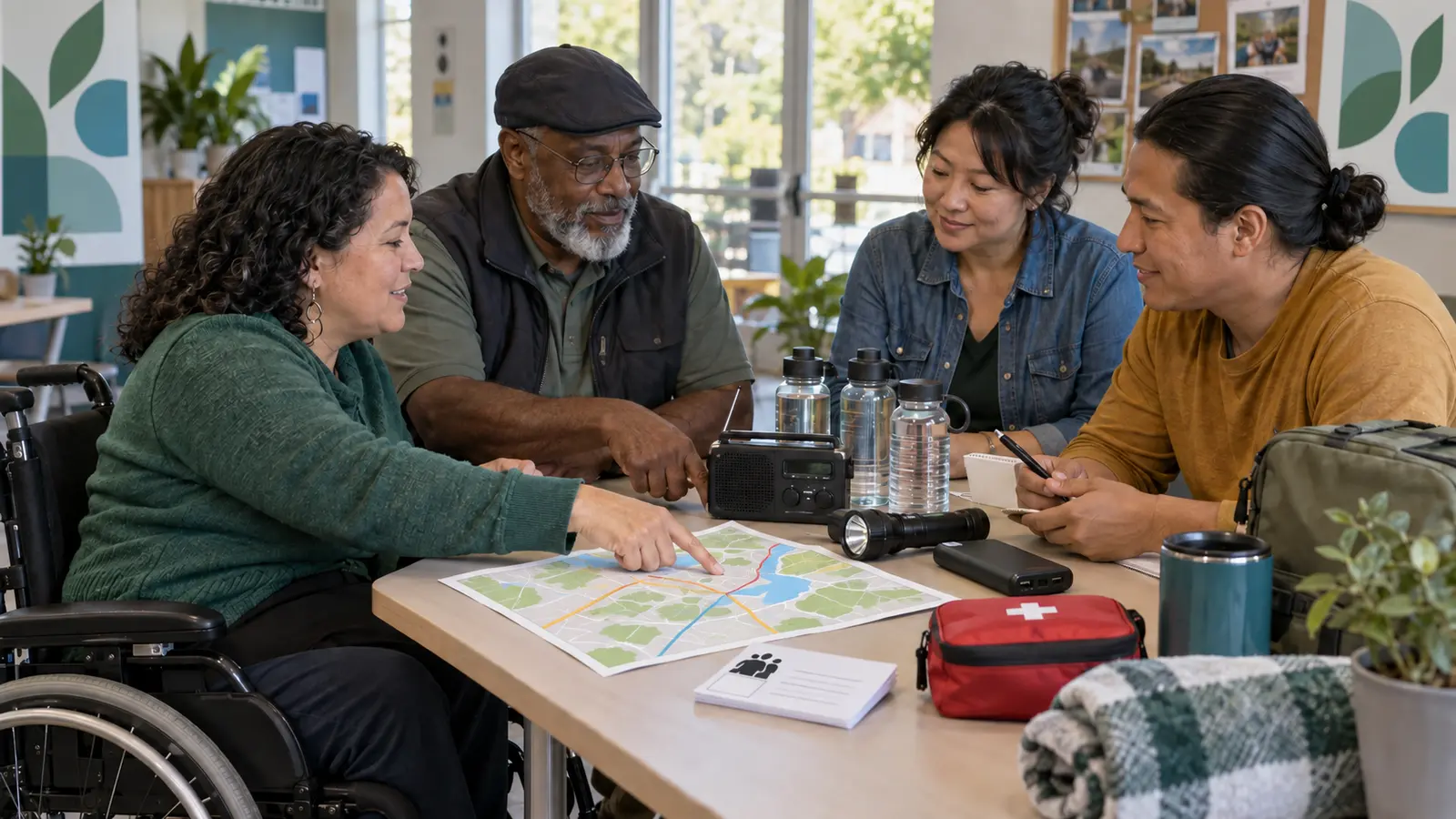
An emergency plan is more useful when everyone can understand it, reach it, and practice it. A list stored on one person’s phone is not enough if power is out, family members are separated, transportation changes, or someone needs communication, mobility, medication, sensory, or power support.
This guide explains how to make an emergency preparedness plan for a household and trusted local network. It is based on practical federal preparedness guidance and should be adapted to local hazards, official instructions, and individual needs.
List the events that could require you to shelter, evacuate, communicate without normal service, or manage a power or water interruption. In Virginia, a household may consider severe storms, flooding, extreme heat or cold, wildfire smoke, utility outages, and other locally identified hazards.
Use local emergency-management, weather, utility, and public-health sources. Do not copy a hazard list from another region and assume it fits your home.
Write down at least two ways to receive official information, such as local alerts, Wireless Emergency Alerts, a weather radio, local government channels, or trusted broadcast sources.
Account for access:
Keep key instructions available offline. Social media can help distribute information, but it should not be the only source for an urgent decision.
Ready.gov’s Make a Plan guidance recommends discussing alerts, shelter, evacuation, communication, and household needs.
Record:
Give a copy to each person in a format they can use. Children should know which trusted adult to contact, but public copies should not expose unnecessary personal information.
Identify safe locations for the hazards relevant to the home, then plan more than one evacuation route. Note transportation options, accessible pickup needs, pet or service-animal arrangements, fuel or charging requirements, and where you would go.
Do not wait for an emergency to learn whether a shelter, vehicle, or destination can meet a mobility, communication, dietary, sensory, or power need. Contact local emergency management for current accessibility information.
Official evacuation orders and emergency instructions take priority over a household plan.
A useful plan includes what each person needs to function safely, not just a standard checklist.
Ask healthcare professionals, equipment providers, pharmacies, or utilities about appropriate emergency planning for essential medical or power-dependent needs. Do not change medication, device, or storage instructions based on a general article.
Ready.gov’s Build a Kit guidance provides a starting list for water, food, radio, flashlight, first aid, batteries, sanitation, communication, documents, and individual needs.
Start with what you already have, then add items over time. Choose supplies the household can open, carry, understand, and safely use. Label expiration or review dates without putting private health information on the outside of a bag.
Create smaller kits for locations where people spend time, such as home, work, a vehicle, or a caregiver’s home. A kit is not complete unless people know where it is and how to use its contents.
Keep copies of identification, insurance details, emergency contacts, household information, and important instructions in a secure, water-resistant format. Consider an encrypted digital backup and a limited paper copy.
Separate information a helper needs from information that should remain private. A neighbor may need to know that someone needs evacuation assistance without receiving a full medical history or financial record.
Emergency preparedness is stronger when people know who may need or offer help. Participation should be voluntary and privacy-respecting.
Do not publish a vulnerable-person list publicly. Keep the plan with the people who need it and update consent when circumstances change.
List devices that need electricity and how long their batteries usually last. Identify approved charging options, backup communication, paper contact lists, flashlights, and a safe way to receive updates.
Generators create carbon-monoxide and fire risks. Use them only outdoors and according to manufacturer and official safety guidance. Never connect a generator to household wiring without an approved transfer method installed by a qualified professional.
A full drill can feel overwhelming. Practice smaller parts:
Afterward, ask what was confusing, inaccessible, missing, or unrealistic. Update the written plan instead of grading people.
Nonprofits, faith communities, libraries, neighborhood groups, and community centers can share verified local information, offer accessible planning sessions, provide translation or print access, and connect residents with emergency-management resources.
They should clearly separate education from emergency response, protect participant information, and avoid promising supplies or services they have not confirmed.
Connect this work with UWP’s Community Outreach program, browse the Resources hub, explore ways to Get Involved, or learn about responsible volunteering.
Include alerts, contacts, meeting places, shelter and evacuation options, transportation, individual needs, supplies, documents, pets, and a review schedule.
Use current Ready.gov and local guidance, then adapt it for household size, climate, dietary needs, storage, and what people can safely carry and use.
Review it at least when contacts, medications, devices, household members, pets, transportation, work, school, or local guidance changes.
Plan for mobility, communication, sensory, service-animal, medication, equipment, power, transportation, and assistance needs with the relevant professionals and local agencies.
Only voluntarily and with clear privacy boundaries. Share the minimum information needed for the agreed check-in or assistance.
Start with items already available, prioritize critical needs, add supplies gradually, and ask local emergency-management or community organizations about verified resources.
No. Keep important contacts and instructions available offline in an accessible paper or backup format in case power, service, or the device is unavailable.
This article provides general preparedness education. It is not medical, emergency-response, engineering, or legal advice. Follow official local instructions during an emergency and call emergency services for immediate danger.