
A practical first-aid-kit checklist for choosing supplies, adapting the kit to your household, placing it accessibly, and keeping it ready to use.
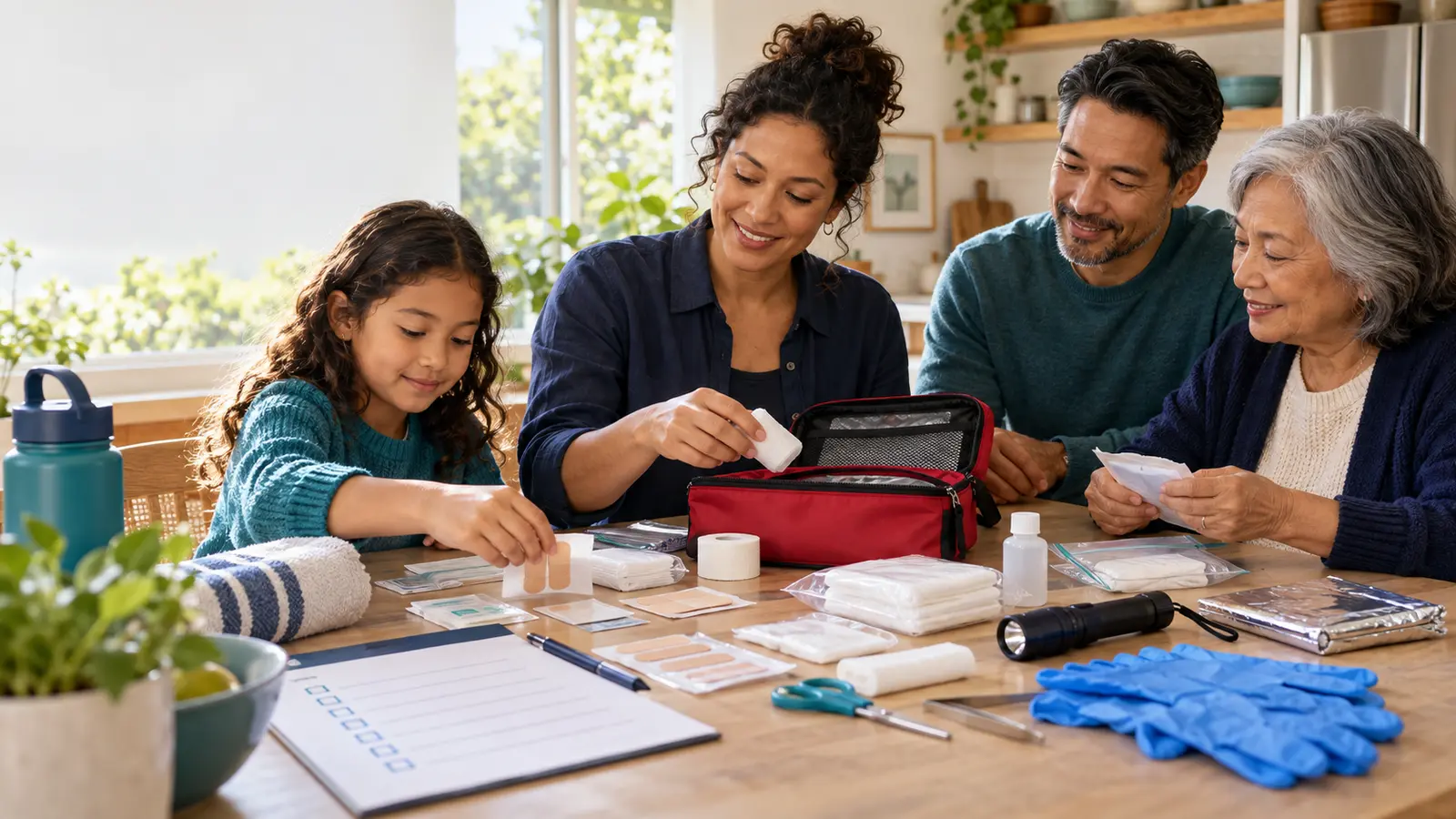
A first aid kit is most useful when people can find it quickly, understand what is inside, and replace supplies after they are used. A store-bought case can be a starting point, but readiness comes from matching the kit to the people, setting, and skills involved.
This first aid kit checklist focuses on practical household planning. It does not teach first aid or replace training. For a life-threatening emergency, call emergency services. The American Red Cross first aid kit guidance provides a detailed supply list and recommends keeping kits at home and in the car.
Start with where the kit will be used and who may use it. A home kit, vehicle kit, workplace kit, sports bag, and travel kit face different conditions. Consider household size, children, older adults, disabilities, allergies, regular activities, pets, climate, and the time it may take emergency help to arrive.
Write down the most likely situations the kit should support: small cuts and scrapes, minor burns, sprains, splinters, or protection while waiting for professional help. This is a planning exercise, not a prediction. Specialized settings such as child care, workplaces, boats, wilderness trips, and organized events may have additional requirements and should follow the rules and qualified guidance that apply to them.
Use the current Red Cross list as a reference rather than relying on memory. A basic household kit commonly includes several sizes of adhesive bandages, sterile gauze, absorbent dressings, adhesive tape, roller and triangular bandages, disposable nonlatex gloves, antiseptic wipes, an instant cold compress, a breathing barrier, tweezers, a thermometer, an emergency blanket, and written first aid instructions.
Add a small flashlight with working batteries, a notepad, a pencil, and emergency contact information. Choose blunt-tip or first-aid scissors suited to the kit. Keep every product in its original package when its label, directions, sterility, or expiration date matters. Do not add loose pills, unidentified creams, or supplies that household members do not know how to use.
A first aid kit supports immediate care for injuries and sudden problems. A broader emergency supply kit supports a household during a power outage, evacuation, severe storm, or disruption lasting several days. The two can sit together, but they are not interchangeable.
The Federal Emergency Management Agency’s Ready.gov build-a-kit guide covers water, food, communication, lighting, charging, documents, sanitation, and other disaster supplies. Keeping a smaller first aid case inside or beside the emergency kit can make it easier to carry, inspect, and use without unpacking everything else.
Household-specific items may include copies of emergency contacts, communication cards, spare glasses, hearing-aid batteries, mobility-device information, or supplies recommended by a qualified professional. If someone uses prescribed emergency medication, follow the prescriber, pharmacist, label, storage, and expiration directions. Do not share prescription medicines.
Think about access as well as contents. Large-print labels, tactile markers, a high-contrast inventory card, picture-based directions, or a translated contact sheet may help. Avoid color as the only way to identify sections. If several people may respond, agree on the same names and locations for items.
The kit should be easy for responsible household members to reach but secured from young children and anyone who could be harmed by its contents. Avoid damp bathrooms, very hot cars for temperature-sensitive supplies, direct sunlight, and storage behind heavy objects. Follow every product’s storage instructions.
Use a sturdy, portable container with a clear label. Organize supplies by function in transparent pouches or compartments: protection, wound covering, wraps, tools, and information. A simple contents card taped inside the lid saves time. Tell household members where the kit is, and include its location in a home emergency plan.
A kit changes every time an item is used, damaged, or expires. The Red Cross advises checking expiration dates and replacing used or out-of-date contents. Choose a schedule your household can remember, such as the first weekend of each season or the dates when smoke alarms are checked.
During the review, count supplies; check seals, cleanliness, labels, batteries, and expiration dates; confirm the flashlight works; and replace anything wet, opened, brittle, corroded, or missing. Review contact details and household needs. Write the inspection date on the inventory card. Do not assume the date printed on an outer kit means every item inside has the same shelf life.
A well-stocked kit cannot make decisions or provide skills. Consider a recognized first aid and CPR course appropriate to the household. Review how to call for help, give the location, follow dispatcher instructions, and protect yourself from hazards. Children can learn how to find an adult and call emergency services without being expected to provide care beyond their age and training.
Do not use unfamiliar equipment simply because it is in a kit. If a supply requires training, either obtain that training or ask a qualified instructor whether it belongs in your household kit. Written instructions should be readable, current, and kept with the supplies.
Practice locating the kit without opening sterile packages. Confirm that a visitor, caregiver, or support person could identify it. Decide who replaces used supplies and who checks the kit after travel. Keep emergency numbers and the home address where they can be read quickly.
For suspected poisoning in the United States, contact Poison Control at 1-800-222-1222 or use Poison.org for situation-specific guidance. Call emergency services for severe bleeding, trouble breathing, loss of consciousness, seizure, signs of stroke or heart attack, or another immediate threat. Do not delay urgent help while searching the kit.
For related planning, use UWP’s accessible emergency preparedness plan, medication safety at home checklist, Wellness Education program, and Resources hub.
Use a current Red Cross list as the baseline. Common categories include protective gloves, wound coverings, wraps, cold care, simple tools, an emergency blanket, a breathing barrier, and written instructions. Adapt the list to the household and setting.
Either can work. A purchased kit may be convenient, while a self-built kit may be easier to tailor. In both cases, compare the contents with current guidance, remove nothing essential, and maintain every item.
Choose a dry, clearly identified place that responsible people can reach quickly and that is secured from children or unintended use. Follow temperature and storage directions for every product.
Check on a repeatable schedule and after every use. Replace anything used, expired, opened, wet, damaged, or missing. Follow the printed expiration date for each component.
Do not add loose or unidentified medicine. Any medication should remain labeled and be stored and used according to professional advice and product directions. Prescription medicines should never be shared.
The container may not, but many contents do. Adhesives, sterile dressings, batteries, creams, and other components can degrade or expire at different times, so inspect each item individually.
No. A first aid kit is for immediate care, while an emergency supply kit also addresses water, food, communication, lighting, sanitation, documents, and other needs during a broader disruption.
This article provides general education and is not medical advice or first aid training. Follow product labels, recognized training, qualified professional guidance, and emergency-dispatch instructions.