Fair access • community voice • practical next steps
Health Equity Programs in Virginia
Health equity work asks a practical question: what barriers keep some people from reaching understandable wellness information, healthy-living opportunities, or a meaningful role in community decisions? Unified Wellness Project supports nonclinical education and partnership planning that helps Virginia organizations notice those barriers, listen to the people affected, and choose a manageable next step.
Important boundary: Unified Wellness Project is a nonprofit education and community-outreach organization—not a medical clinic, public-health agency, research institution, benefits provider, or legal-compliance consultant. UWP does not diagnose inequities, provide clinical care, certify a health-equity program, or promise funding, participation, access, or health outcomes.
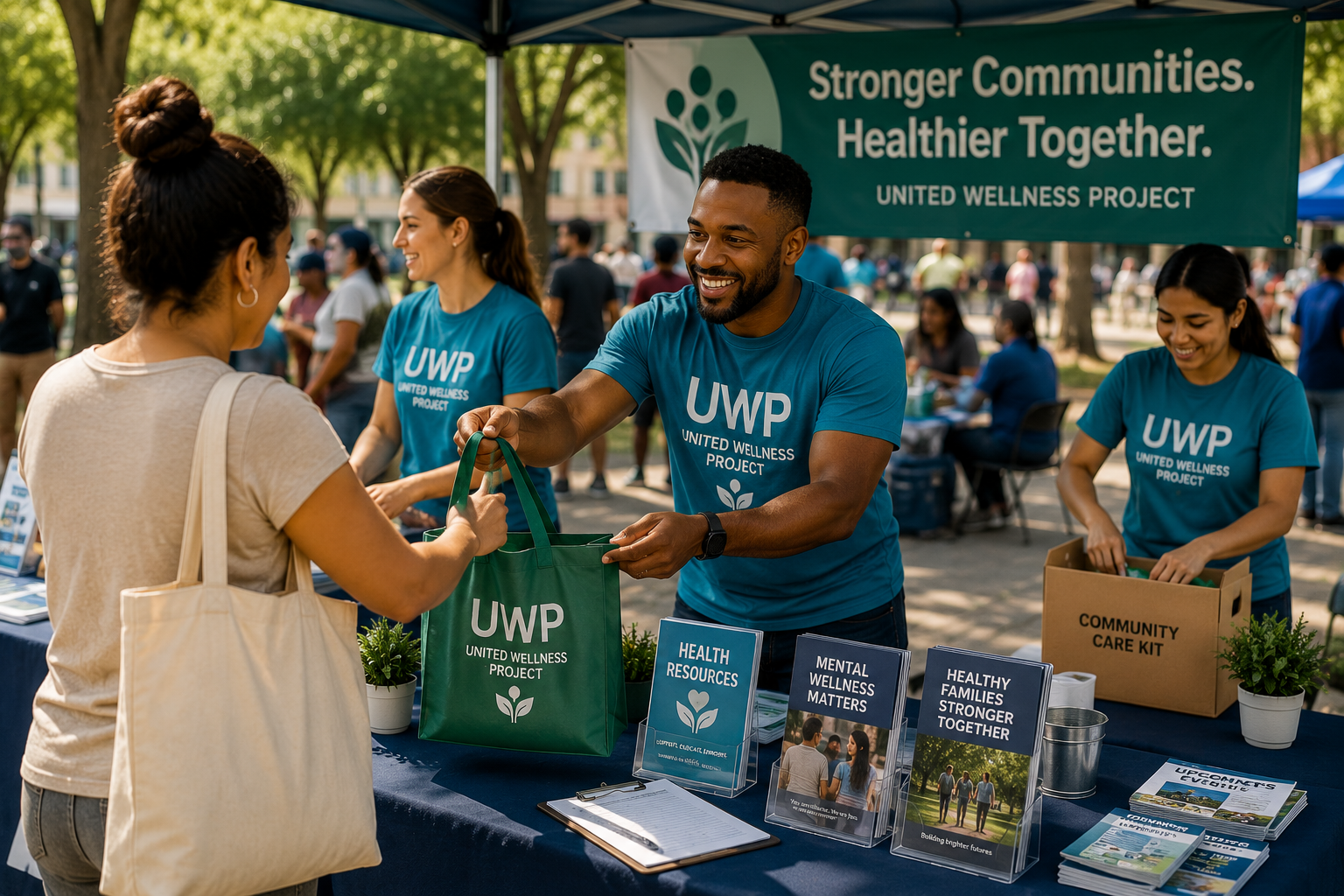
Community-centered planning starts by asking who can participate, who may be missing, and what would make the next step easier to reach and use.
Listen
Invite people closest to the issue to describe strengths, barriers, priorities, and workable forms of participation.
Remove barriers
Review communication, cost, timing, location, transportation, disability access, language, technology, and trust.
Choose a next step
Connect what was heard to one responsible action, a named owner, a review date, and honest limits.
A practical definition
What health equity means for community wellness
The Centers for Disease Control and Prevention describes health equity as a state in which every person has the opportunity to attain their highest level of health. In community wellness work, that does not mean promising the same result for everyone. It means paying attention to avoidable barriers and making participation, information, and decision-making more reachable.
Equity is not simply equality
Equality may offer the same resource in the same format to everyone. Equity asks whether people can actually find, understand, access, and use it. A single evening workshop may be formally open to all while remaining difficult for a caregiver, a person without transportation, someone who needs captions, or someone who reads in another language.
An equity-minded plan does not assume what each group needs. It creates respectful ways to ask, documents what is possible, and explains what cannot yet be offered.
Conditions beyond medical care matter
Healthy People 2030 identifies social determinants of health as the conditions where people are born, live, learn, work, play, worship, and age. Housing, transportation, education, income, neighborhood conditions, food access, language, and social connection can shape whether a wellness opportunity is realistic.
UWP can help keep education and outreach grounded in those everyday conditions without presenting itself as a healthcare provider or claiming to solve structural issues alone.
A seven-part planning framework
Plan a health equity program without overpromising
A useful program begins with a decision that can be influenced—not a broad promise to eliminate disparities. The following sequence can guide an educational workshop, resource effort, outreach activity, or mission-aligned partnership conversation.
1
Define one specific access question
Replace a goal such as “improve community health” with a question that can guide action: Who is not reaching this information? What makes attendance difficult? Which format would make a resource easier to understand? Name the community and the decision the answers will inform.
2
Map strengths before gaps
List trusted messengers, gathering places, existing programs, informal support networks, transportation options, accessible spaces, and useful public resources. The recent UWP Journal guide to community asset mapping offers a structured way to begin without describing a community only by its problems.
3
Listen through more than one channel
Offer a small number of accessible ways to participate, such as a short conversation, a plain-language form, a partner-facilitated discussion, or an asynchronous response. Do not rely only on online surveys, public meetings, or organizational leaders. Explain how input will be used and protect privacy.
4
Review barriers across the full path
Follow the participant journey from first hearing about an activity to using what they learned afterward. Check language, reading level, disability access, digital access, cost, timing, location, transportation, caregiving, food, registration, documentation requests, and follow-up.
5
Use public data with care
Public data can show patterns, but it cannot explain every lived experience. Note the year, geography, definitions, sample size, suppressed values, and populations that may be combined or missing. Use Census data and current public-health sources as context, then compare them with local knowledge.
6
Select an action that matches capacity
Choose one or two steps the participating organizations can actually own. Examples may include revising a resource in plain language, adding an accessible participation option, changing outreach channels, improving referral information, or testing a small educational activity with community feedback.
7
Measure access, not promised outcomes
Track whether the planned access improvement happened: Was the format provided? Did the intended outreach channels work? Could participants complete the task? What barrier remained? Report limits and unexpected findings. Do not imply that attendance or a short educational effort proves a health outcome.
Where UWP may fit
Nonclinical education, outreach, and partnership support
UWP’s role depends on mission fit, capacity, and a clearly defined scope. A conversation may explore how existing UWP work relates to a community priority; it does not create an automatic commitment or a new clinical, government, or regulated service.
Accessible wellness education
A planning conversation may consider plain-language goals, trusted source selection, readable materials, useful takeaways, and formats that make general wellness education easier to reach. Visit Wellness Education and Health Literacy Programs for adjacent services focused on understanding and communication.
Community outreach
Outreach planning may examine who is being reached, which partners already have trusted relationships, what participation barriers are visible, and how the next invitation could be clearer. UWP’s Community Outreach page describes the organization’s current focus.
Mission-aligned partnerships
Organizations can bring a concrete community priority, the people already involved, known access considerations, and the decision ahead. UWP can review whether an educational resource, outreach conversation, volunteer pathway, or partnership next step appears mission-aligned.
Resources for self-directed planning
The Resources hub and Community Wellness Journal provide plain-language material organizations and residents can use independently. The Community Health Needs Assessment page covers broader listening and prioritization; this page focuses specifically on equitable access and participation.
A practical intake checklist
What to bring to an initial conversation
The purpose
What decision should this effort inform? Which part is educational, outreach-oriented, or partnership-based? What is outside scope?
The people
Who is affected, who already has trusted relationships, and whose perspective may be missing? How will participation be voluntary, respectful, and accessible?
The known barriers
Share what is already known about communication, disability access, language, transportation, cost, technology, timing, caregiving, or trust. Separate observations from assumptions.
The available capacity
Identify staff or volunteer time, current materials, partner roles, decision authority, and the smallest action that can be maintained. Avoid designing a program that depends on unconfirmed funding or participation.
For deeper planning, review UWP’s community health promotion framework, accessible wellness education page, accessibility commitment, partnership information, and the Journal’s community asset mapping guide.
Useful primary sources
Evidence and planning resources
These sources help define the planning context. They do not replace local listening or determine what UWP can offer.
CDC: Social Determinants of Health
CDC explains how nonmedical conditions influence health and describes convening, data integration, and collaboration as public-health actions.
Healthy People 2030: Social Determinants of Health
The federal framework groups social determinants into five domains and emphasizes social, physical, and economic environments.
DOJ: Effective Communication
The Department of Justice explains effective-communication responsibilities and why the appropriate aid or service depends on the person and context.
U.S. Census data
Data.census.gov provides public demographic, social, economic, housing, and geographic data that can support careful community context review.
Frequently asked questions
Questions about health equity programs
What is health equity?
Health equity means every person has an opportunity to attain their highest level of health. In community wellness planning, that involves identifying avoidable barriers and improving fair access to information, participation, and supportive conditions without promising identical outcomes.
Why is health equity important?
People do not encounter wellness information and opportunities under the same conditions. Transportation, housing, language, disability access, income, education, technology, neighborhood conditions, and trust can affect whether a resource is reachable and useful. Considering those conditions helps organizations design a more responsible next step.
What is a health equity program?
The term can describe many kinds of work, including education, outreach, access improvement, community engagement, policy, or clinical initiatives. UWP uses it here for nonclinical wellness education and partnership planning focused on participation and access. The scope should always be defined clearly.
How can an organization improve health equity?
Start with a specific decision, listen to people affected, map strengths, identify barriers across the participation path, review credible data with its limits, choose an action that matches capacity, and check whether the access improvement actually occurred. Structural issues usually require collaboration across more than one organization.
How do you measure health equity?
Measurement depends on the question. A community initiative might examine who was reached, which access features were delivered, whether a task could be completed, what participants reported, and which barriers remained. Disaggregate information only when it is appropriate, ethical, sufficiently reliable, and protective of privacy.
What is the difference between health equity and health equality?
Equality generally means offering the same thing to everyone. Equity considers whether different barriers make that same offer less reachable or useful for some people, then adjusts support or design so people have a fair opportunity to participate.
Does Unified Wellness Project provide medical care or health-equity certification?
No. UWP is not a clinic, hospital, public-health agency, research institution, insurer, or certifying body. It does not diagnose or treat conditions, determine legal compliance, certify programs, or guarantee health outcomes. Its role is limited to mission-aligned education, resources, outreach, and partnership conversations.
Start with one barrier and one decision
Describe the health equity priority you are exploring
Share the community context, who is already involved, the access barrier you want to understand, the decision ahead, and the smallest useful next step. Unified Wellness Project can review whether a nonclinical educational, outreach, resource, volunteer, or partnership conversation fits its mission and current capacity.