
A practical household medication-safety checklist covering current lists, label review, secure storage, dosing tools, caregiver coordination, disposal, and emergency help.
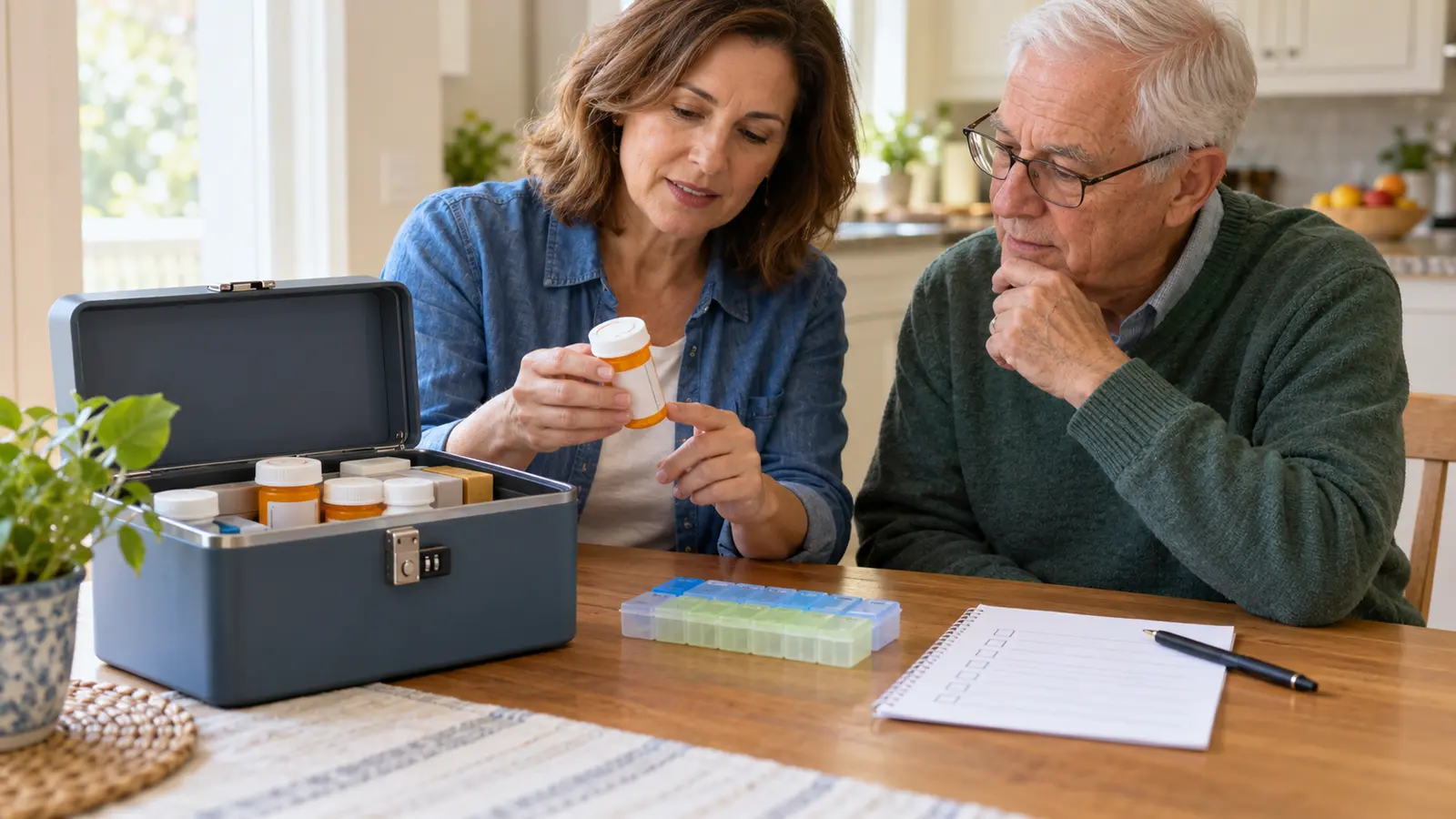
Medication safety at home means creating routines that help the right person use the right medicine according to the label and a qualified health professional’s directions, while reducing mix-ups, accidental access, damage, and outdated supplies. It applies to prescription medicines, over-the-counter products, vitamins, and supplements.
A household system should support—not replace—conversations with a pharmacist, prescriber, nurse, or other qualified professional. The FDA recommends keeping an up-to-date medication list and sharing it during healthcare and pharmacy visits. Do not start, stop, split, combine, or change the timing of a medicine based only on a general article.
List each prescription, over-the-counter medicine, vitamin, herbal product, and supplement used regularly or occasionally. Include the name, strength, form, reason it is used, dose, timing, prescriber when relevant, and any known allergies. Add the preferred pharmacy and emergency contacts.
Date the list. Review it after every change and at a recurring household check. Keep a copy that can travel to appointments and another accessible during an emergency. Protect personal health information; do not post the list publicly or leave it where visitors can photograph it.
Confirm the person’s name, medicine, strength, directions, warnings, and expiration date before use. For over-the-counter products, review the Drug Facts label, including active ingredients. Different products may contain the same active ingredient, which can create an unintended duplicate.
The FDA’s Drug Facts label guide explains the purpose, uses, warnings, directions, inactive ingredients, and other information on nonprescription products. If a label is damaged, unclear, unexpectedly different, or hard to read, pause and contact the pharmacy or another qualified professional.
Follow the storage directions for each product. Many medicines need a cool, dry place, while some require refrigeration or another specific condition. Bathrooms, cars, windowsills, and areas near a stove can expose products to moisture or temperature changes. Never refrigerate a medicine unless its instructions call for it.
Keep medicines secured and out of sight and reach of children, visitors, and anyone who could be harmed by access. Child-resistant packaging is not childproof. Consider a locked container when household circumstances call for one. Store human and pet medicines separately, and keep medicines away from food, cleaners, and other look-alike containers.
Original labeled containers help people check the medicine, strength, directions, expiration, and pharmacy information. Do not combine different medicines in one bottle. A pill organizer may support a routine for some people, but it should be filled carefully from the current list and labels. Ask a pharmacist whether an organizer is appropriate because some products need their original packaging.
If several people use medicines in the home, give each person a distinct, clearly labeled storage area. Avoid relying only on color because people may have color-vision differences, and packaging can change. Large-print labels, tactile markers, good lighting, or an accessible electronic reminder may help; ask the pharmacy what formats it can provide.
For liquid medicine, use the device supplied with the product or one recommended by a pharmacist. Household spoons vary in size. Match the measurement unit on the label to the device, and ask for help if the label uses an unfamiliar unit.
A written checklist, blister pack, alarm, or organizer can support memory, but no tool prevents every error. Record a dose only after it is taken. If you are unsure whether a dose was already taken, do not guess or automatically repeat it; call a pharmacist, prescriber, or Poison Control for situation-specific guidance.
When more than one person helps, agree on who prepares, gives, records, refills, and reviews medicines. Use one shared method so two caregivers do not each give the same dose. Document changes after appointments, hospital discharge, urgent care, or pharmacy substitution.
Bring the current medication list and the questions you have to every visit. Ask which medicines changed, which stopped, what side effects need attention, what to do about a missed dose, and whom to call after hours. The FDA’s Use Medicines Wisely guidance encourages people to ask questions, keep a list, follow label directions, and discuss medicines with qualified professionals.
Set a recurring date to examine containers for expiration, damage, missing labels, unexpected appearance, and discontinued medicines. Do not use a product that looks or smells unusual, was stored incorrectly, or is affected by a recall without professional guidance.
Separate items marked for disposal from active medicines so they cannot return to use accidentally. The FDA says the preferred way to dispose of most unused or expired medicines is a take-back option. Follow its drug-disposal questions and answers because instructions differ by product. Do not flush or place medicine in household trash unless current guidance for that product says to do so.
Post the U.S. Poison Control number, 1-800-222-1222, where caregivers can find it, and save it in phones. If someone may have taken the wrong medicine, the wrong amount, or another person’s medicine, contact Poison Control promptly for specific guidance. Call emergency services for severe symptoms, loss of consciousness, trouble breathing, seizure, or another immediate emergency.
Keep original containers or packaging available when seeking help. Be ready to share the product name, strength, amount, time, person’s age and weight, symptoms, and other medicines. Do not make someone vomit unless a qualified professional instructs you to do so.
UWP provides nonclinical wellness education, not medication management or pharmacy services. Use the Wellness Education program and Resources hub to explore practical learning. Companion Journal guides cover safe disposal of unused medication, finding reliable health information, and other community wellness topics.
Home routines can reduce preventable mix-ups, duplicate ingredients, missed or repeated doses, unsafe storage, accidental access, and use of damaged or outdated products.
Include prescription and over-the-counter medicines, vitamins, supplements, names, strengths, doses, timing, reasons for use, relevant prescribers, allergies, and the date the list was reviewed.
Follow each label. Many products need a cool, dry place secured from unintended access, while some require refrigeration or other conditions. Ask a pharmacist when directions are unclear.
Usually, original labeled containers preserve important identification and instructions. Ask a pharmacist before moving medicines into organizers or alternative packaging, especially when moisture, light, or special handling matters.
Maintain one current list, read labels, check active ingredients, use correct measuring tools, secure storage, coordinate caregivers, review supplies, and ask a pharmacist rather than guessing.
Do not apply a universal rule. Check the medicine instructions and contact a pharmacist or prescriber for guidance specific to that medicine and timing.
In the United States, contact Poison Control at 1-800-222-1222 or use its online tool for specific guidance. Call emergency services for severe symptoms or immediate danger.
This article provides general education and is not medical advice, diagnosis, treatment, or a substitute for a pharmacist or other qualified healthcare professional.