Use a take-back option first, follow FDA guidance when one is unavailable, protect personal information, and handle sharps separately.
Unused or expired medicine can be easy to overlook. A bottle moves to the back of a cabinet, a prescription changes, or a product reaches its expiration date. When it is time to remove medicine from your home, the safest next step depends on the product and the disposal options available where you live.
This guide explains how to safely dispose of unused medication using current federal guidance. It covers prescription and over-the-counter medicines, but it does not replace the product label or advice from a pharmacist or other qualified professional.
Do not stop or discard a medicine that someone may still need without checking the prescription instructions or asking a pharmacist or prescriber. A medicine may look unused because it is taken only as needed, stored for an emergency, or part of a current treatment plan.
Keep medicines in their original containers until you know the correct next step. The label helps identify the product, person, strength, and instructions. If the label is unreadable or the container is damaged, place it where children and pets cannot reach it and ask a pharmacist what to do.
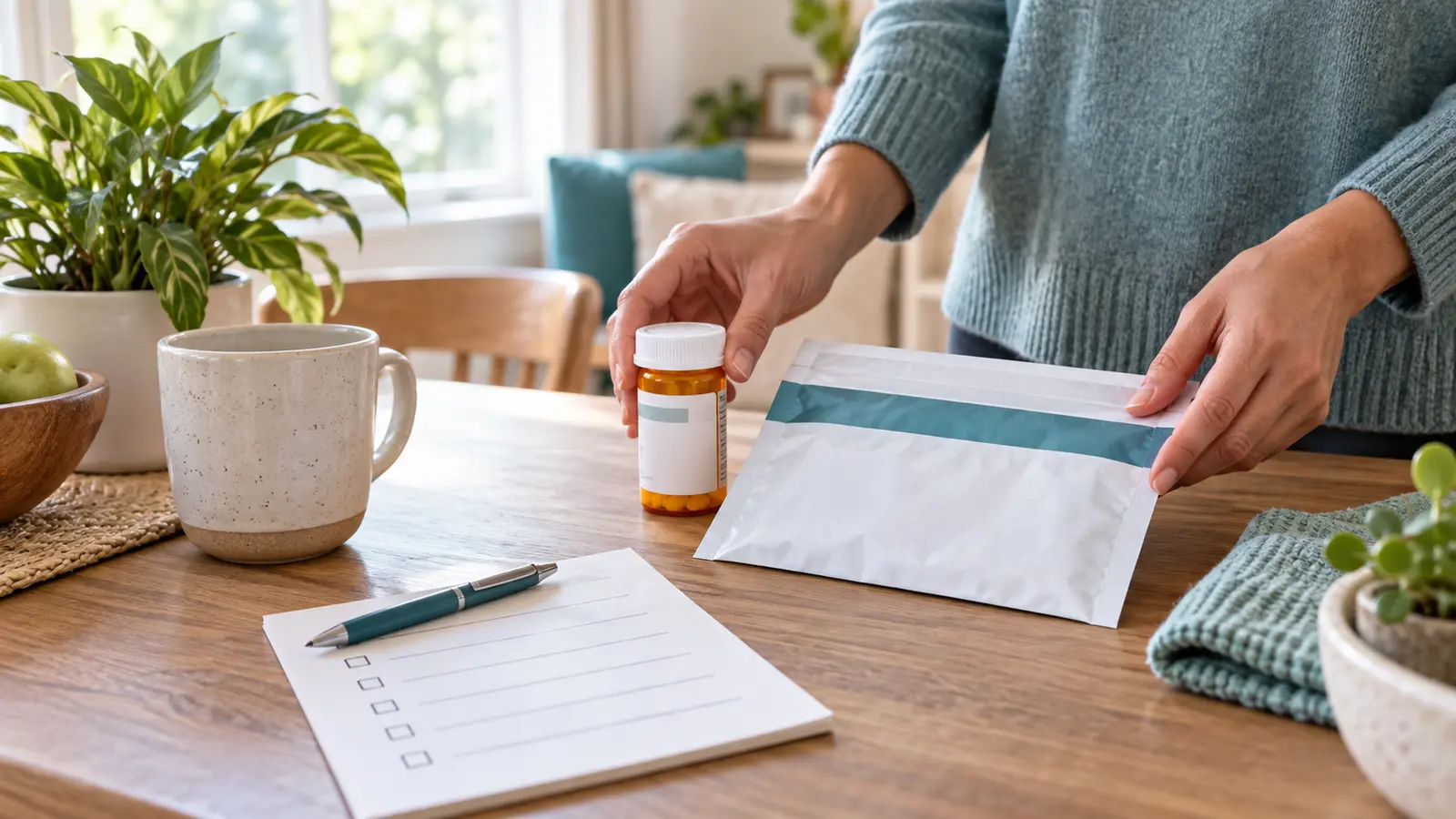
The U.S. Food and Drug Administration says the best way to dispose of most expired, unwanted, or unused medicines is through a drug take-back option. Depending on what is available, that may be a year-round collection box, a scheduled event, or an authorized mail-back envelope.
Start with the DEA’s Every Day is Take Back Day page, which links to a locator for year-round drop-off locations. You can also ask a local pharmacy or local law-enforcement agency whether it operates an authorized collection site.
Call or check the location’s current instructions before traveling. Programs may differ in whether they accept liquids, inhalers, patches, pet medicines, controlled substances, or items from people outside the area. Never leave medicine outside a closed collection site.
Do not pour different medicines together unless the authorized program specifically instructs you to do so. Keep each product closed and identify which category it belongs to:
Sharps are not ordinary medicine waste. Many medicine collection boxes do not accept them, and putting loose sharps in a bag with bottles can injure workers or other community members.
For a take-back program, follow the site’s instructions about labels and packaging. Some programs allow you to cover personal information while leaving the medicine name visible; others accept medicine removed from outer packaging. Do not remove a label if doing so would make it impossible for staff to identify a product the program needs to screen.
After the medicine has been removed for disposal, scratch out or permanently cover your name, prescription number, address, and other personal details on empty packaging before discarding or recycling it according to local rules.
The FDA’s unused-medicine disposal guide describes two at-home routes when a take-back option is not readily available.
Only a small group of medicines has instructions for flushing when take-back is not readily available. Check the label and the current FDA flush list. Do not flush a medicine simply because it is liquid or because that seems convenient. If it is not on the list, use the non-flush instructions instead.
When take-back is unavailable, the FDA says almost all medicines that are not on the flush list can be placed in household trash using these steps:
Local waste rules can add requirements. If the product label gives different disposal directions, follow the label or ask a pharmacist.
Used patches can still contain medicine. Follow the product instructions and FDA guidance; do not assume every patch belongs in ordinary trash. Inhalers and aerosol products may be dangerous if punctured or exposed to heat. Contact your local trash or recycling program for instructions that apply to pressurized containers.
Sprays, lozenges, chemotherapy medicines, compounded products, and other uncommon forms may have product-specific requirements. A pharmacist can help interpret the label and identify an appropriate disposal route.
The FDA advises placing used needles, syringes, lancets, and similar sharps into an appropriate sharps-disposal container immediately after use. The FDA’s sharps safety guidance explains container features and alternatives when an FDA-cleared container is unavailable.
Never put loose sharps in household trash or recycling, never flush them, and do not force them into a medicine take-back box unless that program explicitly accepts sharps. Ask the local health department, pharmacy, waste authority, or healthcare provider about local container and drop-off rules.
A short routine can keep disposal from becoming a large project:
For more plain-language prevention education, explore UWP’s Wellness Education program, Resources hub, and guide to finding reliable health information online. Community organizations interested in sharing accessible educational resources can visit Partners.
Start with the DEA’s year-round collection-site locator, then check local pharmacies or law-enforcement agencies. Confirm the location’s hours and accepted products before you go.
If take-back is unavailable, the FDA says almost all medicines not on its flush list can go in household trash after they are mixed with an undesirable material and sealed in a closed container. Follow the current FDA steps and local rules.
Only flush a medicine when it appears on the current FDA flush list and a take-back option is not readily available, or when the label specifically instructs you to do so. Do not flush other medicines.
Some do and some do not. Participating pharmacies may offer collection boxes or mail-back options, with different rules for liquids, inhalers, patches, and other forms. Check first.
Follow the program’s instructions. You can often cover personal information while keeping enough product information visible for safe screening. Remove personal details from empty packaging before discarding it.
Usually not unless the program clearly says it accepts sharps. Place used sharps in an appropriate sharps container and use the disposal route provided by your local health or waste authority.
Read the label and contact the local trash or recycling program. Inhalers can be pressurized and should not be punctured or exposed to fire.
This article provides general wellness and safety education. It is not medical advice and does not tell you to start, stop, or change any medicine. Ask a pharmacist, prescriber, or other qualified professional about a specific product.