A practical plan for intergenerational activities that centers shared purpose, participant choice, accessibility, safeguarding, mutual learning, and useful evaluation.
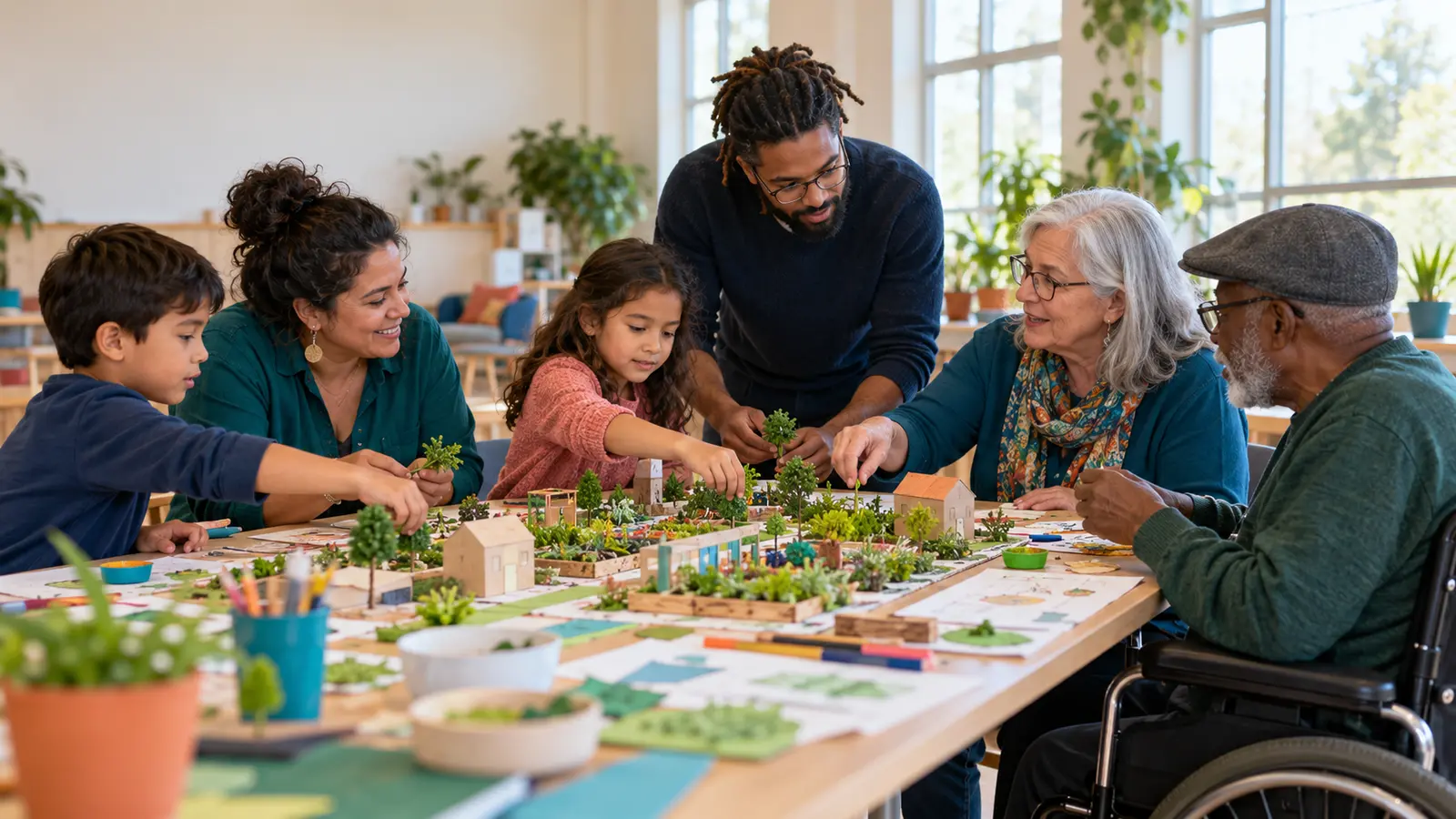
Intergenerational activities bring people from different age groups together around a shared purpose. A strong program is more than placing younger and older people in the same room. It creates roles, choices, and conditions that allow participants to learn with one another rather than treating one group as the helper and the other as the recipient.
The World Health Organization offers a step-by-step resource for planning intergenerational contact. Research reviews indexed by the National Library of Medicine describe promising possibilities while also noting variation in program designs and evidence. Plan for a meaningful experience; do not promise health, educational, or social outcomes that have not been measured.
Name what people will do together and why it matters to them. A purpose might be documenting neighborhood stories, exchanging practical skills, creating art, tending a garden, exploring technology, reading together, preparing an exhibit, or improving a public space. Avoid goals that define people only by age or deficit.
Write a one-sentence purpose that a participant could understand: “We will create a seasonal garden plan by combining local memories, youth research, and accessible design ideas.” Then identify what each age group may contribute and receive. The roles should be flexible enough for different interests, energy levels, communication styles, and abilities.
Ask potential participants what they enjoy, what they want to learn, what they would rather not do, what support they need, and how they prefer to communicate. Include family members, caregivers, teachers, support staff, or partner organizations when participants want them involved.
Do not assume that every older adult enjoys reminiscence, every young person wants technology, or every participant is comfortable with touch, photographs, competition, or public sharing. Offer choices. A short listening session, picture-based interest card, phone conversation, or accessible survey can reveal ideas a planning team would otherwise miss.
Useful partners may include schools, libraries, youth organizations, senior centers, housing communities, parks, cultural groups, and volunteer networks. Confirm that the activity fits each partner’s mission, schedule, staffing, safeguarding policies, transportation capacity, and communication process.
Write down who recruits participants, obtains permissions, checks the space, handles transportation, leads the activity, responds to an incident, communicates changes, purchases materials, and gathers feedback. If children or adults who need support are involved, follow applicable screening, supervision, consent, privacy, reporting, and accessibility requirements. Use qualified guidance for legal or risk-management questions.
Choose tasks that require contribution from more than one person. Instead of asking young people to perform for older adults, invite mixed-age pairs to select songs and explain their significance. Instead of asking older adults only to tell stories, create a team that records, illustrates, fact-checks, and decides together how the story may be shared.
Plan more than one role: speaker, listener, maker, researcher, photographer with permission, organizer, reader, gardener, mapper, or materials helper. Rotate roles and allow participants to pass. Virginia Cooperative Extension’s intergenerational programming guidance emphasizes collaboration between the adults who know the participating groups and involving participants in decisions.
Check step-free entry, accessible restrooms, parking or transit, seating, table height, lighting, acoustics, temperature, and quiet space. Offer large-print, high-contrast, translated, picture-based, or digital materials when useful. Use microphones or assistive listening options when the room and group require them.
Build in breaks and flexible arrival. Avoid activities that depend entirely on standing, fine-motor control, fast reading, color recognition, hearing in a noisy room, or remembering many instructions. Describe the activity in advance so participants can decide whether it fits. Ask how to help rather than moving a mobility device, touching a person, or speaking for them without permission.
Share names, preferred forms of address, the purpose, schedule, group agreements, and what will happen step by step. Explain that people may communicate, move, remember, read, hear, or participate differently. Replace stereotypes with curiosity.
Begin with a low-pressure task that lets everyone contribute: choose an image, sort materials, answer an optional prompt, or make a small shared decision. Keep the first session manageable. A well-run pilot can reveal whether timing, room setup, instructions, roles, and group size need adjustment before a longer series.
A facilitator should notice who is being interrupted, overlooked, over-helped, or placed in a token role. Use small groups when a large circle makes conversation difficult. Offer prompts without demanding personal disclosure. Make it normal to take a break, change roles, use an alternative format, or decline a photograph.
Allow relationships to develop over repeated contact when feasible, but do not imply that one event will eliminate loneliness, ageism, or community division. The Administration for Community Living includes youth mentorship, storytelling exchanges, family garden days, and skill-sharing workshops among examples of intentional intergenerational engagement.
Ask simple questions tied to the purpose: Did you have a meaningful role? Did you learn or share something you valued? What helped you participate? What created a barrier? Would you return, and what would you change? Offer spoken, written, picture-based, or private feedback options.
Record participation and outputs accurately, but protect privacy. Do not publish names, images, stories, or personal information without appropriate permission. Review feedback with representatives from the participating groups. Continue, adapt, pause, or end the program based on capacity and participant experience—not on the desire to preserve a good-looking event.
Connect this plan with UWP’s Older Adult Wellness Programs, Community Outreach, inclusive-playground planning guide, Volunteer page, and Partnerships page.
They are purposeful activities in which people from different generations interact, contribute, and learn together around a shared task or goal.
Skill exchanges, storytelling and mapping, gardens, art, music selection, shared reading, technology practice, oral history, and neighborhood projects can work when participants help choose them and roles are accessible.
Define a shared purpose, listen to participants, choose suitable partners, assign responsibilities, address safeguarding and access, test a small activity, and use feedback before expanding.
There is no universal length. Consider attention, energy, transportation, breaks, setup, and the task. A short, well-supported pilot is often more useful than an ambitious session that creates fatigue.
Offer choices, multiple roles and formats, accessible spaces and materials, flexible pacing, permission to pass, and support based on what participants request rather than age-based assumptions.
Some studies report promising effects, but results vary and depend on program design and participants. Do not promise a health outcome. Measure the specific experience and goals of the local program.
Use applicable safeguarding, consent, privacy, supervision, screening, transportation, accessibility, emergency, and incident-response policies. Obtain qualified advice for legal or clinical questions.
This article provides general community-planning education. It does not replace legal, safeguarding, clinical, educational, or risk-management guidance for a specific program.