Plan an inclusive community walking group with a clear purpose, accessible routes, shared roles, practical safety steps, and a simple first-month launch plan.
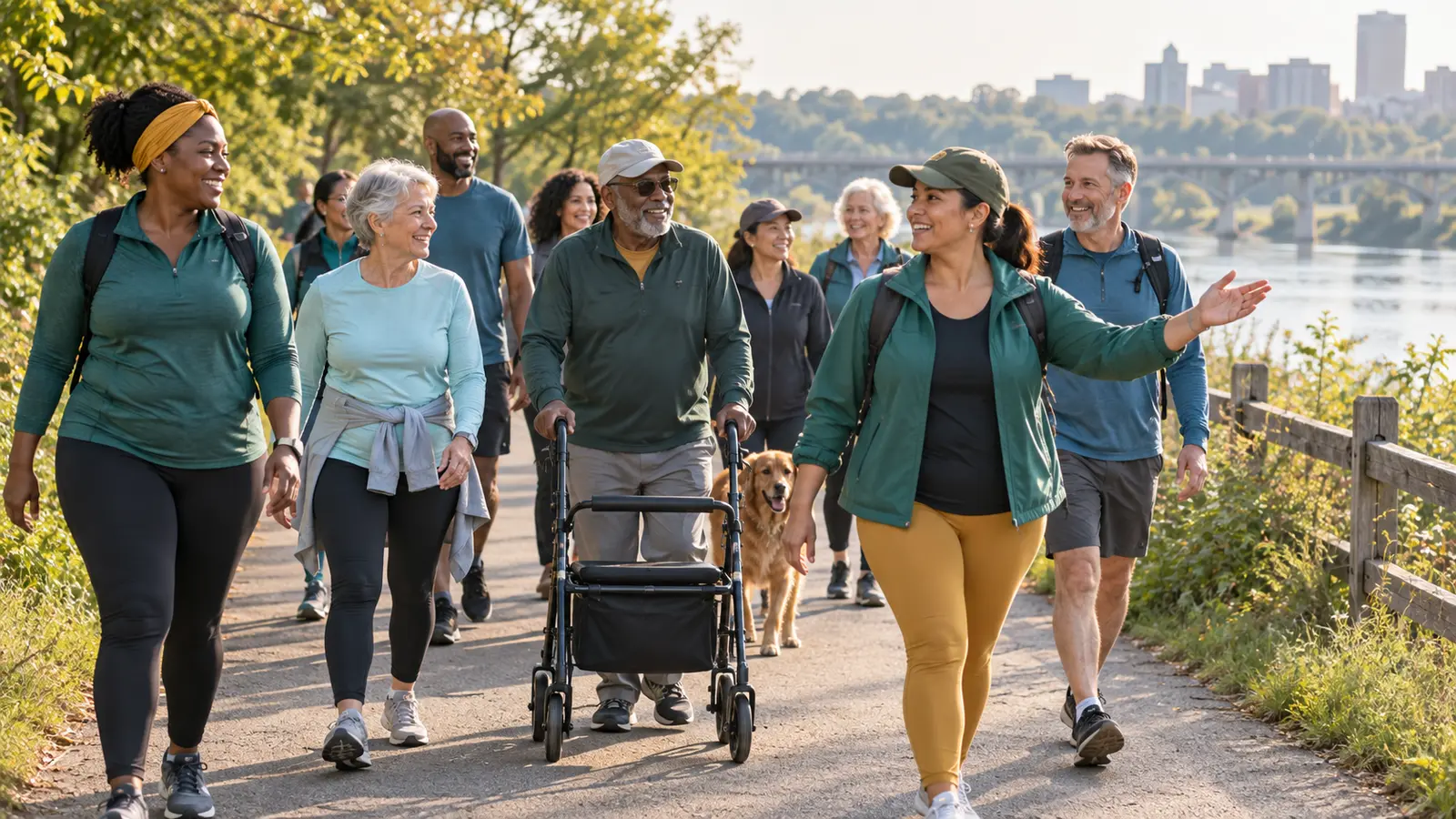
A community walking group can make movement feel more welcoming, social, and practical. It does not need matching shirts, a complicated registration system, or a competitive pace. A few neighbors, a thoughtfully chosen route, and a reliable way to communicate are enough to begin.
This guide explains how to start a community walking group that respects different ages, abilities, schedules, and reasons for joining. The aim is to create an inviting community activity—not to prescribe exercise or promise a health result.
Write one sentence that describes who the group is for and what it offers. For example: “A free, welcoming weekly walk where neighbors can move at a comfortable pace and meet one another.” A clear purpose helps people decide whether the group fits them.
Avoid language that suggests people must reach a certain speed, distance, body size, or fitness level. Decide whether the group will emphasize conversation, nature, family participation, a lunch-hour break, or another community need. If the group is organized through a nonprofit, school, library, neighborhood association, or workplace, confirm the activity fits that organization’s policies.
Before choosing a schedule, ask a small but varied group of potential participants about preferred days, start times, route length, transportation, lighting, restrooms, seating, language access, and mobility needs. A convenient plan for organizers may still exclude the people the group hopes to welcome.
Keep the questions brief and offer more than one way to respond. A paper sign-up sheet, phone number, short online form, and conversation at an existing gathering can reach different people. The goal is not a formal survey; it is to catch barriers early.
Walk or roll the full route before inviting the public. Look for an even surface, safe crossings, curb cuts, lighting, shade, benches, steep grades, construction, traffic, and places where the group can gather without blocking others. Note the nearest restroom and a clear landmark for the start and finish.
Consider offering a short loop that returns to the starting point. Loops let participants choose one or more rounds without being stranded far from the group. If one route cannot meet every need, publish its conditions plainly and offer alternatives when possible.
The CDC notes that communities can support physical activity by connecting activity-friendly routes with everyday destinations. Its physical activity overview also points to the social value of walkable communities. Route planning is therefore part of access, not just logistics.
Every announcement should answer the practical questions a new participant is likely to have:
Use plain language and repeat important details in reminders. If the walk is free, say so. If the route has a barrier that cannot be removed, describe it before someone arrives.
A walking group is more sustainable when one person is not responsible for everything. Useful roles include:
Roles can rotate. Publish a backup plan for weeks when a volunteer is unavailable, and never pressure a participant to supervise others merely because of their age, identity, or experience.
Safety planning should be calm and specific. Use established crossings, follow posted rules, carry a charged phone, and know the exact location to give emergency services. Keep emergency contact information optional and protected. Organizers should know when to cancel rather than encourage people to continue through hazardous weather, smoke, ice, poor visibility, or unsafe route conditions.
Participants should be encouraged to choose a pace and distance that suit them. Anyone with questions about whether walking is appropriate for their circumstances can consult a qualified health professional. The group itself should not screen, diagnose, or give individualized medical advice.
People are more likely to return when they feel noticed without feeling singled out. Welcome newcomers by name when invited, explain that different paces are normal, and use a no-drop structure in which nobody is intentionally left alone. Avoid body commentary and unsolicited health advice.
The CDC describes social connection as the relationships and support that help people feel they belong. Its social connection overview highlights neighborhoods, parks, workplaces, schools, and community centers as places where connections can grow. A walk can create space for those connections when participation remains respectful and voluntary.
Write the purpose, talk with potential participants, identify a coordinator, and choose two possible routes and times.
Walk or roll each route. Record distance, surface, crossings, seating, restrooms, lighting, and a weather backup. Choose the option that best matches participant needs.
Share the date, exact meeting point, route description, cost, pace options, accessibility contact, cancellation rule, and what participants may want to bring. Invite through trusted community channels rather than relying only on social media.
Arrive early, welcome participants, explain the route and no-drop approach, and keep the first outing manageable. At the end, ask two questions: “What worked?” and “What would make the next walk easier to join?”
Track simple participation information without collecting unnecessary personal data. Notice whether newcomers return, whether one pace dominates, and whether cancellations are communicated reliably. Recheck the route as seasons and construction change. Invite feedback privately as well as in the group.
Do not judge success only by head count. Consistency, accessibility, trust, and shared leadership may matter more than rapid growth. If interest exceeds volunteer capacity, add sessions slowly rather than promising a schedule the group cannot maintain.
For broader movement guidance, read UWP’s article on how much physical activity adults need. Explore the Healthy Living program, find practical materials in Resources, or visit Volunteer to learn about ways to support community wellness work.
There is no required number. Two or three reliable participants can establish a routine. Build slowly, learn what works, and add capacity before expanding invitations.
Requirements depend on the organizer, property, activities, and local rules. Ask the sponsoring organization and its insurer before public launch. This article does not provide legal or insurance advice.
Choose a length that matches participant input and the route. A short loop with optional additional rounds can accommodate more schedules and comfort levels than one long out-and-back route.
Use a no-drop approach, identify front and back volunteers, offer distance options, regroup at agreed points, and make clear that speed is not a measure of success.
Set a cancellation rule in advance, identify who makes the decision, and use one dependable communication channel. Do not pressure people to attend in heat, cold, storms, smoke, ice, or other unsafe conditions.
Mobility devices should be welcomed when the route is suitable. Publish accurate information about surfaces, grades, curb cuts, distance, seating, and restrooms so each person can decide. Invite accommodation questions without requiring private health details.
Keep the schedule predictable, share leadership, welcome newcomers, act on feedback, and avoid expanding faster than volunteers can support.
This article provides general educational information and is not medical, legal, safety, or insurance advice. People should choose activity appropriate to their circumstances and seek qualified guidance when needed.