
Create a clear, respectful smoke-free-home rule with practical steps for conversations, visitors, outdoor arrangements, cleaning, and quitting support.
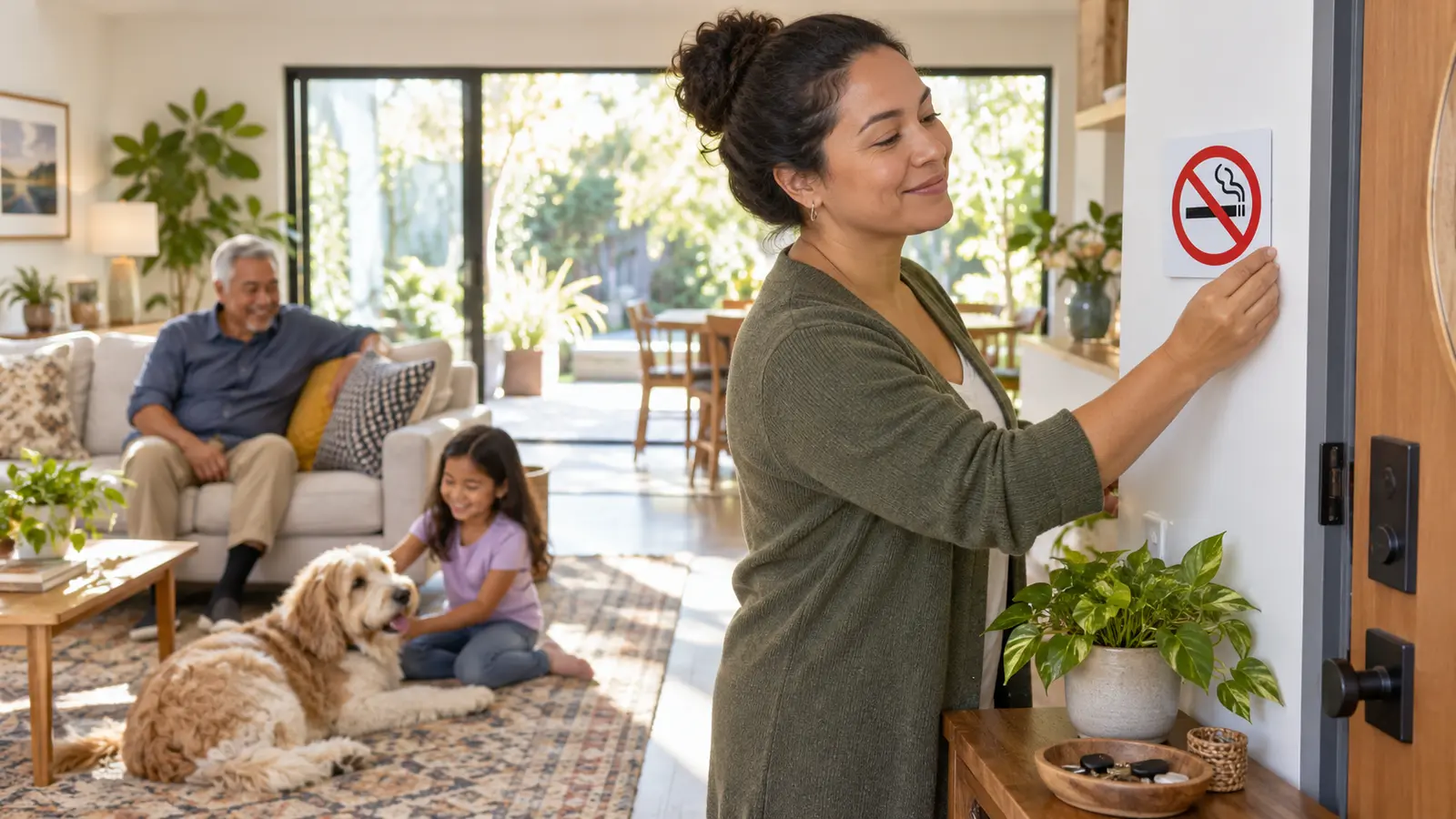
A smoke-free home is a clear household rule: no one smokes anywhere inside the home or vehicle. The rule protects other people from secondhand smoke without shaming the person who smokes. It also removes the uncertainty that comes with “only in one room,” “only by the window,” or “only when children are away.”
This guide explains how to create a smoke-free home with a respectful conversation, a simple written rule, practical outdoor arrangements, and support for anyone who wants to quit. It is intended for households, caregivers, renters, and community educators.
A fully smoke-free rule covers every indoor room, attached space, and vehicle. It applies every day and to everyone: residents, visitors, workers, and family members. A rule that changes by person or time is difficult to remember and enforce.
The CDC’s secondhand smoke guidance for homes explains that opening windows, using fans, air conditioners, air purifiers, or ventilation systems does not eliminate exposure. Smoke can move between rooms and remain in the air after a cigarette is finished.
A smoke-free-home rule is about the shared indoor environment. It is not a diagnosis, a judgment about character, or a demand that someone quit before the household can act.
Discuss the rule before a conflict, visit, move, or health concern forces a rushed decision. Invite everyone who shares responsibility for the home, including adult residents and caregivers. If children live there, adults should make and communicate the rule rather than asking children to police it.
Use direct, neutral language: “We are making the home and car smoke-free starting on this date. Smoking will need to happen outside and away from doors, windows, and air intakes.” Explain the reason briefly, then make space for practical questions.
Avoid arguing about whether a small amount of smoke “counts.” Consistency is easier when the rule is based on location, not on how much someone smokes.
A short written reminder helps residents and visitors receive the same message. Include:
Post a small reminder near the main entrance if that fits the household. A symbol can help, but do not rely on an image alone; provide plain-language text for people who may not recognize it.
Tell visitors before they arrive, especially for a long visit or overnight stay. A brief message is enough: “Our home and vehicles are smoke-free. Please plan to smoke only outdoors in the agreed area.” Early notice lets a visitor prepare.
If home-care staff, contractors, or delivery workers will be present, follow the organization’s communication process and property rules. Keep lit cigarettes, lighters, and ash away from children, pets, and combustible materials.
For a gathering at home, include the smoke-free rule with directions and accessibility information. UWP’s accessible event planning guide offers a broader checklist for welcoming communication.
“Go outside” may still leave smoke near an open door, window, neighboring unit, child’s play area, or air intake. Identify a location that follows property rules and reduces smoke drifting back inside. Keep the route safe in rain, heat, cold, and darkness.
Use a stable, noncombustible container for cigarette waste and keep it away from children, pets, dry vegetation, and anything that can burn. Never empty warm ashes into household trash. Follow local fire-safety and property requirements.
People who cannot safely reach the outdoor location may need another plan. Discuss accessibility needs without demanding private medical information or assuming a particular arrangement is safe.
Once the rule begins, remove indoor ashtrays, cigarette packs, and lighters from shared spaces. Wash fabrics and hard surfaces using product directions, ventilate during cleaning when appropriate, and keep cleaning products away from children and pets.
Cleaning can improve odor and comfort, but it does not make indoor smoking safe or replace a smoke-free rule. For broader ventilation, moisture, and filtration questions, see UWP’s indoor air quality checklist.
If smoke is coming from another unit in a multi-unit building, document dates, locations, and where smoke appears to enter. Review the lease or building policy and contact the property manager through the established process. Do not enter another person’s unit or alter shared ventilation without qualified guidance.
Some people will want to quit; others may not be ready. Ask what kind of support they want instead of prescribing a plan. The National Cancer Institute’s Smokefree.gov quit resources offer planning tools and information about handling cravings.
A person who smokes can still follow a smoke-free-home rule while deciding whether or when to quit. Separate the household boundary from the quitting decision so conversations remain clear.
If someone wants clinical advice about medications, pregnancy, a chronic condition, or withdrawal, encourage them to speak with a qualified healthcare professional. Community educators should not diagnose nicotine dependence or recommend individualized treatment.
Plan for bad weather, parties, stress, a guest who did not know, a long car trip, or a resident who forgets. Decide in advance how to respond.
For immediate fire danger or a person in medical distress, use the appropriate emergency service.
Ask what has been confusing or difficult. Check whether the outdoor location is safe, reminders are visible, visitors receive notice, and smoking materials are discarded securely. Adjust logistics without weakening the indoor rule.
If the household uses multiple languages or communication formats, make the reminder available in those formats. Keep the wording short and avoid technical language.
Explore UWP’s Healthy Living program, Resources hub, and guide to reliable health information for more plain-language wellness education.
Set one written rule that prohibits smoking in every indoor room and vehicle, tell residents and visitors before the start date, identify an outdoor location that follows property rules, and use calm, consistent reminders.
No. Windows, fans, air conditioning, and air cleaners do not eliminate secondhand smoke exposure. Preventing smoking indoors is the protective step.
No. Smoke can move through doorways, gaps, ventilation, and shared air. A whole-home rule is clearer and more protective than a designated indoor room.
Households can create a broader tobacco- and vape-free rule. State the products and locations covered so residents and visitors understand the boundary.
Tell them before arrival in plain language: the home and vehicles are smoke-free, and smoking is limited to the identified outdoor area. Keep the message respectful and consistent.
Document when and where it enters, review the lease and building policy, and contact the property manager or housing authority through the proper process. Seek qualified housing guidance for rights or enforcement questions.
No. The person can smoke only in permitted outdoor locations while deciding whether they want quitting support. The household boundary and the individual quitting decision are separate.
This article provides general wellness and prevention education, not medical, legal, housing, or fire-safety advice. For individualized health questions, consult a qualified healthcare professional; for urgent danger, contact emergency services.