
Use source control, safer ventilation, moisture management, and properly matched filtration to make a practical home air-quality plan.
Indoor air can be affected by smoke, moisture, combustion, cleaning products, renovation dust, outdoor pollution, ventilation, and how a heating or cooling system is maintained. Improving it does not begin with buying the most expensive machine. It begins by finding likely sources, reducing what can be controlled, and choosing ventilation or filtration that fits the home.
This guide explains how to improve indoor air quality at home using the U.S. Environmental Protection Agency’s three-part framework: source control, ventilation, and filtration. The right steps depend on the building, weather, outdoor air, household activities, and individual health needs.
The EPA’s indoor-air-quality guidance identifies three basic strategies:
These strategies work together, but source control often comes first. A filter cannot repair a water leak, vent a combustion appliance, or make indoor smoking safe.
Walk through the home without trying to solve everything at once. Note where odors, visible moisture, condensation, dust, smoke, or stuffy air appear and what activity was happening.
Do not disturb material that may contain asbestos or spread a large area of suspected mold. Qualified local guidance is safer than an improvised cleanup when the material or hazard is uncertain.
Source control means changing the activity or condition that creates the problem. Practical examples include keeping the home smoke-free, using exhaust ventilation while cooking, choosing lower-emission products when feasible, closing containers, following product labels, and moving fuel-powered equipment outdoors.
Never run a generator, grill, or fuel-burning engine inside a home, garage, or enclosed porch. Keep combustion appliances maintained and use carbon-monoxide alarms as directed by local requirements and manufacturer instructions.
Fragrance does not equal clean air. Air fresheners, scented candles, and some cleaning products may add substances to the air. If a product seems to trigger irritation, stop using it, ventilate safely, and review its label rather than trying to cover the odor.
Kitchen and bathroom exhaust fans can move moisture and pollutants outdoors when they actually vent outside and are used during and after the activity. Opening windows may help in suitable conditions, but it is not always the right answer.
Before bringing in outdoor air, check local air-quality and weather information. During wildfire smoke, extreme heat, high outdoor pollution, or another public warning, follow official local guidance. People with health conditions should ask a qualified healthcare professional for individualized advice.
Do not block supply or return vents. If a room remains unusually stuffy or damp, a qualified building or HVAC professional may need to evaluate airflow, exhaust, or equipment rather than guessing from one room reading.
Moisture supports mold growth and can damage materials. Repair leaks, dry wet areas promptly when it is safe, use bathroom and kitchen exhaust, direct drainage away from the building, and avoid creating more humidity than the space can manage.
The EPA’s home guidance recommends keeping relative humidity below 60 percent and ideally between 30 and 50 percent when practical. A basic humidity meter can show patterns, but it cannot identify every hidden moisture problem.
Persistent condensation, recurring staining, musty odor, damaged drywall, or water intrusion deserves investigation at the source. Painting over a stain does not repair the moisture path.
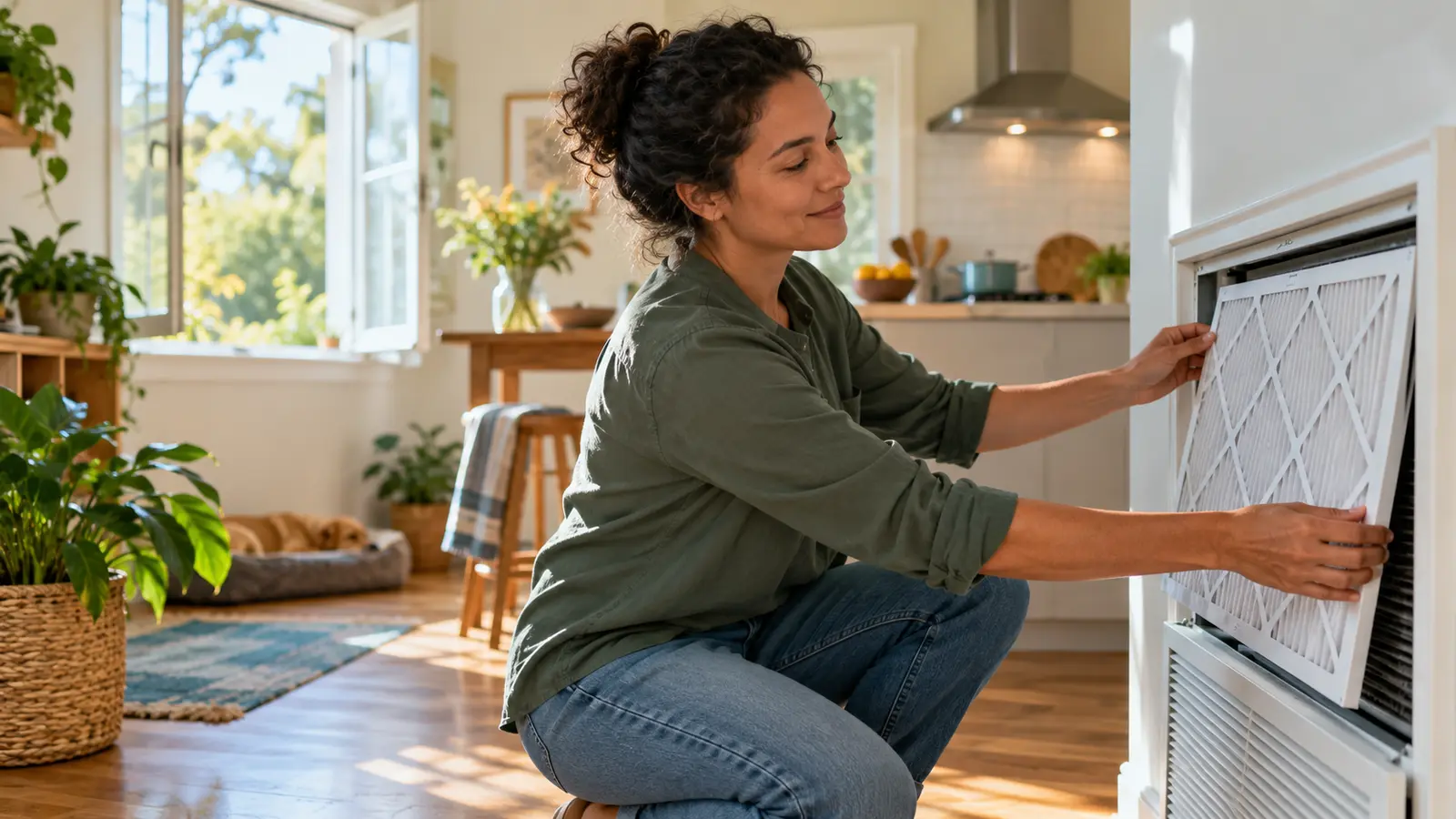
Replace HVAC filters according to the equipment and filter instructions. A more restrictive filter is not automatically compatible with every system; ask a qualified professional when changing filter type or efficiency.
For a portable air cleaner, the EPA’s air-cleaner and filter guidance recommends considering the room size and the unit’s ability to remove the pollutant of concern. Clean Air Delivery Rate can help compare particle removal for an appropriate room size. No air cleaner removes every pollutant.
Kitchen: use outdoor-venting exhaust when available, maintain appliances, clean grease buildup safely, and never ignore a gas or burning odor.
Bathroom: run exhaust ventilation, dry persistent wet surfaces, repair leaks, and investigate recurring moisture.
Bedroom: keep vents clear, wash bedding as appropriate, reduce dust-holding clutter if it causes difficulty, and place any air cleaner where instructions recommend.
Basement or crawlspace: look for water entry, drainage issues, stored chemicals, damaged materials, and pests. Do not enter an unsafe confined or flooded area.
Garage: keep engines off, store chemicals as labeled, and reduce air transfer into living areas where possible.
Renters can document leaks, ventilation failures, odors, or visible damage with dates and photos, then report them through the appropriate property process. Avoid making building alterations without permission. Local housing, health, or code offices may explain responsibilities and complaint routes.
Community centers, classrooms, and nonprofit spaces should assign responsibility for filter schedules, moisture reports, cleaning-product storage, exhaust operation, and accessible reporting. People should have a clear way to report a concern without having to diagnose it.
Leave the area and contact the appropriate emergency or utility service for a carbon-monoxide alarm, suspected gas leak, fire, or immediate danger. Follow official instructions rather than searching for a household fix.
Seek qualified building, environmental, or healthcare guidance when there is recurring water damage, suspected asbestos or lead disturbance, a major contamination event, persistent symptoms, or uncertainty about a combustion appliance. This article cannot identify a pollutant or determine whether a home is safe.
Explore UWP’s Healthy Living program, browse the Resources hub, or continue with the Community Wellness Journal.
Remove or reduce a known source when it is safe to do so. Ventilation and filtration may help, but neither replaces fixing a leak, stopping indoor smoke, or addressing unsafe combustion.
Only when outdoor air, weather, security, and household needs make it appropriate. Follow local guidance during smoke, high pollution, extreme temperatures, or other alerts.
Ordinary houseplants are not a substitute for source control, ventilation, or correctly sized filtration. They may also add moisture or soil-related concerns in some spaces.
A filter may capture some airborne particles, but it does not repair the moisture source or remove mold growing on materials.
Use a filter compatible with the system and follow manufacturer guidance. Ask a qualified HVAC professional before increasing filter resistance.
Document the condition, notify the property contact through the correct channel, keep copies, and use local housing or health resources for guidance when needed.
A carbon-monoxide alarm, suspected gas leak, fire, or immediate breathing danger requires urgent action and the appropriate emergency or utility service.
This article provides general wellness and home-safety education. It is not medical, environmental-testing, engineering, or legal advice for a specific building or person.