
Learn how to identify common household hazardous waste, find local disposal instructions, store items safely while you wait, and avoid dangerous mixing or dumping.
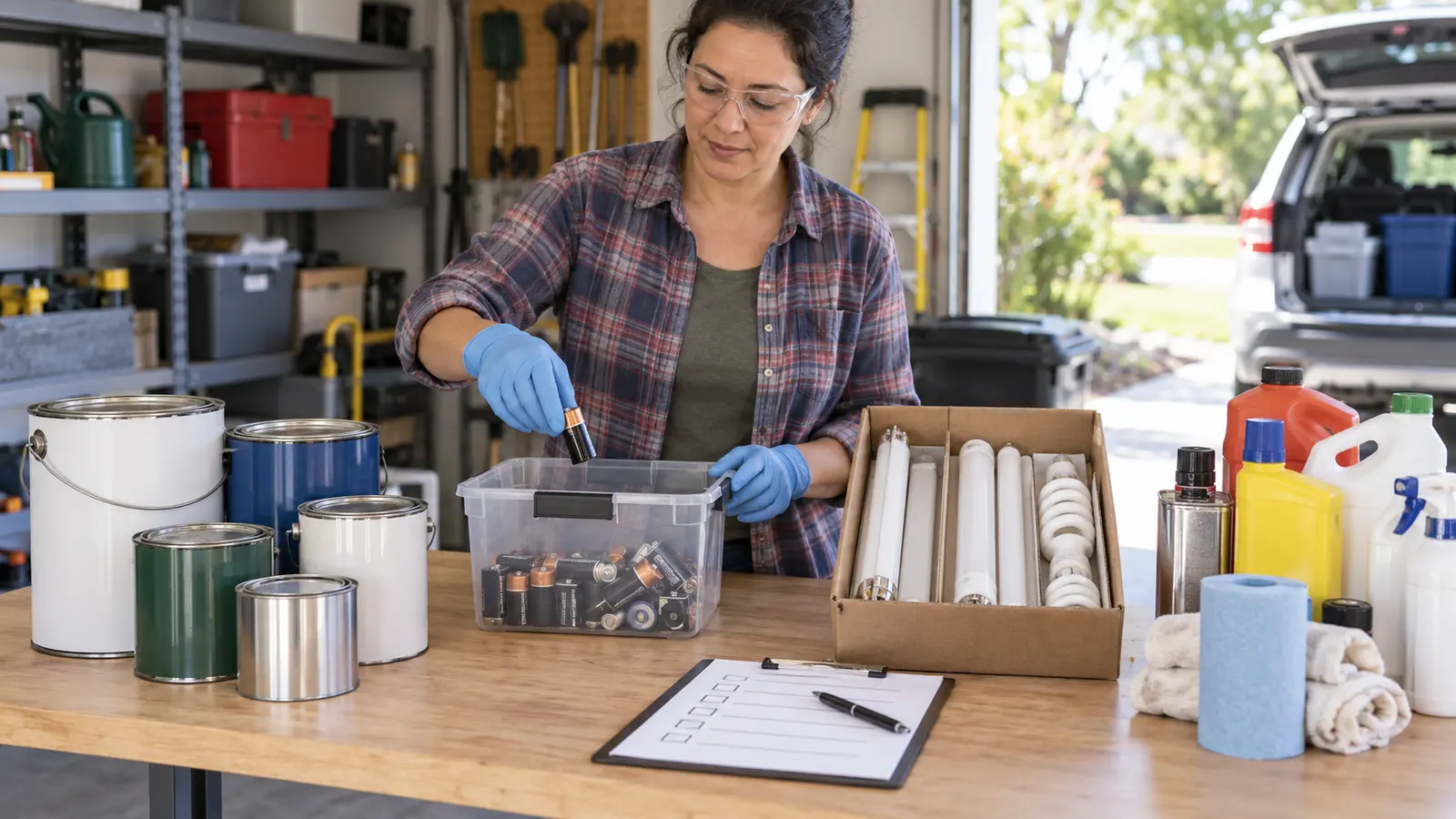
Paints, cleaners, oils, batteries, pesticides, fluorescent bulbs, and other household products can require special handling when they are no longer usable. The safest disposal option depends on the product and local rules. A city, county, solid-waste authority, retailer, or manufacturer may offer a permanent collection site, a scheduled event, or a take-back program.
This guide is for household planning, not business or industrial waste. It does not replace instructions from a product label, local waste agency, fire department, poison center, or emergency responder. If a container is leaking, bulging, badly corroded, producing fumes, hot, or involved in a spill or fire, keep people away and contact the appropriate local authority. Call 911 for an immediate emergency.
The U.S. Environmental Protection Agency describes household hazardous waste as leftover household products that can catch fire, react, explode, corrode, or be toxic. Common examples can include some paints and solvents, pesticides, automotive fluids, fuels, batteries, pool chemicals, and strong cleaners. A warning label can help identify hazards, but products and local rules vary. Read the original label and check your local program before deciding what belongs in a special collection.
The EPA's household hazardous waste guidance warns against pouring these materials down drains, onto the ground, into storm sewers, or into regular trash when local rules prohibit it. It also advises keeping products in original containers when possible and never mixing different wastes.
Walk through storage areas such as a garage, shed, utility room, or under-sink cabinet. Write down the product name, container condition, and approximate amount without smelling, testing, or opening an unknown product. Keep children and pets away. Do not combine small amounts to save space because incompatible products can react.
Look for disposal directions and hazard words on the original container. Separate items by category in your inventory: paint, battery, pesticide, cleaner, fuel, automotive fluid, bulb, electronics, or unknown. The category helps local staff explain the correct program. Never guess at the contents of an unlabeled container.
Search your city or county government website for household hazardous waste, solid waste, recycling, or environmental services. You can also call the agency listed on a recent waste bill or the local government information line. Ask whether the program accepts residents from your address, which items and container sizes it accepts, whether an appointment or proof of residency is needed, and how materials should be transported.
The EPA's common recyclables guide emphasizes that local programs differ and that items such as batteries, electronics, paint, and other products may need special collection. A search result for a private drop-off should be confirmed with the operator before travel.
Leave materials in their original labeled containers when possible. Close caps, keep containers upright, and store them away from heat, flames, direct sunlight, drains, food, and areas used by children or pets. Do not place incompatible products together. If the original container is deteriorating, do not repackage it on your own; call the local waste agency or fire department for instructions.
Follow the facility's exact rules. In general, secure closed containers upright in a sturdy box so they cannot tip, keep categories separated, protect them from passenger areas when local guidance allows, and go directly to the approved location. Do not smoke or create flames nearby. Never transport a container that is actively leaking, hot, pressurized, or producing fumes without professional direction.
Some retailers or manufacturers accept certain batteries, electronics, medicines, paint, or automotive products. Acceptance can change, so confirm the item, quantity, hours, and any fee before visiting. For unused medicines, follow official medication take-back guidance rather than placing them with household chemicals. The Journal's safe medication disposal guide explains that separate pathway.
Buy only the amount you can use, choose a less hazardous product when it meets the need, share usable material only when lawful and the recipient understands the label, and keep products in original containers. Do not mix leftovers or remove labels. A small inventory can prevent duplicate purchases and forgotten containers.
Batteries vary by chemistry and should not all be handled the same way. Ask the local program how to prepare terminals and which types it accepts. Electronics may be managed through a separate e-waste program because devices can contain materials that should not enter ordinary disposal streams. The World Health Organization e-waste overview explains why unsafe processing can release hazardous substances.
Latex paint, oil-based paint, gasoline, antifreeze, propane cylinders, pool chemicals, pesticides, and fluorescent lamps often have different destinations. Do not assume that an empty-looking container is harmless; residue may remain. Ask the receiving program how it defines empty and what it accepts.
Community groups can help residents find official information without collecting the material themselves. Share the agency name, accepted items, eligibility area, dates, access instructions, language options, and a phone number for questions. Use plain language and large, readable type. Never advertise an unofficial drop-off or ask volunteers to transport unknown chemicals.
For related education, visit Unified Wellness Project's Healthy Living, Community Outreach, and Resources pages. The Journal also offers guides to improving indoor air quality and planning a neighborhood cleanup. These resources support safer planning; local authorities remain the source for disposal requirements.
Check your city, county, or regional solid-waste website for a permanent facility, scheduled collection, or approved partner. Confirm residency rules, accepted items, quantities, appointments, and transport instructions before leaving home.
Search your local government's website using the phrases household hazardous waste, solid waste, or recycling. Prefer official agency information and call to confirm details because search listings and event schedules can be outdated.
Often it should not, but rules depend on the product and locality. Never pour it onto the ground or into a storm drain. Follow the label and official local instructions.
First identify whether it is latex or oil-based and check the label. Local programs and paint take-back options differ. Do not mix paint types or assume every can belongs in household trash.
Many need dedicated battery or e-waste collection. Identify the battery type or device, check the local program or verified retailer take-back, and follow instructions for terminal protection and transport.
Keep each product separate in its original labeled container and contact the local household hazardous waste program for acceptance and transport rules. Never mix them or pour them into a drain, onto soil, or into a storm sewer.
Do not open, smell, mix, or repackage it. Keep people and pets away and call the local waste agency or fire department for instructions. Call 911 if there is an immediate fire, fume, exposure, or spill emergency.