
Plan a manageable neighborhood cleanup with permission, a defined route, safe no-touch rules, accessible roles, and a confirmed disposal path.
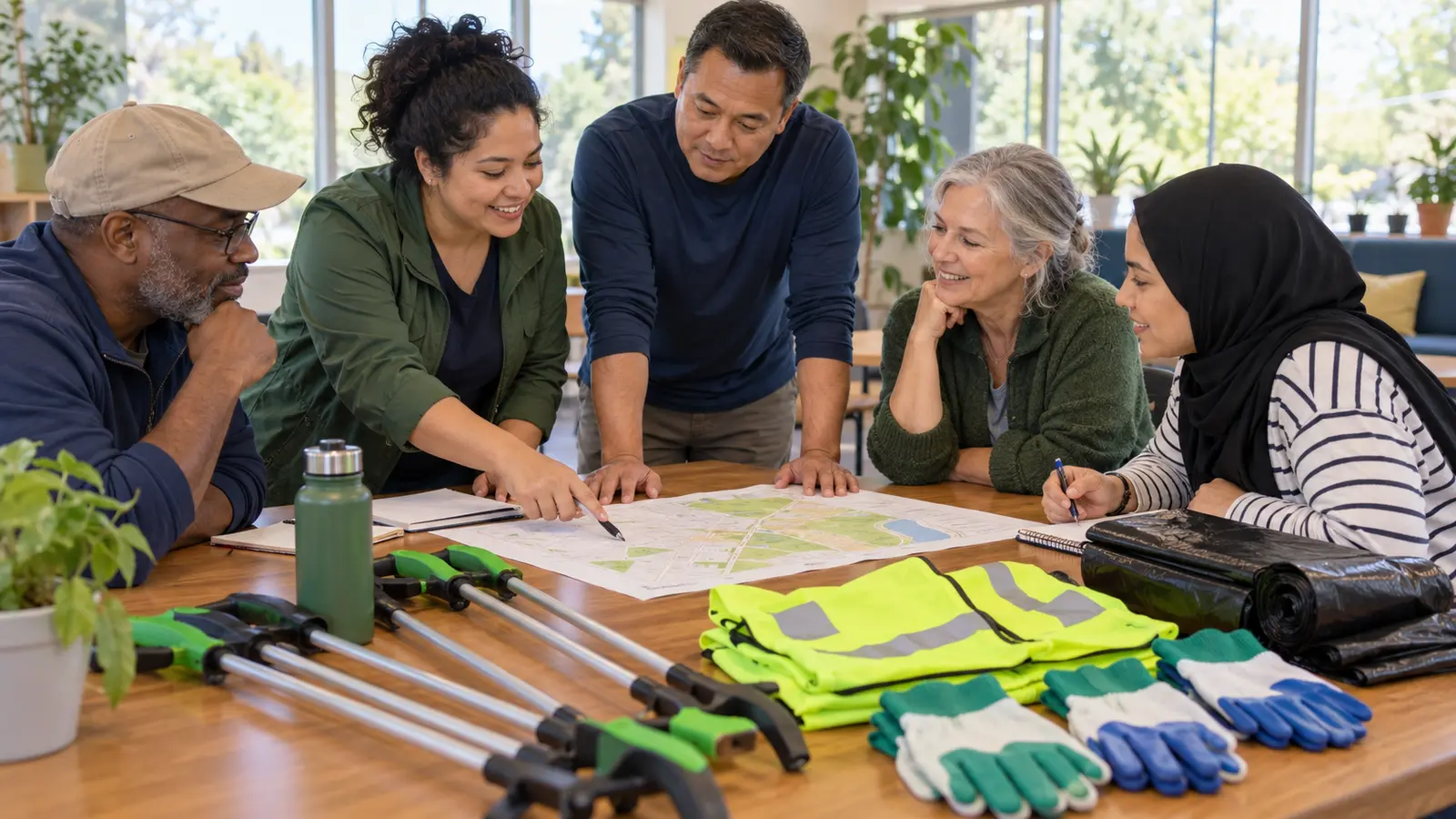
A neighborhood cleanup can bring people together around a visible, practical goal. It can also create traffic, waste-handling, accessibility, and disposal questions that should be answered before volunteers arrive. Good planning keeps the project manageable and gives people clear ways to participate.
This guide explains how to organize a neighborhood cleanup for routine litter in a public or shared space. It is not a plan for hazardous-material removal, illegal-dumping remediation, roadside work without authorization, or contaminated-site cleanup.
Start with a small area that a group can finish in the available time: a short neighborhood route, a community-space edge, a park entrance, or another location where cleanup is permitted. Avoid announcing a broad “clean the whole neighborhood” goal when the route, number of volunteers, and disposal capacity are still unknown.
Write the purpose in one sentence. For example: “Remove ordinary litter from the approved walking route and document anything volunteers should not handle.” This helps people understand both the goal and the boundary.
Identify who owns or manages the property. A city, county, homeowners association, school, park authority, business, or private owner may require permission, a permit, an agreement, or specific supervision. Roadside cleanups can have traffic-control and eligibility rules that do not apply to a neighborhood courtyard.
For state-maintained roads, use the current Virginia Department of Transportation process instead of creating an informal roadside event. VDOT’s Adopt-a-Highway information describes program commitments and supplied safety materials. Local roads and public spaces may use different agencies.
Ask the local solid-waste authority or property manager what it will accept, where full bags should go, whether pickup must be scheduled, and how recyclables, bulky items, tires, electronics, or yard waste are handled. Do not place collected bags beside a road or dumpster without confirmation.
Determine who is authorized to transport bags and whether a vehicle is suitable. Keep collected waste secured and separated from passengers. If the disposal site has fees, hours, residency rules, or quantity limits, confirm them in advance rather than promising free disposal.
Routine volunteers should not improvise with unknown liquids, chemicals, leaking containers, gas cylinders, batteries, ammunition, drug-related items, medical waste, dead animals, heavy objects, unstable piles, or anything that may be sharp, pressurized, toxic, or contaminated.
The EPA’s household hazardous-waste guidance explains that some products can ignite, react, explode, corrode, or cause toxic exposure and that local authorities set disposal options. Volunteers should leave suspicious items in place, keep others away, record the location from a safe distance, and notify the designated local agency or site manager.
Never ask a volunteer to pick up a needle or sharp object by hand. Establish a reporting process before the event and explain it during the briefing.
Walk or review the route with permission before the cleanup. Look for traffic speed, blind curves, narrow shoulders, construction, steep or uneven ground, water edges, poison ivy, unstable surfaces, poor lighting, limited shade, and a lack of accessible parking or restrooms.
If safe participation would require traffic control, specialized equipment, environmental assessment, or trained responders, choose another route or work through the responsible agency. A smaller safe area is a better community project than a larger risky one.
Offer useful roles beyond bending and carrying: welcome table, supply check-out, route documentation, hydration support, translation, photo consent, bag count, data entry, or follow-up communication. Review UWP’s accessible community-event planning guide for more inclusion questions.
A defined start and end time helps people decide whether the event fits their day. Choose a meeting point that is legal, visible, and accessible. Share parking, transit, restroom, shade, and weather information. Provide a contact for access questions and a cancellation method that does not depend on one social platform.
Plan a check-in, a safety briefing, work time, return time, and closeout. Make sure every volunteer knows where to return if they become separated from the group.
Gloves do not make hazardous items safe. Supplies should match the specific site, local rules, weather, and participant needs.
Your invitation should say who is organizing the cleanup, what location is covered, the time commitment, age or supervision requirements, access information, what is provided, what volunteers should bring, what will not be handled, and how weather changes will be communicated.
Do not imply that every person must perform the same physical task. Avoid public sign-up forms that ask for medical details. Instead, offer a private way to request an accommodation or alternative role.
Organizations can use UWP’s volunteer orientation checklist to shape a clear role briefing.
Assign one coordinator who can stop the activity. If an injury, severe weather, traffic danger, or unknown substance appears, pause the cleanup and use the planned response.
Virginia DEQ’s nonpoint-source guidance encourages keeping litter and debris out of street gutters and storm drains because those outlets can drain to lakes, streams, rivers, and wetlands. Do not wash debris into a gutter, move material into a waterway, or empty unknown liquids.
If the event is near a stream or shoreline, use a program or partner with appropriate site knowledge. Water access, unstable banks, wildlife, and contaminated sediment require additional planning.
Count volunteers back in, check the route without re-entering unsafe areas, secure tools, and confirm every bag follows the disposal plan. Record routine information such as the section completed, approximate bag count, bulky or hazardous items left for official follow-up, supply problems, and access barriers.
Before-and-after photos can be useful when taken from safe public locations and only with consent for recognizable people. Do not publish addresses, vehicle tags, faces, or sensitive information unnecessarily.
Ask volunteers and nearby residents what worked. A repeat cleanup may help, but recurring litter can also point to missing bins, confusing collection rules, illegal dumping, or a need for agency action. Share patterns factually with the property manager or responsible public office.
Connect with UWP’s Community Outreach program, explore ways to Volunteer or Get Involved, and browse the Resources hub for more community-planning tools.
Often, yes. Confirm with the owner or managing agency. Public roads, parks, schools, waterways, and private property can have different permission, insurance, supervision, and disposal requirements.
Typical supplies include appropriate gloves, grabbers, approved bags, route information, high-visibility clothing when required, water, weather protection, first-aid basics, and a clear no-touch list.
Leave needles, unknown chemicals, leaking containers, batteries, gas cylinders, ammunition, medical waste, dead animals, unstable piles, heavy objects, and other suspicious or hazardous items for the proper authority.
A short, defined session is often easier to supervise and more accessible. Set a finish time based on the route, weather, volunteer capacity, and disposal plan rather than an arbitrary duration.
That depends on the location, organizer, permission, supervision, and task. Provide age-appropriate boundaries and never place children near traffic, water hazards, sharp objects, or unknown waste.
Only if the local program accepts the materials and safe sorting is practical. Dirty, broken, sharp, or mixed items may not be recyclable. Follow local rules.
Do not move or open the material. Keep people away, document the location from a safe distance, and contact the property manager or the designated local reporting agency.
This article provides general community-planning and safety information. Local laws, property rules, traffic requirements, weather, and waste conditions vary. Use the responsible local agency for site-specific direction and call emergency services for immediate danger.