
Create and practice a home fire escape plan with two ways out, a meeting place, working alarms, and realistic support for every household member.
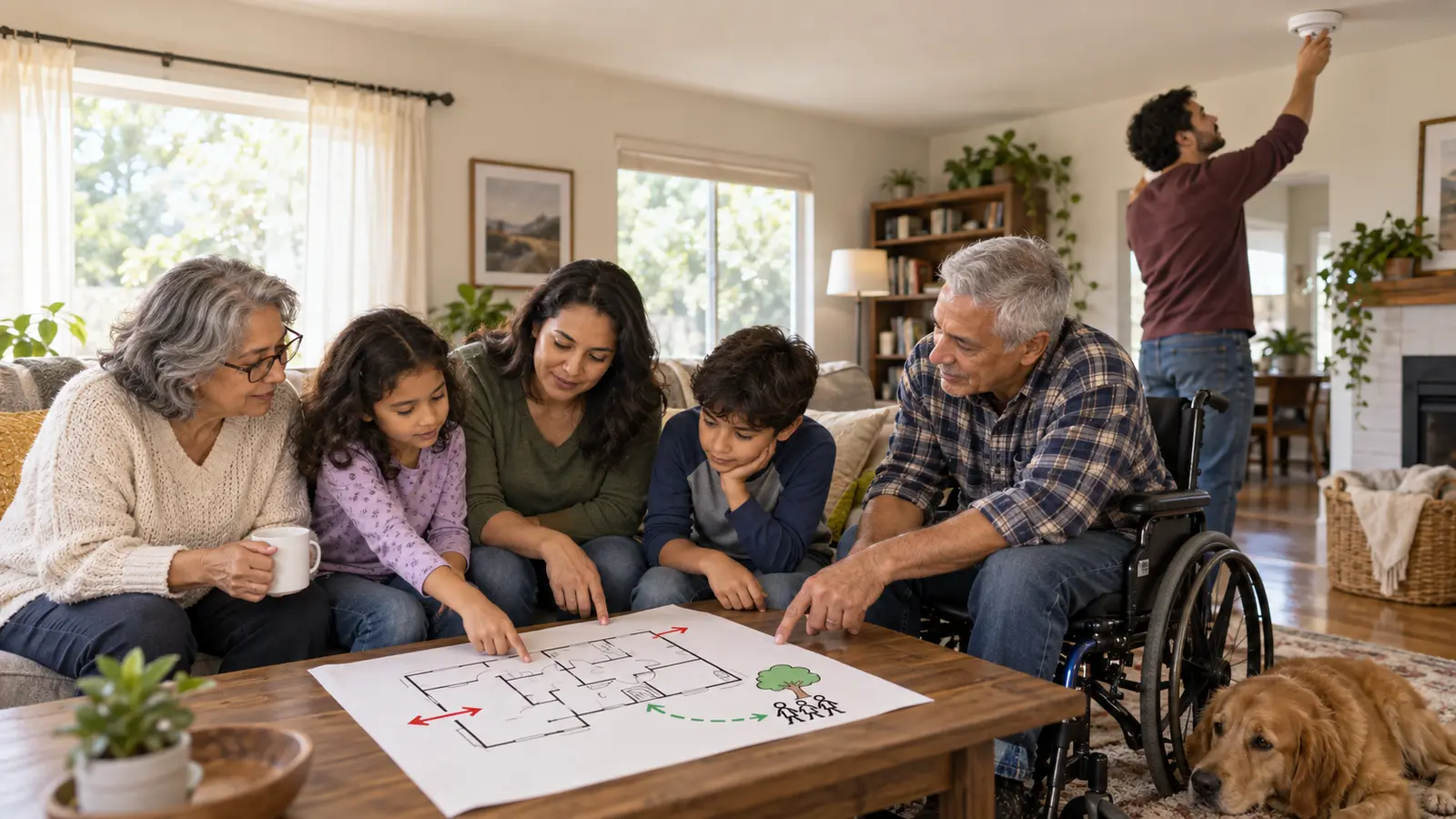
A fire escape plan is a short, shared answer to a high-pressure question: how will everyone leave the home and meet safely if a smoke alarm sounds? The best plan is specific enough to use, simple enough to remember, and practiced under calm conditions before an emergency.
This guide focuses on home planning, not firefighting. If a fire or smoke alarm occurs, get outside, stay outside, and call emergency services from a safe location. Never delay your exit to collect belongings, investigate the source, or return for a person, pet, or item. Tell firefighters if someone may still be inside.
The U.S. Fire Administration's home fire escape guidance recommends drawing the home, identifying two ways out of every room, keeping doors and windows clear, choosing an outdoor meeting place, and practicing with everyone in the household. A complete plan also accounts for smoke alarms, children, older adults, disabilities, pets, overnight guests, and the actual doors, stairs, windows, and locks in the home.
Do not rely on a diagram alone. Walk each route and check whether it can really be used. A window shown as an exit may be painted shut, too high, blocked by furniture, or difficult for someone to open. A hallway may become narrow when mobility equipment, boxes, or shoes are left in the path. The plan should reflect the home as it is today.
Sketch each floor, including bedrooms, common rooms, doors, windows, stairs, porches, and the primary entrance. The drawing does not need to be to scale. Use clear symbols or colors that everyone understands. If written instructions are a barrier, add pictures and practice the route physically.
Apartment and condominium residents should also mark the nearest exit stairs and know the building's posted procedures. Never plan to use an elevator during a fire unless firefighters direct you to do so.
The first route may be the room door and the second may be another door or a window. Trace where each route leads all the way outside. Check that keys, locks, security bars, and window hardware can be operated quickly without creating another household safety risk. Ask the local fire department's nonemergency line about questions specific to your building rather than improvising equipment or escape methods.
Keep exit paths clear. Do not store boxes, furniture, bicycles, or charging equipment in a route people may need. If a household member uses a wheelchair, walker, cane, service animal, or other equipment, include it in the walk-through and identify where assistance may be needed.
Select a fixed, easy-to-describe location a safe distance from the home, such as a particular tree, mailbox, sign, or neighbor's driveway. Avoid a location that requires crossing a busy street. Everyone should go directly there and remain there so one person can quickly tell firefighters who is accounted for.
Do not use a vague instruction such as “meet out front.” In darkness, smoke, noise, or bad weather, people may stand in different places and mistakenly believe someone is missing.
The U.S. Fire Administration's smoke-alarm guidance recommends alarms inside and outside sleeping areas and on every level of the home. Follow the manufacturer's instructions and local requirements for placement, testing, batteries, and replacement.
Plan for how each person will receive the alert. Standard sound may not work for someone who is deaf or hard of hearing; available alerting devices can include strobes or bed-shaker systems. A closed bedroom door, headphones, medication, or deep sleep can also affect response. Ask a local fire-safety professional about appropriate alarm options for the household.
Children, older adults, people with disabilities, and some visitors may need help. Decide who will assist whom and identify a backup when practical. The support plan must not depend on someone crossing smoke, re-entering the building, or waiting in danger.
For a person who cannot use a primary route independently, seek individualized planning support from the local fire department or building manager before an emergency. Describe the building, floor, mobility or communication needs, and available exits. Keep emergency contact and building information current, but do not post private health details where they are unnecessary.
Teach children that a smoke alarm means leave immediately and meet outside. They should not hide, return for toys, or wait for a pet. Adults should know which sleeping areas need assistance, but no one should re-enter a burning building.
Include pets in prevention planning by keeping leashes or carriers where they do not block an exit and by using identification information that is current. During an actual fire, human evacuation comes first. Tell firefighters about animals that may remain inside.
Show overnight guests the exits and meeting place when they arrive. A short explanation is especially useful in a home with unfamiliar locks, multiple levels, or an accessible route that differs from the main stairs.
Use the smoke alarm's test button to begin a planned drill, then have everyone follow a route to the meeting place. Practice in daylight first. Later, consider a calm nighttime practice without creating fall hazards or panic. Never use real smoke, flames, blocked exits, or surprise tactics.
Time can reveal friction, but a drill is not a race. Focus on whether everyone recognized the signal, used a safe route, reached the same meeting place, and knew to stay outside. Revise the plan after a move, renovation, new household member, mobility change, or change in sleeping arrangements.
Unified Wellness Project's Healthy Living and Resources pages support practical wellness learning. For related planning, read the Journal's accessible emergency preparedness guide and carbon monoxide safety checklist.
It is a household plan showing how each person will recognize an alert, leave by a safe route, meet at one outdoor location, stay outside, and contact emergency services.
Draw every level, mark two ways out of each room, clear the routes, choose one outdoor meeting place, plan needed assistance, confirm alarms can alert everyone, and practice together.
Smoke or fire may block the usual door or hallway. A second usable route gives the household another option, but it must be checked in advance and appropriate for the person using it.
Practice regularly and whenever the household or home changes. U.S. fire-safety campaigns commonly recommend practicing at least twice a year; local fire officials can provide guidance for your building and household.
Choose a fixed, memorable place a safe distance from the home that does not require crossing traffic, such as a specific tree, sign, or neighbor's driveway.
Do not open a door that feels hot or has smoke coming around it. Use the planned second exit if it is safe. Get outside, stay outside, and call emergency services.
Know the building's alarm and evacuation procedures, locate exit stairs, count doors between the unit and exits if helpful, close the unit door when leaving, avoid elevators unless firefighters direct otherwise, and meet at the chosen outdoor location.
Walk from each sleeping area to the outside today. Identify the primary route, the second route, and one fixed meeting place. If a route is blocked or an alarm is missing or not working, address that gap before scheduling a drill.
This article provides general fire-safety and preparedness education. It does not replace instructions from emergency responders, your local fire department, building officials, alarm manufacturers, or other qualified professionals.