Use a calm household checklist during a boil water advisory, including drinking, cooking, brushing teeth, dishes, bathing, pets, and the all-clear.
A boil water advisory changes ordinary routines quickly. Drinking, cooking, brushing teeth, making ice, washing dishes, preparing infant formula, and giving water to pets all need attention. The most important first step is to read the notice from your water utility or local government, because the affected area, reason, start time, and exact instructions can differ.
This household checklist explains common guidance for a boil water advisory caused by possible germs. It does not apply automatically to a do not drink or do not use advisory. Those notices may involve chemicals, toxins, or other hazards that boiling will not correct. Follow the words in the official notice, not a social-media summary or advice from a different community.
Check the official website, alert system, social account, or phone line for your water utility, city, county, or health department. Confirm your address is in the affected service area and note the type of advisory. If you rent or live in a multi-unit building, contact the property manager as well, but rely on the issuing authority for the safety instructions and all-clear.
The CDC's drinking-water advisory overview describes three different notices. A boil water advisory directs people to boil tap water before certain uses. A do not drink advisory calls for commercially bottled water for drinking and cooking. A do not use advisory means tap water should not be used for any purpose while the notice remains active.
Do not use water or ice from a refrigerator, freezer, beverage machine, or other appliance connected to the water line during the advisory. Empty existing ice if the official notice directs you to do so, and prevent others from using the dispenser. A home pitcher or refrigerator filter does not replace boiling during a boil water advisory.
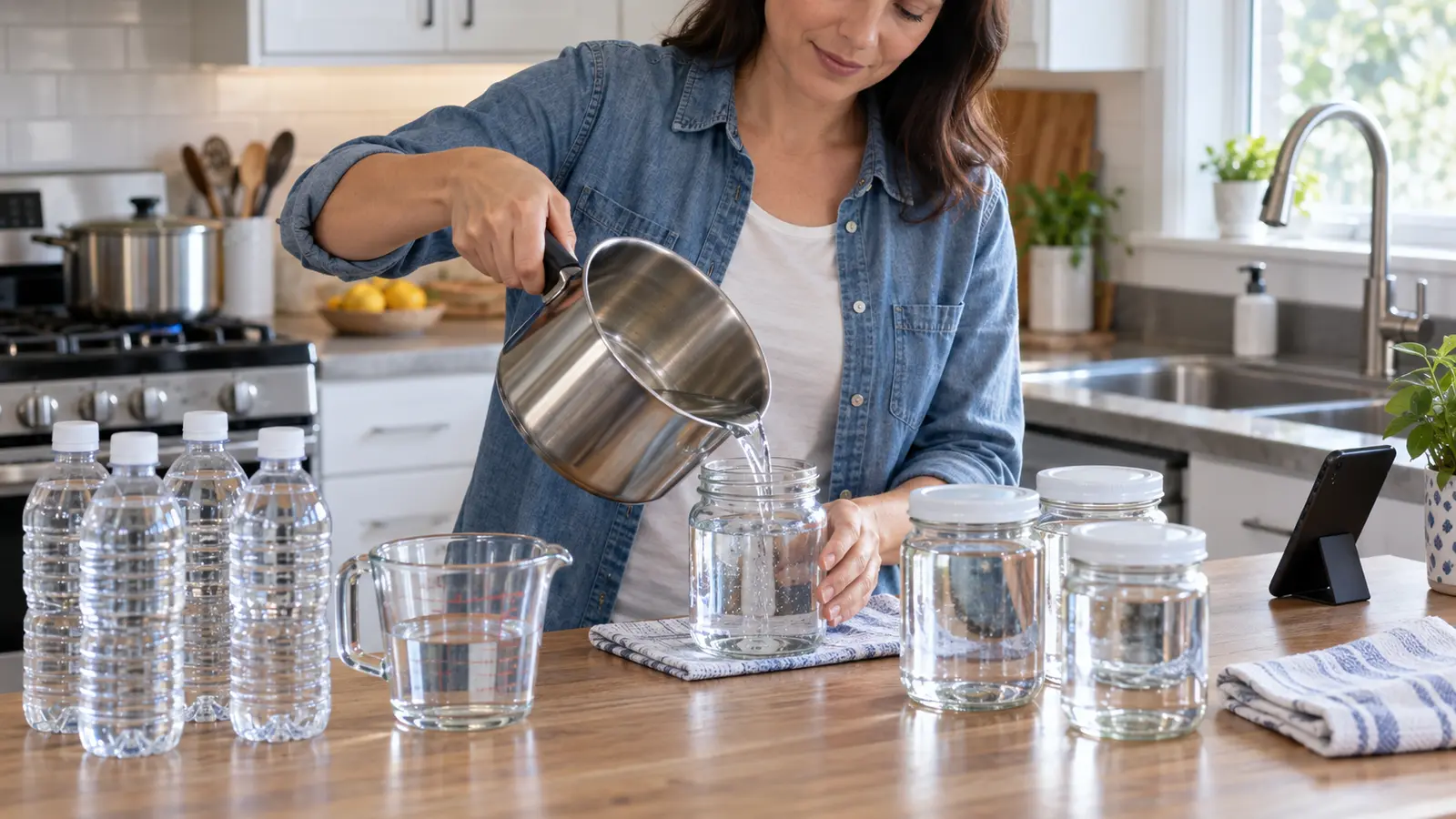
Use commercially bottled water when available, or bring tap water to a full rolling boil for one minute. At elevations above 6,500 feet, CDC guidance says to boil for three minutes. Allow the water to cool before handling or using it. Keep children away from hot pots and do not pour boiling water directly into a container that could crack, melt, or cause a burn.
Store cooled water in a clean, sanitized container with a tight cover. Label it in a way your household understands and keep it separate from untreated tap water. Prepare manageable amounts rather than lifting a heavy pot. If you cannot safely boil water because of mobility, power, equipment, or other access barriers, contact the issuing authority or local emergency-information line for available instructions and resources.
Use commercially bottled or properly boiled and cooled water for drinking, making beverages, cooking, washing produce, brushing teeth, making ice, and preparing food. Follow the advisory's instructions for infant feeding. CDC guidance notes that ready-to-use formula may be the preferred option when formula is needed during a boil water advisory. Ask a qualified healthcare professional or local public-health authority about individual feeding needs.
Disposable plates, cups, and utensils can reduce dishwashing needs when they are available and practical. The CDC says a dishwasher is generally safe if it has a sanitizing cycle or reaches a final rinse temperature of at least 150°F (66°C); check the appliance manual or manufacturer information rather than guessing.
For hand washing dishes, follow the issuing authority's directions. CDC's general guidance describes washing and rinsing as usual with hot water, then soaking rinsed dishes for at least one minute in a separate basin containing one teaspoon of unscented household liquid bleach per gallon of warm water, followed by complete air drying. Do not mix bleach with ammonia, vinegar, acids, or other cleaners, and use only a product and concentration permitted by the official instructions.
During many boil water advisories, showering and bathing are allowed if no water is swallowed. Use extra caution with babies, young children, and anyone who may have difficulty avoiding swallowing water; a sponge bath may be safer. Follow local advice for open wounds, recent surgery, or specific health conditions.
In many cases, tap water and soap can still be used for handwashing during a boil water advisory. The official notice may give different instructions. When soap and safe running water are not available, follow public-health guidance for an appropriate hand-sanitizer option. For washable toys and food-contact surfaces, use the water or disinfection method specified by local officials.
Give pets commercially bottled water or boiled water that has cooled. Do not assume an animal can safely drink water that people have been told to avoid. Laundry is generally allowed during a boil water advisory, but again, the local notice controls. Gardens and houseplants may often be watered with tap water; check the advisory when edible crops or unusual contamination concerns are involved.
An advisory does not end because the water looks clear, pressure returns, a neighbor says it is over, or a certain number of hours has passed. Continue following the instructions until the issuing authority officially lifts the notice for your service area. Save the notice or alert source so you can check updates without relying on forwarded screenshots.
Follow the water utility's post-advisory steps. These may include flushing household pipes, clearing faucets, discarding ice, cleaning ice makers, changing filters, or running connected appliances. The correct sequence and flushing time depend on the system and the event. Do not invent a flushing routine from a generic checklist when the utility provides specific directions.
Clean and sanitize containers used to store water before putting them away. Note which supplies were missing, difficult to carry, or hard to use. A small improvement—such as keeping clean covered containers, a manual can opener, or printed utility contact information—can make the next interruption easier to manage.
Alerts work only when people can receive and understand them. Households and community groups can identify at least two official information channels, including a phone option when possible. Share the exact affected area, notice type, issuing authority, start time, instructions, and update link. Add language access, large print, captions, or relay information based on community needs.
Do not create an unofficial water-distribution site or promise supplies. Community organizations can instead help people locate verified public information, identify transportation or delivery barriers, and connect with the responsible local agency. Unified Wellness Project's Community Outreach, Healthy Living, and Resources pages support broader wellness learning. The Journal's accessible emergency-planning guide and mutual aid planning guide offer related, non-emergency-service frameworks.
It is an official notice that tap water may contain harmful germs and should be boiled or replaced with commercially bottled water for specified uses. Read the notice carefully because it is different from do not drink and do not use advisories.
CDC guidance says to bring water to a full rolling boil for one minute, or three minutes above 6,500 feet. Let it cool before use. Follow a local notice if it provides more specific instructions.
Often yes, as long as you do not swallow the water, but follow the local notice. Use extra caution for babies, young children, and anyone who may have difficulty avoiding ingestion.
Yes, with the method approved in the advisory. A sanitizing dishwasher cycle may be acceptable, and hand-washed dishes may need a separate sanitizing step. Follow official measurements and never mix cleaning chemicals.
Use commercially bottled water or tap water that has been properly boiled and cooled. Do not use untreated tap water for brushing teeth while the advisory remains in effect.
Laundry is generally allowed during a boil water advisory, but check the official notice because conditions and instructions can vary.
There is no fixed duration. It lasts until the issuing authority completes the required evaluation and officially lifts the notice for your area. Keep following the guidance until that confirmation arrives.
Save the official contact page for your water provider and write down a second way to receive alerts. Then identify one clean, covered container your household could safely lift and use if a boil water advisory begins.
This article provides general wellness and emergency-preparedness education. It is not medical advice and does not replace instructions from your water utility, public-health agency, emergency officials, or healthcare professional.