A practical, accessible guide to building a neighbor-led mutual aid network with shared expectations, privacy safeguards, clear boundaries, and sustainable roles.
A mutual aid network is a group of people who choose to share practical support, information, skills, or resources. It can be as small as neighbors who coordinate rides and grocery pickups or as broad as a community group that connects people with food, weather information, and local services. The goal is reciprocal, relationship-based support rather than a one-way transaction.
A useful network starts small, listens carefully, and sets boundaries before requests begin. It should not replace emergency services, trained medical care, social services, or professional crisis response. This guide focuses on low-risk community coordination and does not claim that Unified Wellness Project operates a mutual aid program.
Write one sentence that explains who the network is for, what kinds of support it coordinates, and what it does not do. A block, apartment building, faith community, school community, or existing volunteer group can be a workable starting point. A defined area makes it easier to learn which requests recur, which services already exist, and how volunteers can participate without overcommitting.
Before building a new structure, ask what neighbors already use. Informal phone trees, building chats, congregational care groups, and local organizations may already meet part of the need. The Journal's community needs assessment guide can help a group listen before deciding what to offer.
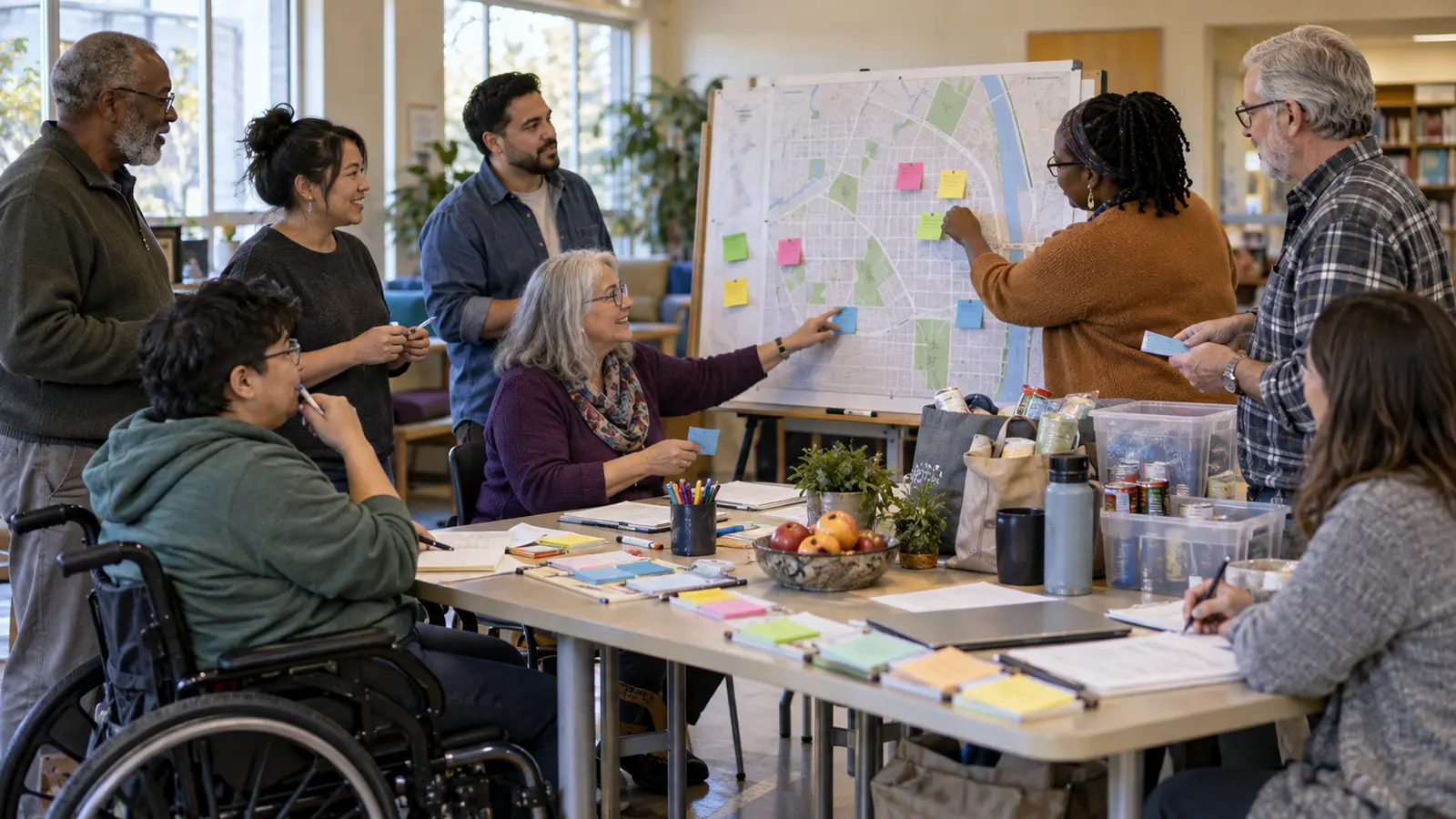
Bring together people with different schedules, ages, languages, access needs, and knowledge of the community. Start with a short meeting and a narrow decision: what problem are we trying to address together? Avoid asking anyone to speak for an entire community. Make participation possible by offering remote or phone options, plain-language materials, and a way to contribute outside a meeting.
Ask what people can share safely: a weekly check-in, translation, a ride during daytime hours, help comparing public resources, a meal, basic technology support, or knowledge of an accessible route. Do not collect sensitive health, immigration, financial, or identity information unless it is truly necessary and you have a clear consent and protection plan. Record the minimum information needed to coordinate a request.
Create a short scope list. Low-risk examples may include friendly calls, doorstep supply drop-offs, help finding official information, or rides arranged under agreed rules. Exclusions might include handling medication, giving medical advice, entering unsafe buildings, transporting someone without appropriate safeguards, managing large sums of money, or responding to violence, fire, or medical emergencies. Clear limits protect both the person requesting help and the volunteer.
No single platform works for everyone. Offer at least two ways to request or offer support, such as a phone number plus a simple online form. Ask about language, large print, captions, relay service, and other communication preferences. The U.S. Department of Justice effective communication guide explains why communication methods should match the person's needs. Avoid posting a person's request in a public group without permission.
Document what happens when a request arrives: who reviews it, how urgent needs are recognized, how a volunteer is matched, what information is shared, how completion is confirmed, and when the request is closed. Use a shared role rather than placing every decision on one person. Keep a separate list of emergency and professional resources so coordinators can redirect requests outside the network's scope.
Tell people what information will be collected, who can see it, how long it will be kept, and how they can ask for deletion. Do not require a personal story to receive ordinary support. If money or donated goods are involved, publish basic rules, use more than one person for oversight, keep receipts, and report totals in a way that protects individual privacy. Never promise tax deductibility unless a qualified organization has confirmed it.
A brief orientation should cover the network's purpose, boundaries, respectful communication, privacy, accessibility, safety, escalation, and how to decline a task. Volunteers need permission to say no without penalty. Use the Journal's volunteer orientation guide to build a consistent starting point. For emergency preparedness roles, connect with trained programs. FEMA's Community Emergency Response Team information explains how CERT training prepares volunteers for defined disaster roles.
Pilot the system with a small number of low-risk requests. After each one, ask whether communication was clear, consent was respected, the match was realistic, and the person received what had been agreed. Review patterns monthly at first. Pause categories that exceed the group's capacity. Sustainable mutual aid depends on honest limits, shared leadership, rest, and reliable handoffs.
A network can help neighbors share official alerts, make household plans, and identify who may want a check-in. It should direct life-threatening situations to 911 and follow instructions from local authorities. Ready.gov's planning guidance offers a starting point for communication, shelter, evacuation, and household needs. Store backup contact information securely and practice what to do if the usual platform or power is unavailable.
People should be able to receive help without having to prove worthiness, disclose unnecessary details, or promise an equal return. Reciprocity can happen over time and in different forms. Someone who needs a ride today might share local knowledge later; another person may participate only by receiving support. Avoid labels that reduce people to needs. Ask, listen, confirm, and respect a refusal.
For broader community work, explore Unified Wellness Project's Community Outreach, Volunteer, Get Involved, Partnerships, and Resources pages. These links offer ways to learn and connect; they do not guarantee that a specific mutual aid request can be fulfilled.
It is a group of people who voluntarily coordinate practical support, information, skills, or resources through reciprocal relationships. It is different from an emergency service and may be informal or organized.
Begin with a small planning group, a defined community, one clear purpose, a short list of safe request types, two accessible communication options, and written privacy and boundary practices. Pilot before expanding.
There is no required number. A dependable group of three to six coordinators can test a small process, provided roles are shared and the network does not accept more requests than it can responsibly handle.
Use written rules, shared oversight, receipts, basic reporting, spending limits, and clear separation between personal and group funds. Seek qualified legal or tax guidance before fundraising or making claims about donations.
Collect only what is necessary, explain consent, restrict access, avoid public details, set a deletion schedule, and never require sensitive personal stories for ordinary support. Use secure tools appropriate to the information.
They should call 911 for life-threatening situations and follow local authorities. People taking on disaster-response roles should use appropriate training, such as local emergency management or CERT opportunities.
Offer phone and online options, ask about communication preferences, use plain language, plan for mobility and sensory access, provide language support when possible, and include disabled community members in decisions from the beginning.