
Clear information • practical skills • accessible participation

Health Literacy Programs in Virginia

Health information is only useful when people can find it, understand it, and use it for an informed next step. Unified Wellness Project helps Virginia organizations think through accessible, nonclinical health literacy education built around plain language, trustworthy sources, and the real questions a community wants answered.

Important boundary: UWP provides general education and community-resource guidance, not diagnosis, treatment, medical advice, or a promise of a program or health result.

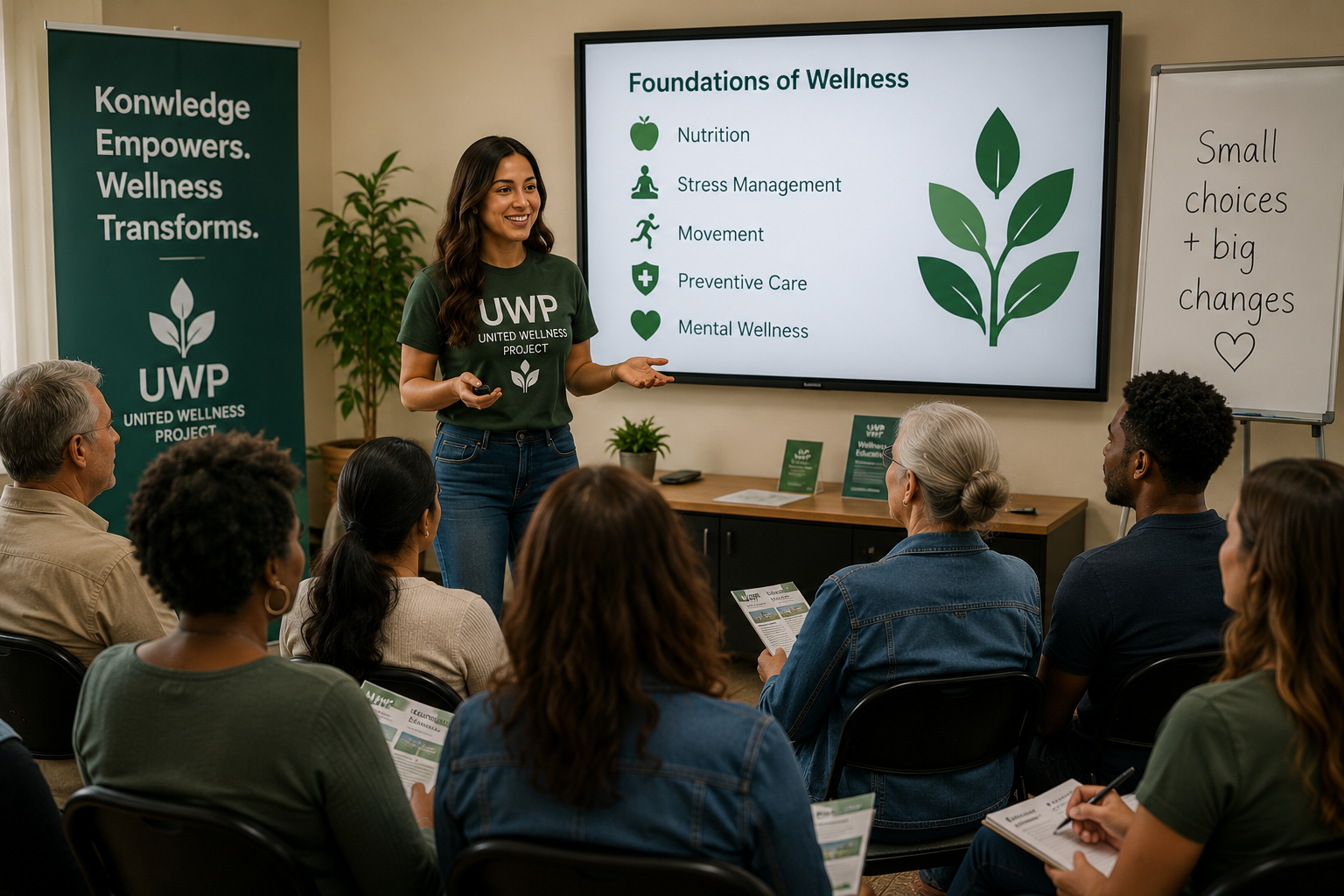
Wellness educator sharing plain-language health information with a multigenerational community group
A useful session starts with what participants need to know, not with how much information an organization wants to present.

Find

Recognize reliable sources and know where to look for help.

Understand

Turn complex terms and instructions into clear, usable meaning.

Use

Prepare questions, compare options, and choose a reasonable next step.

A shared responsibility

Health literacy is more than simplifying a handout

Healthy People 2030 describes both personal health literacy and organizational health literacy. The first concerns a person’s ability to find, understand, and use information and services. The second asks organizations to make that process possible. A strong program works on both sides: it builds practical skills while making the information, environment, and next steps easier to navigate.

Start with community questions

Listen before choosing the lesson. A library group, family-serving organization, school community, faith community, workplace, or neighborhood coalition may have different questions, language preferences, access needs, and trusted messengers.

Reduce avoidable complexity

Use familiar words, put the main point first, organize information in short sections, explain unavoidable terms, and make the action step specific. Clear communication respects everyone; it is not a sign that content lacks substance.

Support informed choice

Education should help people ask better questions and locate appropriate resources. It should not pressure participants, make individual medical judgments, or treat attendance as proof of a health outcome.

Useful topic pathways

What a health literacy program can help people practice

The most useful scope is usually narrower than “everything people should know about health.” A planning conversation can identify one audience, one educational purpose, and a manageable set of skills.

Finding reliable information

Compare the author, date, evidence, purpose, and source of an online claim. Learn where government health agencies, local public resources, and qualified professionals fit. UWP’s Journal guide on finding reliable health information online offers a practical starting point.

Preparing for a conversation

Write down the main question, bring a current list of medicines or instructions when appropriate, ask what unfamiliar words mean, and repeat back the next step in your own words. These are educational communication skills, not clinical recommendations.

Understanding prevention resources

Practice reading a public-information page, noticing who it is for, identifying what action is suggested, and finding where to ask questions. Keep general prevention education separate from individual screening or treatment decisions.

Navigating community resources

Map what a resource does, who may use it, what information it requests, whether language or communication support is available, and how to confirm current details. Avoid presenting a directory entry as an endorsement or guarantee.

Digital health literacy

Help participants identify official websites, recognize sponsored content, protect personal information, use accessibility features, and pause before sharing a claim. Digital skills should be taught without assuming everyone owns a device or has dependable broadband.

Plain-language materials

Review a flyer, slide, form, or resource page for its main message, reading order, headings, link wording, contrast, and next step. The companion Journal article on improving health literacy in a community can support the discussion.

A practical planning framework

Seven steps for planning health literacy education

Listen and define the audience

Ask potential participants and community-facing staff what is confusing, what decisions feel difficult, what formats work, and what barriers appear repeatedly. Record whose perspective has not yet been heard.

Choose one educational purpose

Write a purpose participants can recognize, such as “practice checking the source and date of an online health claim.” Avoid broad promises to improve health, change behavior, or solve access barriers through one activity.

Use plain language and layers

Lead with the essential message, then add optional detail. Use short headings, familiar words, examples, lists, and clear links. Explain technical terms when they are necessary rather than replacing one unfamiliar term with another.

Plan access from the beginning

Consider physical access, effective communication, readable formats, captions, interpretation, sensory needs, transportation, timing, technology, and more than one way to participate. Review UWP’s accessibility commitment and name an access contact before the activity.

Select current primary sources

Prefer the agency or organization responsible for the guidance, check the update date, and save the exact source link. Separate established guidance from local practice, opinion, or a still-developing finding.

Facilitate within clear boundaries

State that the session is educational. Invite questions without turning group discussion into individual medical advice. Have a plan for referring personal clinical questions to an appropriately qualified professional or official resource.

Test usefulness and revise

Ask participants to identify the main message or show where they would find the next step. Collect feedback on clarity, access, relevance, and unanswered questions. Use what you learn to revise the material before expanding it.

Roles and next steps

Build a clear, limited, community-centered scope

A health literacy effort can involve educators, librarians, community organizations, accessibility specialists, public agencies, and qualified health professionals. Before inviting participants, write down who owns the content, who answers access questions, who checks sources, what the facilitator will not do, and where individual questions go.

For organizations

Bring the audience, purpose, existing materials, preferred format, access needs, timing, and any required review process. If you are exploring a broader relationship, review partnership information.

For UWP inquiries

Use the contact form to describe the audience, educational need, access considerations, and desired next step. UWP can review whether a conversation fits its mission; an inquiry does not guarantee availability, a service, or a partnership.

Frequently asked questions

Questions about health literacy programs

What is a health literacy program?

A health literacy program is an organized educational effort that helps people find, understand, evaluate, and use health information or services. It may also help an organization make its own information and processes clearer. UWP’s role is limited to accessible, nonclinical education and planning.

Why is health literacy important?

People regularly encounter instructions, forms, websites, labels, public guidance, and choices that can be difficult to understand. Health literacy education can build practical question-asking and information-evaluation skills, while organizational health literacy can reduce avoidable complexity. Neither guarantees a particular health outcome.

How do you start a health literacy program?

Start by listening to the intended audience, choosing one educational purpose, defining nonclinical boundaries, planning access, selecting current primary sources, testing a manageable activity, and revising it from participant feedback before expanding.

Who should deliver health literacy education?

The right facilitator depends on the topic and setting. Community educators, librarians, accessibility specialists, public-information staff, and qualified health professionals may contribute different expertise. Roles, source review, referral boundaries, and responsibility for individual questions should be clear.

How can a health literacy program be evaluated?

Use measures that match the educational purpose: whether participants can identify the main message, locate a source, explain a next step, or report that the material was clear and accessible. Do not treat attendance, satisfaction, or a single activity as proof of a medical or long-term health result.

How can health literacy education be accessible?

Ask participants what they need and plan for physical access, effective communication, readable formats, captions or interpretation, sensory needs, transportation, timing, technology, and multiple ways to participate. Plain language helps, but it does not replace individualized communication access.

Can a Virginia organization contact Unified Wellness Project about health literacy education?

Yes. A Virginia community organization may contact UWP to discuss an educational need, audience, access considerations, roles, and mission fit. A conversation or inquiry does not guarantee availability, a specific service, funding, or a formal partnership.
Start with one useful question

Plan a clearer path from information to action

Tell UWP who the education is for, what people need to understand or practice, and what would make participation accessible. We can review whether a next conversation fits the mission.

Contact Unified Wellness Project