
Use the UV Index, shade, protective clothing, hats, sunglasses, and properly applied sunscreen to build a repeatable sun-safety routine.
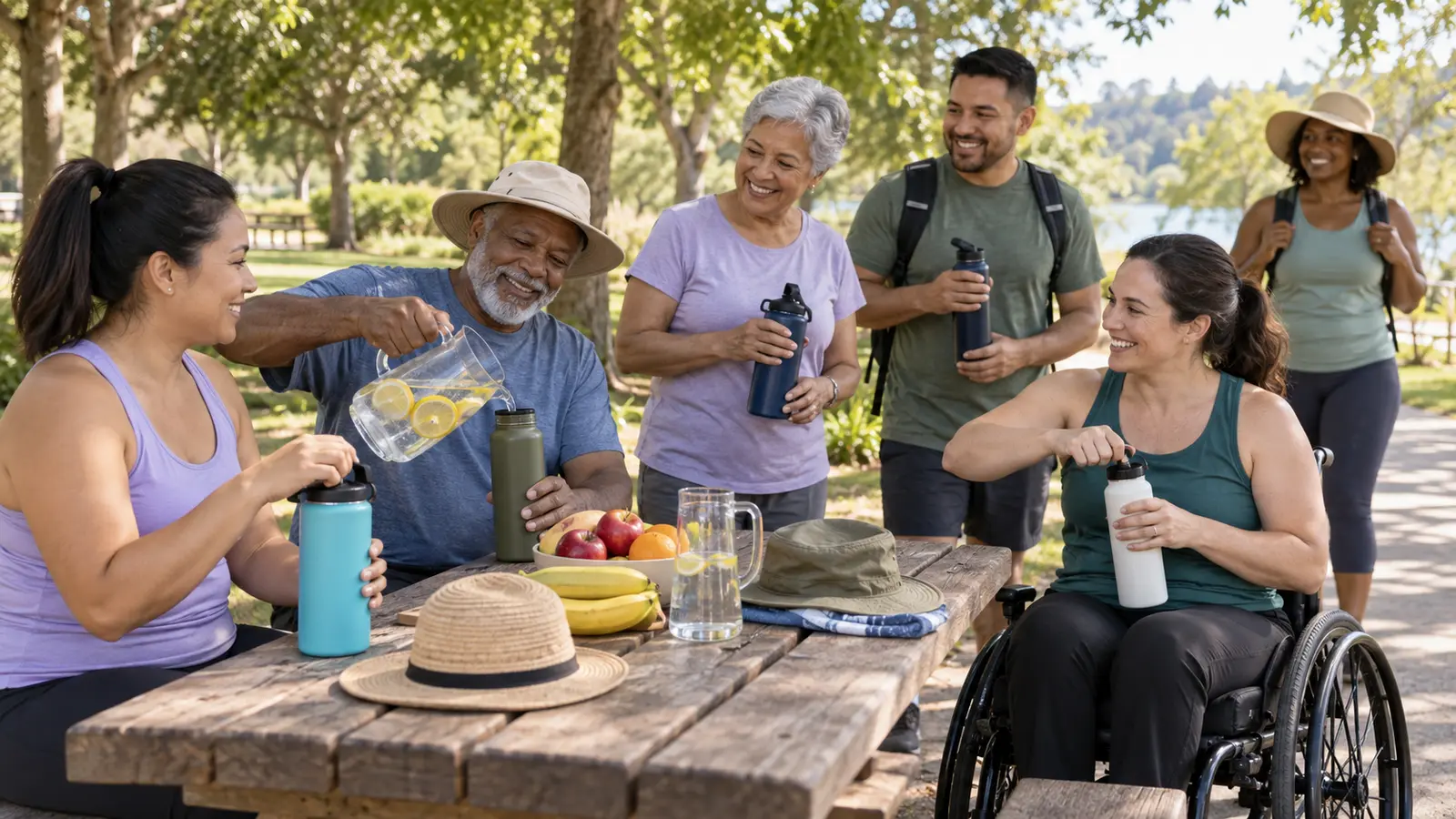
Sun safety is not only a beach-day concern. Ultraviolet radiation can reach people during walks, sports, gardening, outdoor work, community events, and ordinary errands. It can also reach the skin on cool or cloudy days and reflect from water, pavement, sand, and snow.
A useful sun-safety plan combines several layers: check the UV Index, use shade, choose protective clothing, wear a hat and sunglasses, and apply sunscreen as directed. No single step creates complete protection, and people of every skin tone can be harmed by ultraviolet exposure.
The UV Index is a daily forecast of ultraviolet radiation strength. The CDC's sun-safety guidance recommends protecting skin when the UV Index is 3 or higher. Check the forecast for the place and time you will be outside rather than relying only on heat, clouds, or season.
UV risk and heat risk are related to outdoor conditions but are not the same. A mild day can still have strong UV radiation, while heat illness prevention also requires hydration, rest, shade, and attention to symptoms. Use the correct plan for both risks when needed.
When practical, move longer outdoor activities away from the hours when UV rays are strongest. CDC notes that in the continental United States UV rays are generally strongest from 10 a.m. to 4 p.m. during daylight saving time. Exact conditions vary, so use the daily UV Index and local forecast.
For a community event, identify where shade will fall as the sun moves. A tree that protects people during setup may not shade the same area later. Add sheltered seating, cooling and water access where appropriate, and a backup plan for severe weather.
Shade from a building, dense tree canopy, umbrella, tent, or shelter can reduce direct exposure. It does not eliminate reflected or scattered UV radiation, so combine shade with clothing and sunscreen. Check whether an umbrella or canopy is stable, safely anchored, and accessible without creating a trip hazard.
Make shade the easy option. Place seating, check-in, water, children's activities, and volunteer breaks under cover when possible. Someone should not have to leave the group or stand far away to protect their skin.
Long sleeves, longer pants or skirts, and tightly woven dry fabric generally provide more coverage than thin, loosely woven, or wet fabric. Some garments include an ultraviolet protection factor, but ordinary clothing can also be useful when it covers skin and is comfortable enough to wear.
Balance sun protection with heat safety. Lightweight, breathable options, scheduled breaks, and access to water can help. People who cannot tolerate particular fabrics or styles should have other protective choices rather than an all-or-nothing rule.
A hat with a brim around the entire head can shade the face, ears, and neck. A baseball cap leaves some areas exposed, so add sunscreen, clothing, or shade for the ears and neck. Secure hats carefully in windy conditions without creating a strangulation hazard for children.
Choose sunglasses labeled for UV protection. The FDA's sun-safety guidance recommends looking for UV400 or “100% UV protection.” Dark lenses alone do not prove that glasses block UV rays.
Choose a broad-spectrum product, which protects against UVA and UVB radiation, with the sun protection factor recommended by current public-health guidance. Follow the product label, note the expiration date, and check water-resistance instructions. No sunscreen is waterproof.
People with allergies, sensitive skin, or questions about ingredients can ask a pharmacist or qualified healthcare professional for help choosing a product. Some medicines can increase sun sensitivity; ask about precautions when starting or using a medication rather than guessing.
Apply sunscreen to exposed areas people commonly miss, including ears, neck, hands, feet, lips, the scalp where hair is thin, and along clothing edges. Put it on with enough time to follow the label's directions before exposure.
Reapply according to the label and after swimming, sweating, or toweling. FDA generally advises reapplying at least every two hours and more often when swimming or sweating. Sunscreen works best as one layer of a broader plan, not as permission to remain outside indefinitely.
Keep hats, sunglasses, and sunscreen near the items you take outside. Add a UV Index check to weather planning. For groups, include a reapplication and shade break in the schedule instead of waiting for someone to ask.
At schools, camps, workplaces, volunteer projects, and community events, clarify who may provide sunscreen, whether consent is needed, how products are stored, and how people can bring a preferred option. Avoid sharing applicators in ways that create hygiene concerns.
Infants younger than six months need special care. FDA recommends keeping them out of direct midday sun and using protective clothing; ask a healthcare professional before applying sunscreen to a young infant. For older children, adults can model the same routine instead of treating protection as a punishment.
Use shade structures, hats, protective clothing, sunglasses that provide UV protection, and planned breaks. Never leave a child in a parked vehicle, even briefly. Sun protection does not replace heat-safety supervision.
Explore UWP's Healthy Living, Wellness Education, Resources, and dehydration-prevention guide for related planning.
UV radiation can reach the skin through clouds. Check the UV Index and use protection when it is 3 or higher, even if the day does not feel hot or bright.
It means the product meets requirements for protection against both UVA and UVB radiation. Read the label for SPF, water resistance, directions, warnings, and expiration information.
Follow the product label. FDA generally advises at least every two hours and more often after swimming, sweating, or toweling. Other protection such as shade and clothing remains important.
Yes. People of all skin colors can experience sun damage. Risk levels and visible signs can differ, but protective habits are appropriate for everyone.
For infants younger than six months, FDA recommends avoiding direct midday sun and using protective clothing; ask a healthcare professional before applying sunscreen. Follow current guidance for the child's age.
Look for a label stating UV400 or 100% UV protection. Lens darkness or price alone does not show how much UV radiation the glasses block.
No method blocks all UV radiation. Combine sunscreen with shade, clothing, a brimmed hat, sunglasses, time planning, and breaks.
Check tomorrow's UV Index and place one missing protection item—hat, sunglasses, sunscreen, or shade plan—beside what you will take outside.
This article provides general wellness education, not diagnosis, treatment, or individualized medical advice. Ask a qualified healthcare professional about personal risks, medications, skin changes, or reactions.