A flexible, plain-language plan for drinking regularly, preparing for heat and activity, recognizing warning signs, and helping others stay hydrated.
Dehydration can happen when the body loses more fluid than it takes in. Hot weather, physical activity, fever, vomiting, diarrhea, and some medicines can increase fluid loss. A useful prevention plan is not a rigid number that fits everyone. It is a set of repeatable habits: drink regularly, prepare for conditions that raise your needs, notice early warning signs, and make water easier to reach.
This guide offers general wellness education, not individual medical advice. Fluid needs vary with age, health conditions, pregnancy, medicines, activity, and climate. If a clinician has told you to limit fluids, or if you have questions about a child, pregnancy, illness, or ongoing symptoms, follow individualized medical guidance.
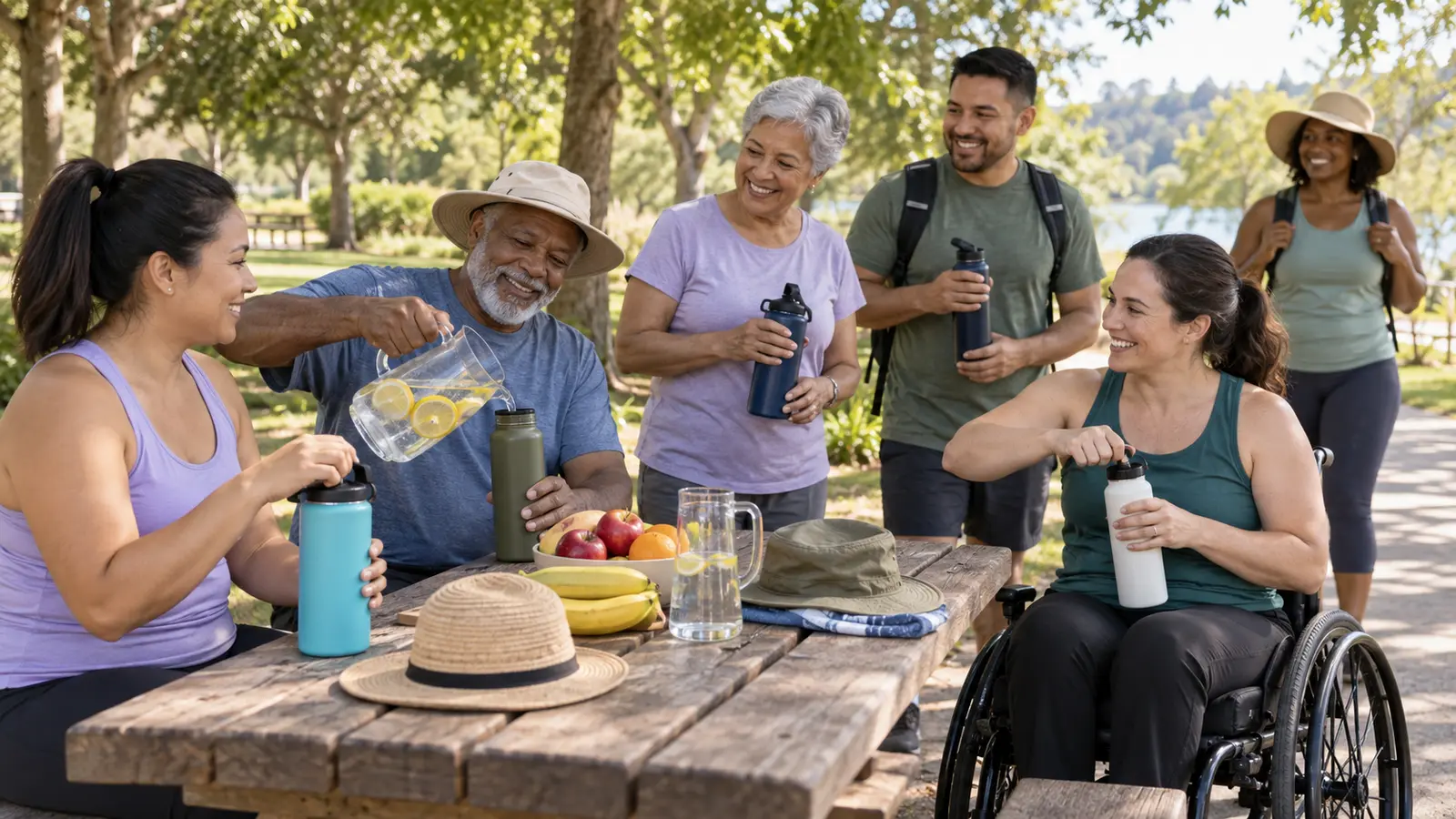
Waiting until you feel very thirsty can make it harder to keep up, especially during heat or activity. Build drinking into moments that already happen: after waking, with meals and snacks, before leaving home, during work or school breaks, and after activity. Keep a clean bottle or cup within reach and refill it before it is empty. People who use mobility devices, have limited grip, or rely on another person for drinks may benefit from a lightweight container, an easy-open lid, a straw, or a consistent placement.
There is no single daily amount that is right for every person. Water needs depend on body size, food, activity, weather, health, and other factors. The NIH MedlinePlus dehydration guide recommends drinking enough each day and asking a healthcare professional how much is appropriate when you are unsure. Water is a practical default. Foods with water, such as soups, fruit, and vegetables, also contribute to fluid intake.
Choose two or three reliable cues rather than depending on memory alone. Put a bottle beside your keys, add water to a meal setup, or schedule a quiet reminder. If frequent bathroom access is a concern, plan around accessible restrooms instead of sharply restricting fluids without medical advice.
Check the weather, take water with you, identify shaded or air-conditioned places, and plan breaks. The CDC's heat and health guidance advises staying hydrated, carrying a refillable bottle, and checking on people who may need support. Begin with water available rather than trying to catch up later.
For walks, gardening, outdoor work, exercise, or community events, create regular drink and cooling pauses. Intensity, duration, clothing, humidity, and sun exposure all affect fluid loss. The CDC/NIOSH heat recommendations emphasize access to fluids and rest as part of heat protection. People doing prolonged, vigorous activity should seek appropriate guidance about replacing electrolytes; many sports drinks contain added sugar and are not automatically necessary for everyday activity.
Thirst, a dry mouth, darker urine, urinating less often, tiredness, headache, dizziness, or lightheadedness can be warning signs. These symptoms are not specific to dehydration, so pay attention to the situation and to whether symptoms are worsening. Stop activity, move to a cooler place when heat is involved, and take small sips if the person is awake and able to swallow safely.
Vomiting, diarrhea, and fever can increase fluid loss. Small, frequent sips may be easier than a large amount at once. Ask a pharmacist or healthcare professional whether an oral rehydration product is appropriate, especially for infants, children, older adults, or people with health conditions. Do not use salt tablets unless specifically directed by a healthcare professional.
Common barriers include water that is out of reach, containers that are hard to open, fear of incontinence, swallowing difficulty, confusion, limited restroom access, and not noticing thirst. Solve the barrier rather than assuming someone is unwilling. A care partner might offer small amounts regularly, use a preferred cup, help arrange an accessible restroom plan, or ask a clinician about swallowing or medication concerns.
During hot weather, a short call or visit can help a neighbor, relative, or volunteer teammate review water access and cooling options. Ask what support would be useful. Bring information in large print or another preferred format when needed. Never pressure someone to drink a specific amount when they have medical fluid restrictions.
Confusion, fainting, inability to drink, very little or no urination, rapid breathing or heartbeat, worsening weakness, or signs of heat stroke require prompt medical attention. Heat stroke is an emergency; call 911. Infants, young children, older adults, and people with certain chronic conditions can become seriously ill more quickly. When symptoms are severe or you are unsure, seek professional help instead of relying only on home measures.
Organizations can support hydration without making medical claims. Provide clearly marked water stations, accessible routes, seating and shade, scheduled breaks, and advance information about refill points and restrooms. Ask participants about access needs. For more practical planning ideas, explore Unified Wellness Project's Healthy Living and Wellness Education pages, browse the resource library, and review the Journal guide to adult physical activity.
There is no single amount that fits everyone. Needs vary with body size, food, activity, climate, pregnancy, health conditions, and medicines. Drink regularly and ask a healthcare professional for individualized guidance, especially if you have been told to limit fluids.
Hydrate regularly during the day, keep water within safe reach at night if appropriate, and avoid trying to make up a large deficit immediately before bed. Nighttime thirst, sweating, frequent urination, or waking very dry may deserve a conversation with a healthcare professional.
Make drinks easy to reach and open, offer them at routine times, and address restroom, mobility, memory, swallowing, or medication barriers. Because thirst can be less noticeable and health needs vary, caregivers should follow any clinician-provided instructions.
Begin with water available, drink during activity, schedule breaks, and adjust for heat, humidity, duration, and intensity. For long or vigorous activity, ask a qualified professional whether electrolyte replacement is appropriate.
Yes. Soups, fruit, vegetables, yogurt, and other foods can contribute fluid. Food can support a hydration routine, but it does not replace the need for accessible drinks when fluid loss is higher.
Small, frequent sips may be easier to tolerate. Contact a healthcare professional promptly for infants, children, older adults, people with health conditions, persistent symptoms, blood, severe pain, confusion, or reduced urination.
Confusion, fainting, inability to drink, very little or no urination, rapid breathing or heartbeat, severe weakness, or suspected heat stroke need prompt medical evaluation. Call 911 for a medical emergency.