
Use distance, time, volume control, and well-fitted hearing protection to reduce noise exposure at events, work, home, and through headphones.
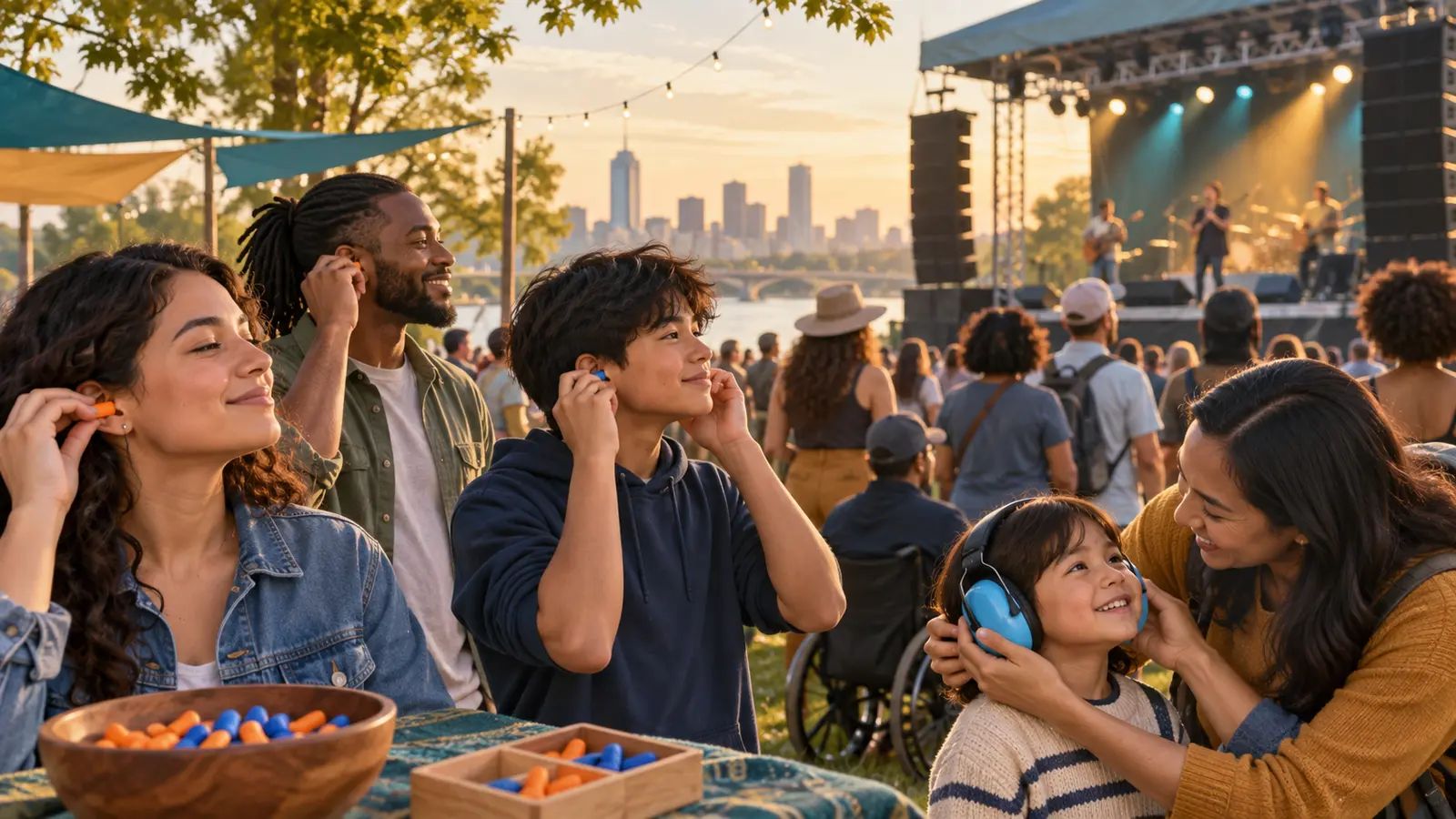
Loud sound is part of everyday life: concerts, power tools, sporting events, fireworks, headphones, lawn equipment, workplaces, and community celebrations can all raise the noise level. The goal is not to avoid every sound. It is to recognize when sound may be hazardous and make protection easy to use before exposure begins.
This guide explains how to protect your hearing with four practical controls: lower the sound, increase distance, shorten exposure, and use properly fitted hearing protection. It offers general education, not a diagnosis or a replacement for workplace safety requirements.
The National Institute on Deafness and Other Communication Disorders explains that sound can be harmful when it is extremely loud for a short time or when it is loud and long-lasting. Its noise-induced hearing loss guidance uses a helpful rule: avoid sound that is too loud, too close, or lasts too long.
Noise-induced hearing loss can develop gradually, so a person may not notice damage while it is occurring. Risk depends on the sound level, distance from the source, duration, frequency of exposure, environment, and individual circumstances. A phone app can raise awareness, but it is not a substitute for calibrated workplace measurement or professional evaluation.
You do not need a meter to recognize every situation that deserves caution. Treat the environment as potentially too loud when you must raise your voice to speak to someone nearby, sound feels uncomfortable, speakers or machinery are very close, hearing seems muffled afterward, or ringing begins.
Plan before activities commonly associated with high sound: live music, motorsports, woodworking, lawn equipment, target shooting, fireworks, amplified fitness classes, construction, and some school or community events.
Do not wait for pain. Harmful sound does not always hurt, and a temporary change after noise should not be treated as proof that no lasting effect occurred.
Turn down personal listening devices, speakers, televisions, tools, and equipment when possible. Use quieter equipment settings, maintain noisy machines according to instructions, close a door between a person and a sound source, or move a generator and other equipment farther from gathering areas while following all safety directions.
At an organization or workplace, reducing sound is stronger than relying only on each person to remember earplugs. The CDC’s National Institute for Occupational Safety and Health describes source reduction and engineering controls in its occupational hearing-loss prevention guide. Employers must follow applicable safety rules; a personal wellness checklist does not replace a required hearing-conservation program.
Distance can make a meaningful difference. At a concert, community festival, movie, sports event, or ceremony, choose a location away from loudspeakers, fireworks launch areas, engines, sirens, and other concentrated sound sources. Do not let children sit or stand directly beside speakers.
If a space sounds overwhelming, step into a quieter area before deciding whether to return. An accessible event plan should identify calm spaces and allow people to move without losing admission, seating support, or necessary assistance.
Distance is also useful at home. Keep bystanders away while using a loud tool, plan the task when fewer people are nearby, and avoid running noisy equipment in a small enclosed area unless it is designed and ventilated for that use.
The louder the sound, the less time it takes for exposure to become hazardous. Breaks do not erase earlier exposure, but moving to a genuinely quieter place can reduce the total time spent in loud sound.
Before an event, agree on where the quiet area is and how family members will communicate if they need to leave. Build breaks into rehearsals, volunteer shifts, workshops, and long events rather than waiting for someone to feel unwell.
For headphones, avoid responding to a noisy room by continually turning the volume higher. Move to a quieter location, use well-fitting equipment that reduces the need to overpower background noise, and take listening breaks.
Common options include disposable foam earplugs, reusable earplugs, high-fidelity or musician-style earplugs, and protective earmuffs. The best option is one designed for hearing protection, appropriate for the activity, compatible with other safety equipment, and comfortable enough to wear correctly for the full exposure.
Earbuds, cotton, tissue, and ordinary headphones are not automatically hearing protection. Noise-canceling features may make listening more comfortable and may help a person avoid raising music volume, but they should not be assumed to provide certified protection against hazardous noise.
For shooting, explosive noise, industrial work, or other high-risk exposure, use activity-specific official guidance and required protective equipment. Ask a qualified safety professional when unsure.
A protector works only when it seals as intended. For foam earplugs, follow the manufacturer’s roll, placement, and hold instructions; an improperly inserted plug may provide far less protection. Reusable plugs should be the correct size, clean, undamaged, and seated according to their instructions.
Earmuff cushions should sit evenly around the ear. Hair, hats, glasses, jewelry, hoodie fabric, and other equipment can break the seal. Check the fit each time and replace damaged cushions or bands according to the manufacturer.
Children need products that fit them and adult help using them. Earmuffs may be easier to observe and manage for some children, but fit still matters. Keep babies and young children far from intense sound whenever possible rather than relying only on equipment.
Community organizers can reduce barriers by warning attendees about amplified sound, identifying quieter seating, offering re-entry after breaks, training volunteers to direct people without judgment, and including hearing access in the event plan.
Hearing protection and communication access are related but not identical. Earplugs may reduce overall level, while captions, assistive listening, sign-language interpretation, written instructions, and clear sightlines support understanding. Ask participants what they need.
For inclusive planning, use UWP’s guide on making a community event accessible. Explore Community Outreach and Wellness Education for broader ways to share practical information.
Store earplugs or earmuffs near the equipment or activity that requires them, not in a distant drawer. Include protection in a tool checklist, event supply bin, or family outing bag. Explain the purpose without using fear: the equipment helps make a valued activity safer and more comfortable.
Neighbors and community groups can give advance notice of fireworks, amplified events, construction, or equipment use when practical. Notice helps families plan for children, older adults, people with sensory needs, shift workers, and pets.
Contact a qualified healthcare professional or hearing specialist when ringing, muffled sound, pain, dizziness, drainage, or difficulty understanding speech persists or causes concern. Sudden hearing loss, an ear injury, or symptoms after an explosion or other intense sound warrant prompt medical evaluation.
A hearing test can establish a baseline or evaluate a concern. It should not be replaced by an online quiz or a phone application.
UWP’s Resources hub and article on finding reliable health information online can help readers evaluate additional guidance.
Bring well-fitting hearing protection, choose a location away from speakers, take breaks in a genuinely quieter area, and leave if the sound remains uncomfortable. Plan protection before the music begins.
Either may work when designed for the activity and fitted correctly. Comfort, seal, compatibility with other equipment, communication needs, and the type of noise all matter.
They may reduce the need to raise listening volume in background noise, but they are not automatically certified hearing protection for concerts, tools, workplaces, shooting, or other hazardous sound.
Increase distance, shorten exposure, choose a quieter setting when possible, and use child-fitting protection with adult supervision. Do not place children close to speakers or intense impulse sounds.
No single device setting applies to every headphone, recording, environment, and listening duration. Keep the level as low as practical, avoid overpowering background noise, and take breaks.
Ringing can occur after noise exposure, but it should not be dismissed. Move to quiet, avoid more loud sound, and seek qualified care when it persists, is severe, or comes with sudden hearing change, pain, or dizziness.
Consider testing when you notice persistent ringing, muffled sound, difficulty understanding speech, repeated loud-noise exposure, or another concern. A healthcare professional or hearing specialist can recommend the right evaluation.
This article provides general wellness education, not individualized medical advice, diagnosis, treatment, or workplace safety compliance guidance.