
Organize a respectful meal train by asking what helps, choosing a manageable schedule, recording food needs, and planning safe, low-pressure delivery.
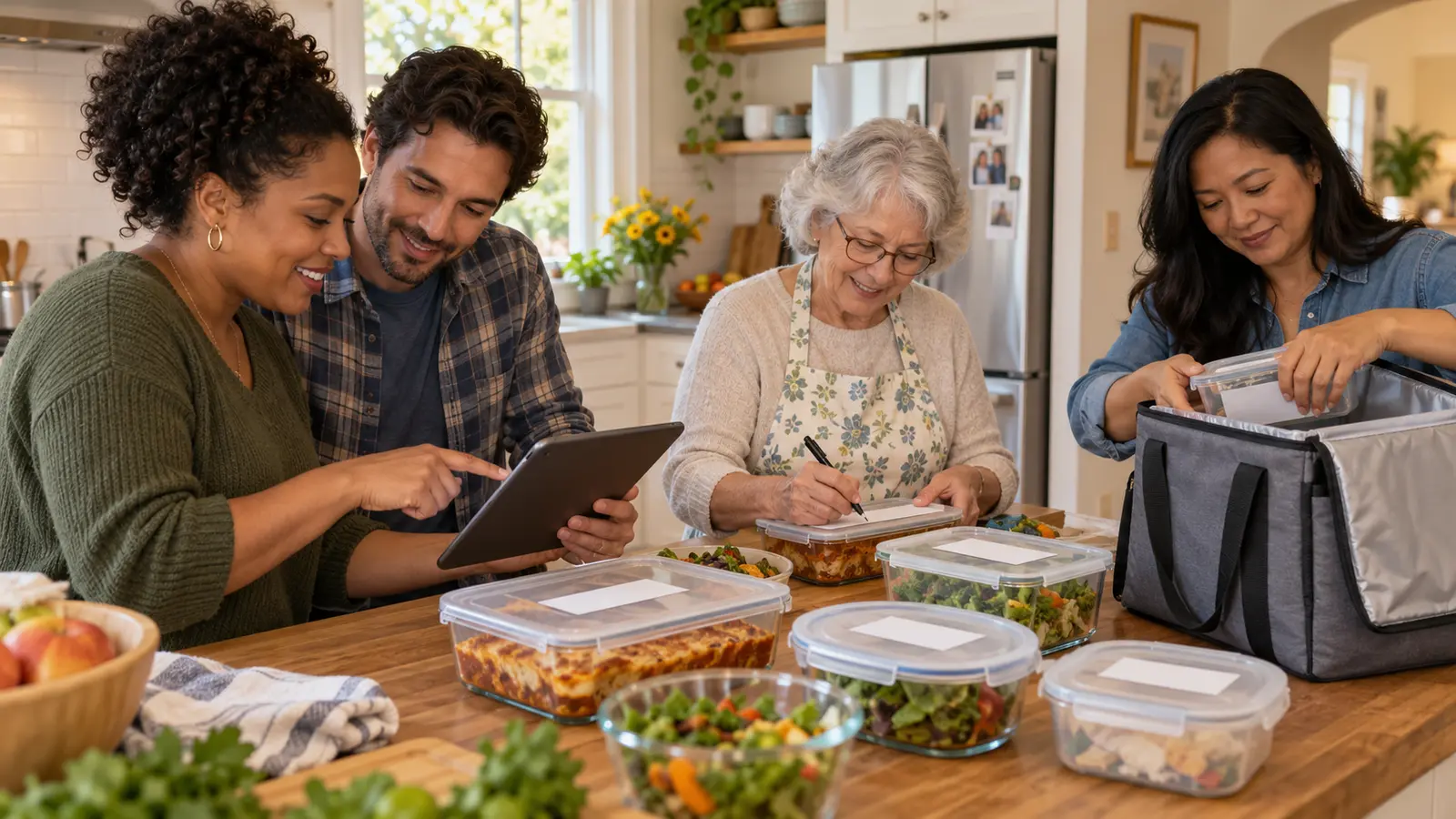
A meal train is a coordinated schedule in which friends, relatives, neighbors, or coworkers provide meals to a household during a demanding period. It can be helpful after a birth, injury, loss, move, caregiving change, or another transition—but only when the recipient wants it and the plan reflects what would actually reduce work.
The organizer's role is not to announce private circumstances or prescribe what someone should eat. It is to ask permission, gather the minimum necessary preferences, create a manageable schedule, and make delivery predictable. A meal train should support a household without turning gratitude, socializing, or personal disclosure into another obligation.
Begin with a private conversation. Ask whether meals are welcome and whether another form of support would be more useful, such as grocery delivery, prepared-food gift cards, help with errands, or no assistance right now. “No” and “not yet” are complete answers.
If the household says yes, identify one decision-maker and one organizer. Agree on what information may be shared with participants. Do not post a diagnosis, family story, address, phone number, children's details, or schedule publicly without explicit permission.
Start with one or two weeks rather than building an open-ended calendar. Two or three delivery days per week may be more useful than daily meals that crowd the refrigerator. Ask about the household's storage space, freezer capacity, work schedule, and energy for receiving deliveries.
Set a review date. The household may want to continue, pause, reduce frequency, or switch to another type of support. Avoid promising a schedule until enough volunteers have confirmed.
Ask about the number of people eating, preferred portion size, foods they enjoy, foods they do not want, delivery timing, packaging, and whether freezer-ready meals are useful. Separate a preference from a medical or allergy requirement.
For allergies, intolerances, religious practices, texture needs, or medically directed diets, do not guess that a homemade meal is appropriate. Ask the recipient what arrangement is acceptable. They may prefer a sealed product with an ingredient label, a restaurant or grocery gift card, or another form of help.
A shared calendar, spreadsheet, email thread, or meal-support platform can work. Choose the option the recipient can access and the organizer can maintain. Include only the dates, delivery window, meal category, volunteer name, and any approved instructions.
Protect access. Do not publish the household's address in an open social post. Share delivery details only with confirmed participants, and remove access when the plan ends. Provide a phone or email alternative for volunteers who cannot use the chosen tool.
Each volunteer should know the date, delivery window, number of portions, preferences, packaging request, contact method, and whether a visit is welcome. Encourage simple, familiar meals rather than an elaborate menu. Participants should not compete, overspend, or expect the recipient to return dishes quickly.
Disposable packaging may be convenient, but reusable containers can work when the volunteer has a no-pressure retrieval plan. Label containers with the dish name, preparation date, reheating or serving instructions, and known ingredients. Never make an “allergen-free” claim unless the recipient has agreed that the preparation environment and ingredients are suitable.
FoodSafety.gov's four-step guidance emphasizes cleaning, separating raw and ready-to-eat foods, cooking to a safe temperature, and chilling promptly. Volunteers should wash hands, use clean equipment, prevent cross-contamination, and use a food thermometer for foods that require a safe internal temperature.
Keep cold food at 40°F (4°C) or below and hot food at 140°F (60°C) or above when holding or transporting it. Perishable food should not remain in the temperature danger zone for more than two hours, or more than one hour when the surrounding temperature is above 90°F (32°C). Use insulated carriers with cold sources for chilled food and appropriate insulated equipment for hot food.
The federal safe minimum temperature chart lists temperatures for meat, poultry, seafood, egg dishes, casseroles, and leftovers. Include clear refrigeration and reheating instructions instead of assuming the recipient knows when the food was cooked or how it traveled.
The FDA identifies nine major food allergens: milk, eggs, fish, crustacean shellfish, tree nuts, peanuts, wheat, soybeans, and sesame. A complete ingredient list is more useful than a vague label such as “safe” or “healthy.”
Cross-contact can occur through shared counters, utensils, cookware, cutting boards, fryers, or storage. A volunteer who cannot meet the recipient's requirements should say so and choose a non-food option. The organizer should never interpret a medical diet or tell someone what is safe to eat.
Confirm the delivery window before leaving. Follow the household's preference for a doorstep drop-off, cooler, lobby handoff, or brief visit. Do not arrive early, stay longer than invited, bring extra guests, post photos, or expect to see the person receiving support.
Use a message such as, “Your meal is in the agreed location; no reply needed.” If no safe handoff is possible, contact the organizer rather than leaving perishable food unattended.
After several deliveries, ask one simple question: Is the schedule helping, or should anything change? Make it easy to pause dates, adjust portions, remove a food, or stop. At the end, thank participants and delete or archive private information that is no longer needed.
Do not publish a success story, household details, health information, or photos without specific permission. A meal train can be meaningful even when it remains entirely private.
Unified Wellness Project's Community Outreach, Healthy Living, Resources, and Volunteer pages explore practical ways communities can support well-being. The Journal's home food-safety checklist offers additional kitchen guidance.
Ask the recipient whether meals are wanted, choose a short schedule, record approved preferences and boundaries, use one private calendar, give each volunteer a clear assignment, and check in after the first few deliveries.
There is no universal number. Start with the household's storage, schedule, size, and preferences. Two or three deliveries per week may be more manageable than daily food.
Include dates, delivery windows, portion needs, approved preferences, allergy or ingredient instructions, packaging expectations, the handoff method, and an organizer contact. Share private details only with confirmed participants.
Choose familiar foods that travel and reheat well, or provide an approved grocery option. The best choice is one the recipient has requested, can store safely, and can use without extra preparation.
Follow the recipient's instructions exactly, provide complete ingredient information, and be honest about cross-contact. When homemade food is not appropriate, choose a sealed labeled product, gift card, or non-food support.
Only when the recipient explicitly invites a visit. A doorstep or cooler delivery with no reply required often reduces pressure during a demanding time.
They can choose an approved restaurant or grocery gift card, deliver a sealed labeled item, help with pickup, or take a non-food task. Participation should fit the volunteer's capacity and the recipient's wishes.
Ask the household one question before opening a calendar: “Would coordinated meals help, and if so, what would make delivery easiest for you?” Let the answer shape every part of the plan.
This article provides general community-support and food-safety education. It is not medical or nutrition advice and does not replace instructions from the recipient, a qualified healthcare professional, public-health authorities, or food-safety regulators.