
Use a practical clean-separate-cook-chill routine, a food thermometer, and safe storage habits to lower food-safety risks at home.
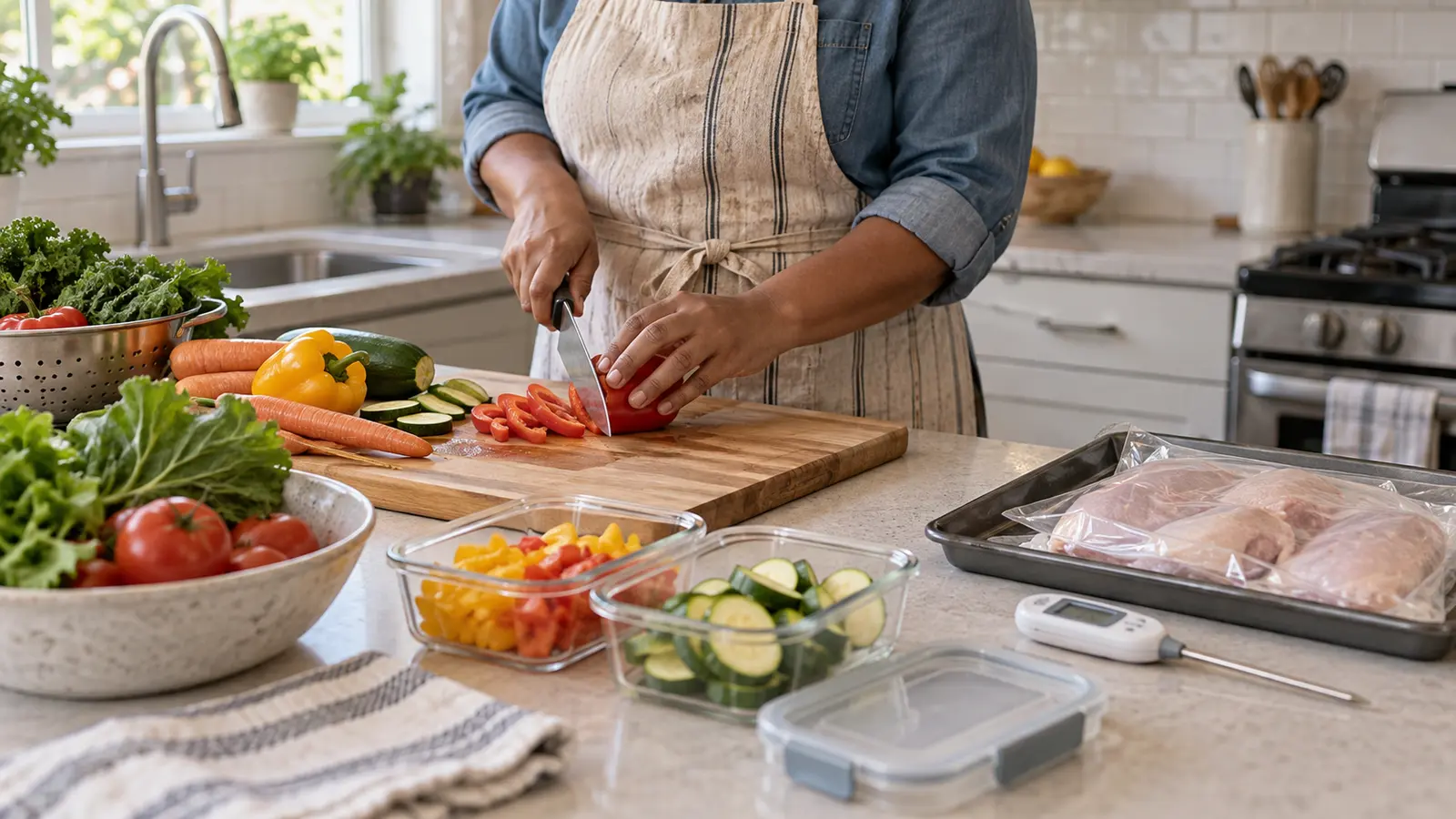
Food safety is easier to manage when it is built into ordinary kitchen routines. You do not need a professional kitchen or a shelf full of specialty products. You need a few repeatable habits that reduce the chance that harmful germs move from hands, surfaces, or raw food into something you are ready to eat.
This guide explains how to prevent food poisoning at home using the four public-health steps: clean, separate, cook, and chill. It also covers shopping, thawing, leftovers, power outages, and food recalls so the checklist works across the full life of a meal.
Wash your hands with soap and running water before preparing food and after handling raw meat, poultry, seafood, eggs, or flour. The CDC recommends washing for at least 20 seconds. Clean counters, utensils, and cutting boards with hot, soapy water after each food-preparation task.
Rinse fresh fruits and vegetables under running water. Do not use soap, detergent, or household cleaners on produce. Raw poultry does not need to be washed before cooking; splashing water can spread germs to the sink, nearby food, and work surfaces.
The CDC's food-poisoning prevention guidance organizes home food safety into four steps: clean, separate, cook, and chill.
Cross-contamination can happen in a shopping cart, grocery bag, refrigerator, or on the counter. Keep raw meat, poultry, and seafood away from produce, bread, cooked food, and other items that will not receive another cooking step.
Color-coded boards can be a useful reminder, but they are not required. A clear sequence and thorough washing between uses can work in a small kitchen.
Color and texture cannot reliably show whether food reached a safe internal temperature. Put a clean food thermometer into the thickest part, away from bone, and check more than one place when the food is unevenly shaped.
CDC guidance lists these common minimum temperatures: 165°F for all poultry, leftovers, and casseroles; 160°F for ground meats such as beef and pork; and 145°F plus a three-minute rest for whole cuts of beef, pork, veal, and lamb. Fish is generally cooked to 145°F or until the flesh is opaque and separates easily with a fork. Follow the current official chart and product instructions for the specific food.
Wash the thermometer stem after each use. When reheating in a microwave, stir or rotate the food, allow the recommended standing time, and check for cold spots.
Keep the refrigerator at 40°F or below and the freezer at 0°F or below. An inexpensive appliance thermometer can show whether the temperature stays in range even when the dial is unclear.
Refrigerate perishable food within two hours. If food is exposed to temperatures above 90°F, such as at a summer picnic or in a hot car, refrigerate it within one hour. Divide a large pot or tray of leftovers into shallow containers so it cools more quickly.
The FDA's safe food-handling guidance explains refrigerator temperatures, thawing, preparation, and storage in more detail.
Do not thaw meat, poultry, seafood, or other perishable foods on the counter. The outer layer can warm while the center remains frozen. Use one of three methods:
Marinate food in the refrigerator, not on the counter. Do not reuse marinade that contacted raw food unless it is boiled as directed by a reliable recipe or replaced with a clean reserved portion.
Put leftovers into clean, shallow containers and refrigerate them promptly. Label the container with the food and date. Keep a simple “use first” area at eye level so older food is not forgotten behind newer items.
When reheating, bring leftovers and casseroles to 165°F. If you are uncertain how long a specific food keeps, use an official storage chart rather than relying only on smell or appearance. Harmful germs do not always change the way food looks or smells.
Planning realistic amounts can support both food safety and affordability. UWP's healthy eating on a budget guide includes ideas for using ingredients before they go to waste.
Adults age 65 and older, children younger than five, pregnant people, and people with weakened immune systems have a higher chance of serious illness from some foodborne germs. Safer choices may include pasteurized dairy and juice, fully cooked eggs and animal foods, and avoiding raw sprouts or raw dough.
Needs differ. A healthcare professional can help someone understand precautions that apply to pregnancy, a medical condition, medication, or immune status. The CDC's safer food choices guide provides a clear comparison of riskier and safer options.
Keep refrigerator and freezer doors closed as much as possible. A closed refrigerator generally keeps food cold for about four hours; a full freezer generally holds temperature longer than a half-full freezer. Use appliance thermometers and current official guidance to decide what can be kept.
Do not taste food to test whether it is safe. When in doubt about a perishable item that was too warm for too long, throw it away. After an outage, clean any leaks before restocking.
A recalled product should not be eaten. Check the brand, product name, package size, lot code, and date against the official notice. Follow the notice's instructions to return or discard it, then clean surfaces or refrigerator areas that touched the product.
Do not repost an unverified recall screenshot without linking to the current government notice. Details can change as an investigation continues.
Explore UWP's Healthy Living program, Resources hub, and Nutrition Facts label guide for more plain-language wellness education.
Clean your hands and surfaces, separate raw foods from ready-to-eat foods, cook food to the correct internal temperature, and chill perishable food promptly.
Refrigerate perishable food within two hours, or within one hour when it is exposed to temperatures above 90°F. If timing is uncertain, use cautious judgment and current official guidance.
No washing is needed. Splashing can spread germs to the sink, counters, tools, and nearby food. Cook poultry to the safe internal temperature instead.
Use a food thermometer in the thickest part. Color, firmness, and clear juices are not reliable substitutes for a temperature reading.
No. Thaw in the refrigerator, in cold water with the water changed regularly, or in the microwave followed by immediate cooking.
Yes. Divide a large amount into clean, shallow containers so it cools quickly, then refrigerate it promptly.
Contact a healthcare professional for severe or concerning symptoms, symptoms in someone at higher risk, or questions about dehydration. Call emergency services for immediate danger. Public-health agencies may also provide instructions for reporting a suspected outbreak.
This article provides general food-safety education and is not individualized medical advice, diagnosis, or treatment. Follow current government guidance and consult a qualified healthcare professional about personal health concerns.