Learn the five basic handwashing steps, when soap and water matter most, how sanitizer fits in, and how community spaces can make clean hands easier.
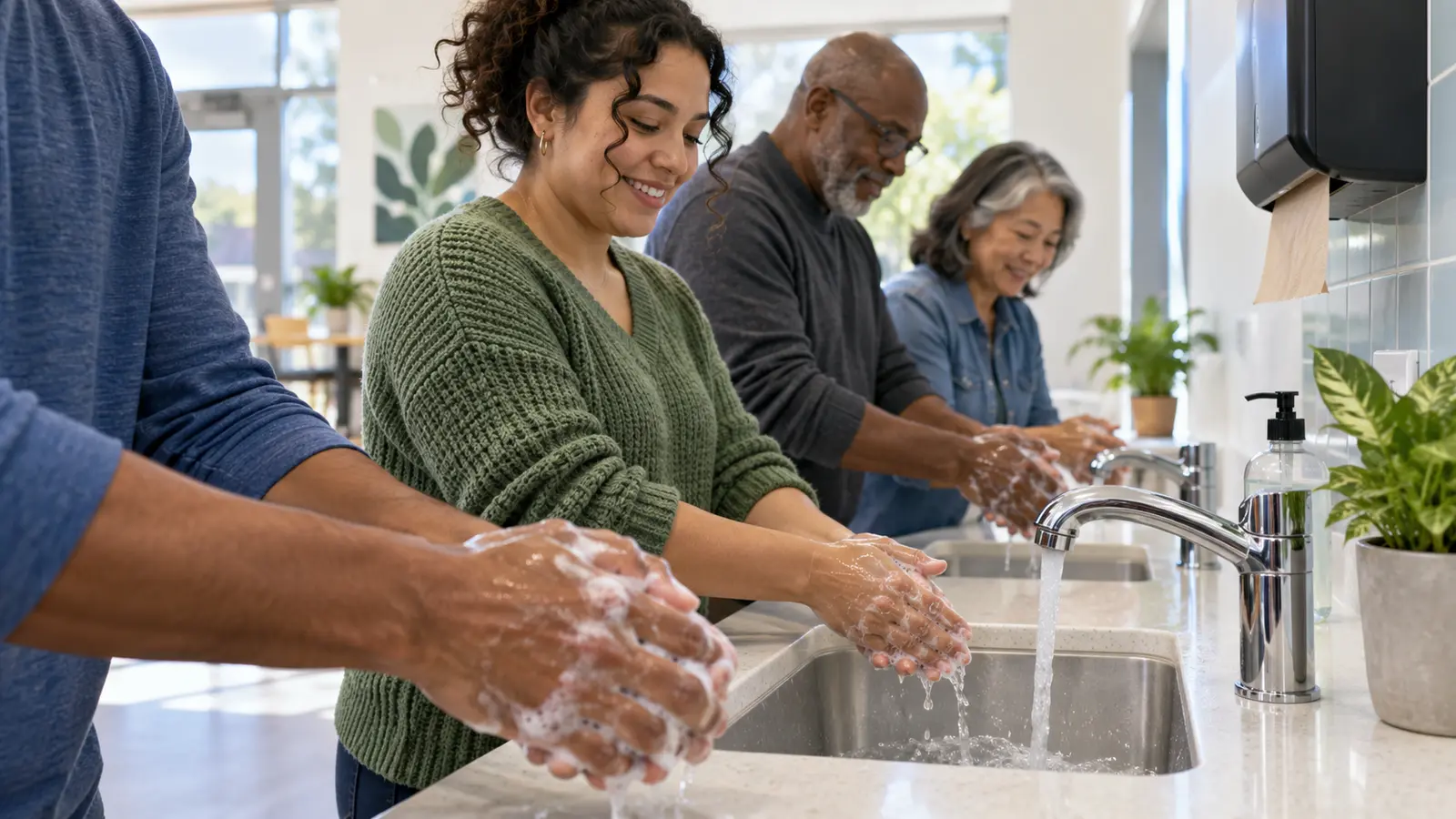
Handwashing is a small routine with an important community purpose: it helps limit how germs move from hands to food, shared objects, faces, and other people. The technique does not need to be complicated, but the order and timing matter. A quick rinse is not the same as washing with soap, and more soap does not replace enough scrubbing time.
This guide explains the standard handwashing steps for everyday settings such as homes, schools, workplaces, community centers, food-distribution sites, and volunteer activities. Healthcare, food-service, childcare, laboratory, and other regulated settings may have additional requirements, so follow the rules for the setting as well.
The CDC's handwashing guidance organizes the process into five steps. Use clean, running water and ordinary soap unless a workplace or care setting gives different instructions.
Warm or cold water can be used. Wet both hands, turn off the tap when practical, and apply soap. Standing water in a basin does not provide the same rinsing action as running water. If the faucet is difficult to reach or operate, an accessible fixture, lever handle, or safe assistance plan can make the routine easier.
Rub your hands together to make a lather. Cover the palms, backs of the hands, between the fingers, around the thumbs, fingertips, and under the nails. These easy-to-miss areas touch phones, handles, tools, food, and faces throughout the day. Rings and long nails can make thorough cleaning harder, so give those areas deliberate attention.
Keep rubbing all hand surfaces for at least 20 seconds. A familiar song, a silent count, or a visible timer can help. The timer begins when active scrubbing begins, not while you are first wetting or rinsing your hands. Scrub firmly enough to reach each surface without causing pain or damaging the skin.
Rinse away the soap and loosened material. Point fingertips down when that position is comfortable, and avoid touching the inside of a dirty sink. If a public sink appears unsafe, has no running water, or has a posted advisory, follow the facility's instructions and use another approved option.
Dry hands completely. A clean single-use towel, a clean reusable towel that is changed regularly, or an air dryer may be used depending on the setting. Do not wipe clean hands on clothing, a visibly used towel, or a shared cloth that stays damp. Drying is part of the routine, not an optional final detail.
You do not need to wash after every object you touch. Focus on moments when hands are more likely to carry germs to food, the face, a wound, or another person. The CDC highlights washing before, during, and after preparing food; before and after eating; before and after caring for someone at home who is sick with vomiting or diarrhea; and before and after treating a cut or wound.
Wash after using the toilet, changing a diaper, helping a child who used the toilet, blowing your nose, coughing, sneezing, touching an animal or animal waste, handling pet food, and touching garbage. Also wash whenever hands are visibly dirty or greasy. A community activity may add other key moments, such as before packing ready-to-eat food or after handling cleanup supplies.
When soap and water are not readily available, the CDC advises using an alcohol-based hand sanitizer with at least 60% alcohol. Read the label, apply enough to cover every hand surface, and rub until dry. Do not rinse or wipe it off early.
Sanitizer has limits. The CDC's hand-sanitizer guidance notes that sanitizer does not eliminate every type of germ, works less well on visibly dirty or greasy hands, and does not remove some harmful chemicals. Soap and water should be the first choice after gardening, handling certain chemicals, preparing food, or using the toilet. Store sanitizer out of children's reach and supervise young children to prevent swallowing.
A reminder sign alone cannot solve a missing-supplies problem. Community organizers can check the full path: Is the sink easy to locate? Can people reach and operate it? Is running water available? Are soap and a usable drying method stocked? Is the area well lit? Can someone report an empty dispenser or broken fixture without searching for the right person?
Consider people with limited reach, grip, vision, balance, mobility, or sensory tolerance. Keep the route clear, avoid storing supplies where they block access, and provide simple directions in the languages and formats the community needs. Fragrance or skin sensitivity may also matter. Organizations should follow applicable accessibility, workplace, food-safety, and public-health requirements rather than improvising a one-size-fits-all station.
For community-facing education, pair a short visual demonstration with a chance to practice and ask questions. Use plain language and show all five steps. Unified Wellness Project's Wellness Education page, Healthy Living page, and Resources hub offer additional pathways for practical learning. The Journal's food-safety checklist explains where clean hands fit into a safer kitchen routine.
Rushing the scrub, missing thumbs and fingertips, using sanitizer on visibly dirty hands, touching a dirty surface immediately after washing, and leaving the station without drying are common gaps. Treat them as design and habit problems rather than personal failures. Better placement, reliable supplies, a timer, a demonstration, or a clearer workflow can make the healthy choice easier.
Wet hands with clean running water, apply soap and lather all surfaces, scrub for at least 20 seconds, rinse under clean running water, and dry completely with a clean towel or air dryer.
The active scrubbing step should last at least 20 seconds. The full routine will take longer because wetting, rinsing, and drying are separate steps.
No. CDC guidance says clean running water may be warm or cold. Choose a comfortable temperature that supports thorough washing and avoids burns.
For routine community handwashing, ordinary soap and clean running water are generally appropriate. Follow any special product requirements in healthcare, food-service, or regulated work settings.
It is a useful backup when soap and water are unavailable and the product contains at least 60% alcohol. Use soap and water when hands are visibly dirty or greasy and in other situations identified by public-health guidance.
No. Gloves can become contaminated, tear, or transfer material between surfaces. Follow the setting's rules for washing before putting gloves on and after removing them.
Use comfortably warm rather than very hot water, rinse well, dry gently, and consider a fragrance-free moisturizer that is appropriate for your setting. Seek professional advice for persistent cracking, rash, pain, or other concerns.
Choose one sink you use often. Check whether soap, running water, drying, access, and a 20-second cue are all in place. Fixing one missing part can make the complete routine easier for everyone who uses that space.
This article provides general wellness education and is not individualized medical advice, diagnosis, or treatment.