Use seven practical steps to understand community strengths and needs, include residents in decisions, choose priorities transparently, and plan responsible action.
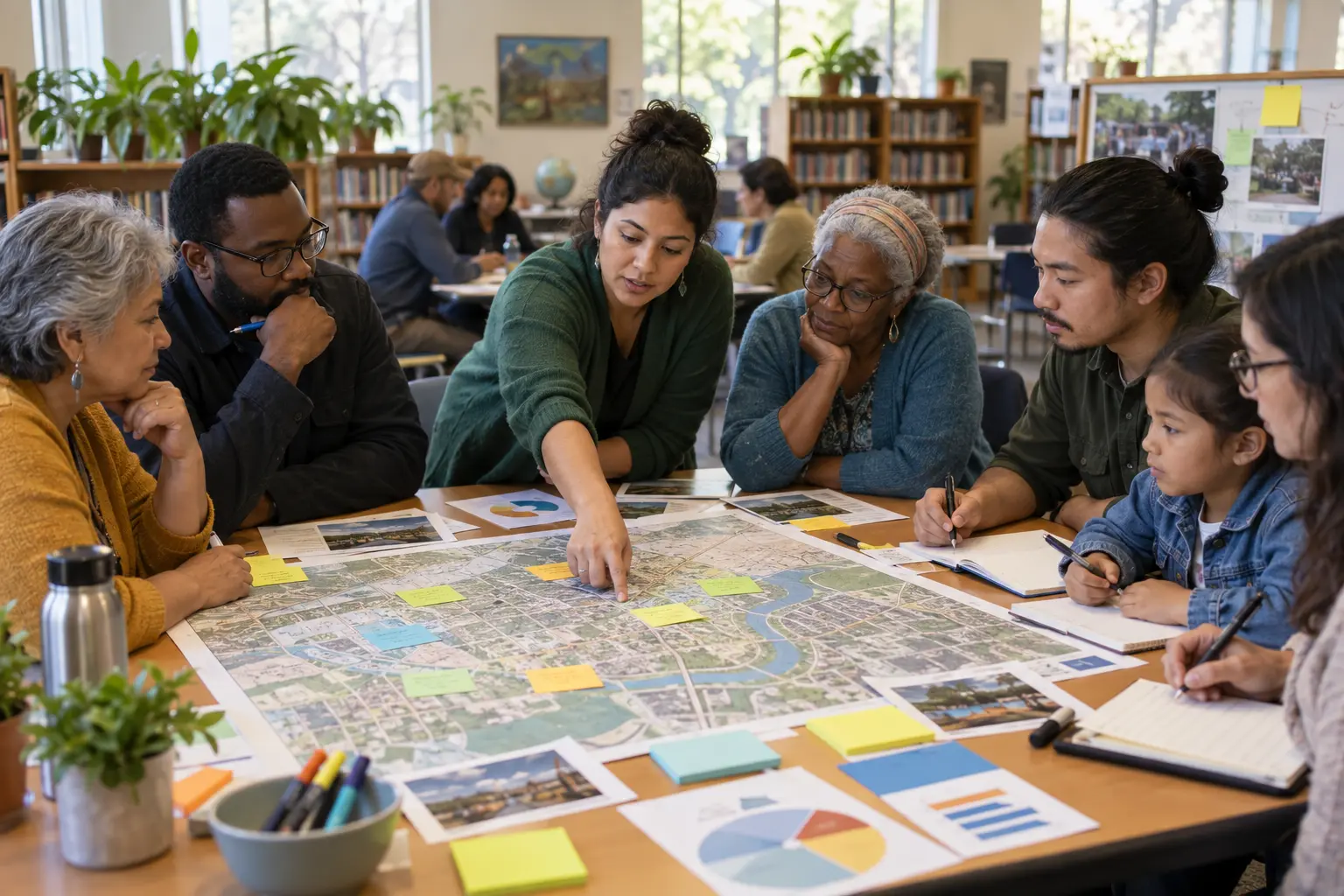
A community needs assessment is a structured way to learn what residents experience, what resources already exist, and which gaps deserve collective attention. Done well, it prevents organizations from designing programs around assumptions or the loudest voice in the room.
These community needs assessment steps are designed for nonprofits, neighborhood groups, coalitions, libraries, schools, and other local partners beginning a small, practical assessment. The goal is not to diagnose a community. It is to listen, combine evidence, and make decisions transparently.
A community is not a list of problems. Residents bring knowledge, relationships, cultural practices, informal networks, trusted spaces, volunteer capacity, and other assets. An assessment should identify those strengths alongside barriers and unmet needs.
The CDC’s Inclusive Healthy Communities assessment guidance describes assessment as a way for a community coalition to understand local assets and deficits for healthy living. ATSDR’s community engagement actions emphasize gathering community concerns, asking how people want to participate, and maintaining communication channels.
Write one sentence describing the choice ahead. For example: “We need to decide which barrier to accessing wellness education our coalition can address over the next year.” A clear decision keeps the assessment focused and prevents data collection from expanding without purpose.
Also define the geographic area and the people affected. Do not use a service area chosen only for organizational convenience if it excludes residents who experience the issue.
Invite residents with lived experience, grassroots leaders, disability advocates, language-access partners, service organizations, public agencies, and other relevant stakeholders. Clarify who has decision-making power, how disagreements will be handled, and whether community participants can be compensated for their time.
Representation is more than inviting one person from a broad group. Ask who is missing, whose schedule or transportation makes attendance difficult, and which trusted organizations can help broaden participation without speaking on residents’ behalf.
Before asking people to repeat their stories, review available public data, prior local assessments, resource directories, meeting notes, and program feedback. Record when information was collected, who was included, and what it cannot tell you.
Quantitative data can show patterns and scale. Qualitative information can explain how people experience those patterns. Neither should be treated as the complete picture.
Use more than one method when possible. Options include short surveys, interviews, small listening sessions, focus groups, walking or accessibility audits, community mapping, and conversations at places residents already visit.
Match the method to the question. A survey can gather broad input but may miss context. A listening session can reveal detail but may favor people comfortable speaking in a group. Combining methods helps reduce the limitations of each.
Participation may require transportation, childcare, food, interpretation, accessible locations, large print, phone options, digital accessibility, evening or weekend sessions, and compensation. Explain how information will be used and do not collect names, diagnoses, or other sensitive details unless they are genuinely necessary and protected.
Our guide on making a community event accessible offers a planning framework that can be adapted to listening sessions.
Organize findings into themes: community strengths, barriers, affected groups, existing resources, gaps, and ideas for action. Share both common themes and important minority perspectives rather than reporting only the most frequent answer.
Agree on criteria before selecting priorities. Possible criteria include:
A scoring tool can support discussion, but it should not replace judgment or community voice. Record why one issue was selected and why others were deferred.
Return findings to participants in plain language and accessible formats. Explain what the group heard, what it will do next, what is outside its current scope, and how residents can remain involved. Assign owners and dates to the first actions.
An assessment loses trust when organizations collect stories and disappear. Closing the loop is part of the assessment—not an optional communications task.
A neighborhood group may not have the capacity for a large formal study. It can still complete a responsible rapid assessment by:
Be explicit about the limits. A small convenience sample should not be described as representing an entire county or population.
A useful brief can include:
Unified Wellness Project’s Community Outreach program centers connection and practical access. Organizations interested in shared work can visit Partner With Us, and UWP’s Impact page explains its commitment to honest measurement.
It is a structured process for understanding community strengths, concerns, resources, and gaps so residents and organizations can choose priorities and plan action.
Include people directly affected by the issue, especially those often excluded from planning, along with trusted community groups and organizations able to support responsible action.
Use only data needed for the decision: existing statistics and reports, resident experiences, resource information, access barriers, and community assets. Avoid unnecessary personal details.
It depends on the scope, methods, and participation needs. A narrow rapid assessment may take weeks, while a comprehensive regional process may take months. Do not rush the time needed for accessible participation and feedback.
A survey is one information-gathering method. A needs assessment combines multiple sources, interprets them with the community, selects priorities, and connects findings to action.
Choose criteria in advance, review evidence and community input, discuss tradeoffs openly, and document why priorities were selected. Frequency alone should not determine importance.
Report back to participants, publish an accessible summary, choose realistic actions, assign responsibility, track progress, and revisit the findings as conditions change.
At your next planning meeting, complete this sentence: “We need to learn ___ so that we can decide ___.” Then identify three groups whose perspective must shape the answer. More tools for accessible community learning are available in UWP’s Resources hub and Community Wellness Journal.
This article provides general educational information. It is not a substitute for professional research, legal, privacy, public-health, or program-evaluation advice.