
Check the bicycle, fit the helmet, improve visibility, choose a lower-stress route, ride predictably, and prepare for common hazards.
Bicycle safety starts before the wheels move. A short equipment check, a properly fitted helmet, a visible rider, a predictable route, and an understanding of local traffic rules can prevent common problems from becoming emergencies.
This guide is for everyday riders, families, walking and bicycling groups, schools, volunteers, and community organizations. It cannot cover every bicycle, adaptive cycle, road condition, or state and local law. Use it as a practical planning checklist and get qualified help for mechanical, medical, or legal questions.
Choose a bicycle or adaptive cycle that fits the rider and can be controlled comfortably. The rider should be able to reach the brakes and steering controls, start, stop, turn, look behind, and put a foot or support down as appropriate. New riders need a traffic-free place to practice before entering a street or busy shared path.
Plan around experience, balance, vision, hearing, reaction time, weather, route complexity, and any equipment carried. A short, calm practice ride is more useful than pushing someone into a route they cannot yet manage safely.
Before each ride, squeeze the tires, test both brakes, inspect the chain and drivetrain, and confirm that handlebars, wheels, seat, and accessories are secure. Spin each wheel and listen for rubbing or unusual noise. Make sure clothing, straps, bags, and shoelaces cannot reach the chain or spokes.
A quick check does not replace maintenance. If a brake feels weak, a tire is damaged, a wheel wobbles, or a component is loose, stop and have the bicycle inspected or repaired. Carry only tools you know how to use, and do not make a rushed roadside repair that leaves a safety-critical part uncertain.
Use a bicycle helmet that meets applicable safety requirements and fits the rider. It should sit level and low on the forehead, with straps adjusted so it stays in position. Follow the manufacturer's instructions for sizing, adjustment, replacement, and compatible accessories.
Replace a helmet after a significant impact and when the manufacturer recommends. Do not buy a used helmet when its crash history, age, or storage conditions are unknown. The National Highway Traffic Safety Administration's bicycle-safety guidance includes helmet fitting and riding reminders for children and adults.
Use the lights and reflectors required by law, and consider visibility before dawn, after dusk, in rain, under tree cover, and near parked vehicles. A white front light and red rear light help others detect and identify a bicycle. Reflective material can add visibility but does not replace active lights where required.
Choose clothing that can be seen against the surroundings. Avoid relying on a driver to notice a small reflector from every angle. Check that bags or coats do not cover lights, and charge or replace batteries before the ride.
The shortest route may not be the most comfortable or predictable. Compare traffic speed, number of lanes, intersections, sight distance, hills, construction, surface conditions, lighting, bicycle facilities, and places to stop. Review current maps but expect conditions to change.
For children or new riders, begin with separated paths or quiet streets where permitted, then teach each transition deliberately. A shared-use path still requires attention to walkers, dogs, children, mobility devices, driveways, and other riders.
Ride in the direction required by law, obey traffic signals and signs, and use a consistent position rather than weaving between parked cars and traffic. Signal before turning or changing position when it is safe to remove a hand from the handlebar. Check behind and yield as required.
Laws governing sidewalk riding, helmets, lights, lane position, passing, and equipment vary. Review the current rules for the jurisdiction where you ride. Do not assume that a practice permitted on a trail or in one town is legal on every street.
Intersections, driveways, parking-lot exits, alleys, trail crossings, and opening car doors deserve extra space and attention. Watch wheel movement and vehicle position, but do not depend on eye contact as proof that a driver sees you. Be prepared for a turn across your path.
Leave room from parked vehicles to reduce door risk when conditions and law allow. Approach blind corners and crowded paths at a speed that lets you stop within the distance you can see. Use a bell or clear verbal warning when passing, then allow enough space.
Keep both hands available for control except when signaling. Do not use a phone while riding. Audio that blocks traffic, warnings, or other path users can reduce awareness. If navigation is needed, set it before moving and stop in a safe place to make changes.
Use racks, baskets, panniers, or a trailer designed for the load. Secure cargo so it cannot shift, block lights, affect steering, or enter the wheels. Follow limits for child seats, trailers, and adaptive equipment.
Bring identification, emergency contact information, water when appropriate, and a way to call for help. Tell someone the route and expected return time for longer or remote rides. Check weather and daylight before departure.
If a crash occurs, move out of traffic only when it is safe, call emergency services for immediate danger or serious injury, and avoid moving someone who may have a head, neck, or spine injury unless necessary to escape another hazard. A damaged bicycle and helmet should be inspected before reuse.
Teach one skill at a time in a protected area: starting, straight-line riding, braking, scanning, signaling, turning, and stopping. Use short practice sessions and repeat the same route before adding complexity. An adult should model helmet use and predictable behavior.
Children may have difficulty judging speed and distance or seeing over parked vehicles. Readiness depends on the child, route, and supervision, not only age. Follow local rules about sidewalk riding and helmets, and choose a level of supervision that matches the conditions.
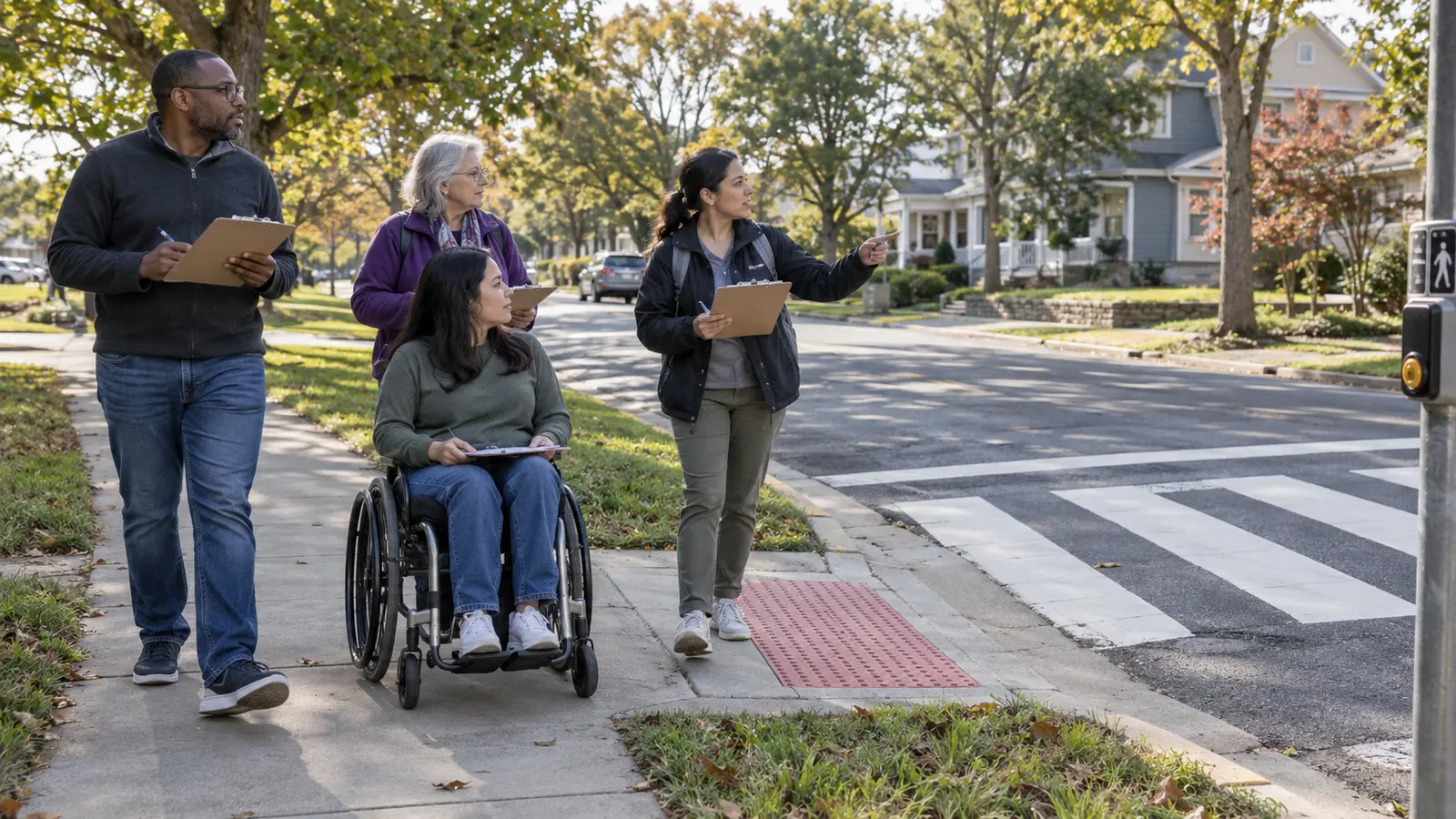
For related community planning, visit UWP's Healthy Living, Community Outreach, Resources, and neighborhood walk-audit guide.
Use a properly fitted helmet, keep the bicycle in working order, remain visible, ride predictably, obey applicable traffic rules, slow at conflict points, and avoid distractions. Local laws determine specific requirements.
It should be the correct size, sit level and low on the forehead, and remain secure when the straps are adjusted according to the manufacturer's directions. Replace it after a significant impact.
Legal requirements vary, but daytime running lights can improve visibility in some conditions. Lights are especially important in darkness, rain, shade, and low-contrast settings. Follow local law.
Not always, and sidewalk riding may be restricted. Sidewalks can create conflicts at driveways, corners, and crossings. Choose the route and position based on current law, rider ability, and local conditions.
Use properly positioned lights and reflectors, visible clothing, and an uncluttered route. Visibility aids do not replace supervision, skills practice, or predictable riding.
Consider identification, emergency contact information, water, weather-appropriate supplies, a charged phone, and tools or a tube only if you know how to use them. Longer rides need a route and return plan.
Seek qualified help when brakes are weak, steering is loose, a wheel is damaged or wobbles, the frame is cracked, the drivetrain fails, or you are unsure a repair is safe. Do not ride a bicycle with a safety-critical problem.
Before the next ride, perform one full air-brakes-chain-controls check and adjust the helmet using the manufacturer's directions. Record any repair or replacement needed before riding again.
This article provides general safety and wellness education. It is not legal advice, mechanical certification, medical guidance, or a substitute for current local traffic rules.