Understandable wellness education
Plain-language learning can help an audience interpret general wellness information, ask better questions, and recognize when a source is current, relevant, and trustworthy.
Wellness Without Barriers
Unified Wellness Project helps Virginia schools and youth-serving organizations explore accessible, practical wellness education and community collaboration. Start with the need your school has identified, then shape a realistic educational effort around students, families, staff, accessibility, and existing school policy.
UWP is a nonprofit education and community organization, not a school-based health center or medical clinic. Any topic, audience, format, staffing, schedule, safeguarding requirement, and cost must be confirmed before an engagement is announced.
A practical role for a nonprofit
A school wellness effort can help people understand everyday health information, practice useful skills, find reliable resources, and connect school priorities with family and community support. The strongest starting point is not a generic presentation. It is a shared question: what do students, caregivers, or staff need to understand or do more confidently?
UWP’s published work centers on wellness education, healthy living, and community outreach. A school inquiry can explore how those educational and community strengths might complement—not replace—the responsibilities of teachers, school nurses, counselors, administrators, food-service teams, or licensed health professionals.
That distinction matters. Educational content can explain general concepts and point to trustworthy sources. It should not diagnose a student, recommend individualized treatment, collect unnecessary health information, or promise a result. Urgent concerns and personal medical questions belong with the school’s established procedures and qualified professionals.
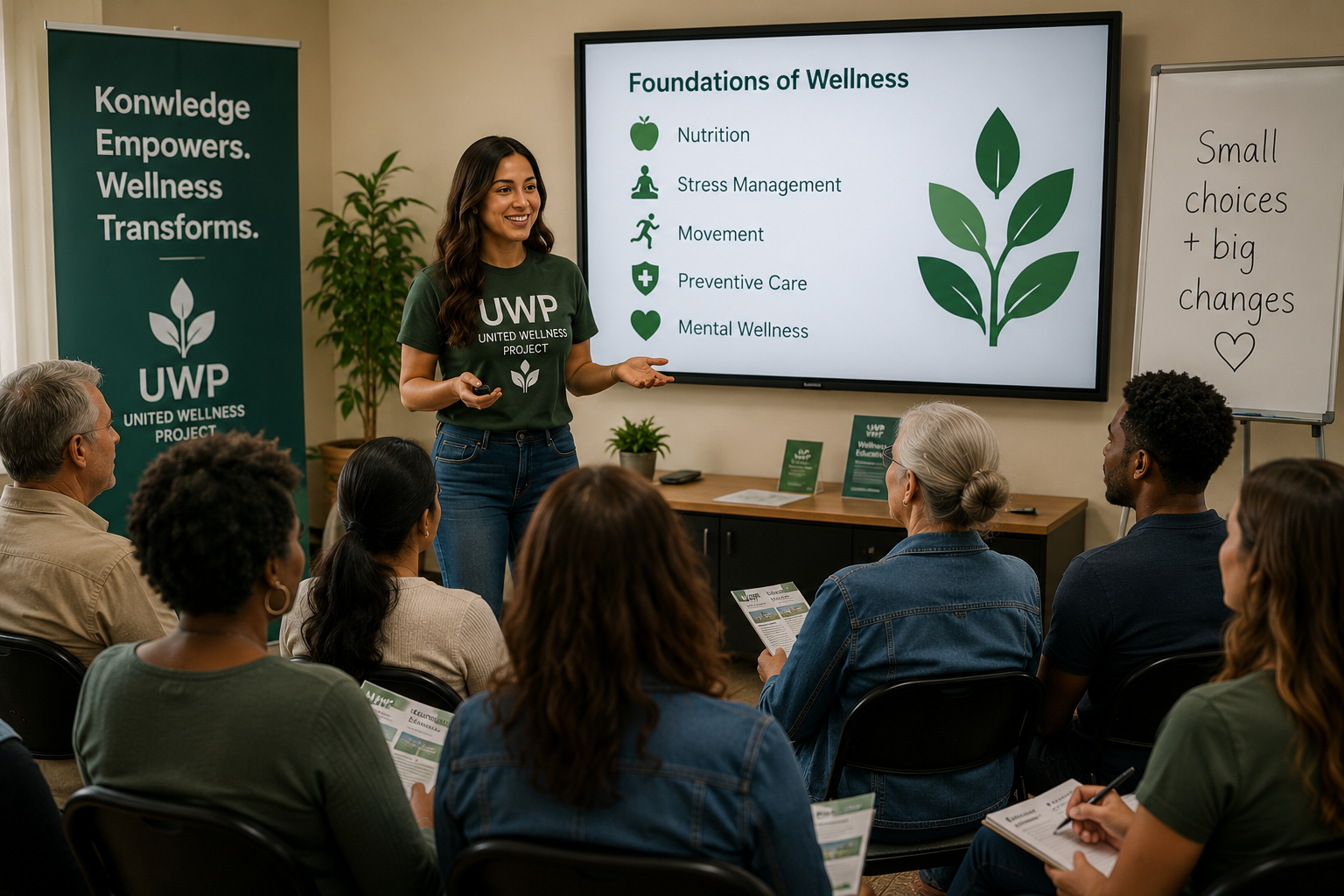
Possible areas of focus
Plain-language learning can help an audience interpret general wellness information, ask better questions, and recognize when a source is current, relevant, and trustworthy.
Age-appropriate education may explore movement, food literacy, sleep routines, stress awareness, or other everyday topics when they fit school policy and the agreed learning goal.
A well-planned effort can give caregivers clear take-home information and connect families with official school, public-health, or community resources without creating a referral promise.
Format, reading level, language access, sensory conditions, physical access, technology, and multiple ways to participate should be discussed before materials are finalized.
These are planning categories, not a fixed catalog or a promise that every topic is currently available. Contact UWP to confirm fit, content ownership, presenter qualifications when relevant, and the responsibilities of each participating organization.
Planning process
01
Describe the audience, the observed need, and the change in understanding or participation the school hopes to support. Avoid treating a broad theme like “wellness” as a complete goal.
02
Include the staff responsible for curriculum, student support, family communication, facilities, accessibility, risk, and approvals. Clarify who can authorize content and scheduling.
03
Define what the activity will and will not cover. Establish how personal questions, disclosures, urgent concerns, and requests for clinical advice will be redirected through school procedures.
04
Plan readable materials, captions or interpretation when needed, accessible routes and seating, sensory considerations, technology alternatives, and more than one way to engage.
05
Review the school’s current wellness policy, curriculum, student-support systems, and family-engagement plans. A community partner should complement those structures rather than create a parallel system.
06
Document the date, space, audience size, equipment, supervision, privacy expectations, emergency procedures, materials, communications, approvals, and cost before promotion begins.
07
Use measures that fit an educational effort: attendance, accessibility issues found and resolved, participant questions, material usefulness, or a next-step commitment. Do not promise health outcomes.
Use established frameworks
The CDC Whole School, Whole Community, Whole Child framework connects health education with the school environment, family engagement, community involvement, services, and other parts of school life. It is a useful reminder that a guest workshop is only one possible piece of a broader system.
The CDC School Health Index offers a self-assessment and planning process schools can use to identify strengths, priorities, and action steps. A school can use that kind of assessment to decide whether outside educational support is timely and where it fits.
For schools subject to local wellness-policy requirements, the USDA Team Nutrition wellness-policy resources provide implementation tools and communication materials. School leaders should use their own legal, district, and policy guidance when deciding what is required.
Prepare an inquiry
A concise inquiry is more useful than a request for “something about wellness.” Include the school or organization type, general location in Virginia, audience and age range, the need you are trying to address, possible dates, format, estimated participation, accessibility and language considerations, and the person responsible for approvals. Do not send student names, diagnoses, or other sensitive information in an initial website message.
Before contacting UWP, you may also want to review the Accessibility commitment, browse the Community Wellness Journal for topic examples, and read the partnership overview. Those pages clarify UWP’s educational, community-centered role and may help your team frame a more focused first conversation.
Frequently asked questions
The term can describe coordinated policies, education, activities, environments, and supports that promote student and staff well-being. The exact meaning varies by school. A UWP collaboration would be one educational or community component, not the school’s entire wellness system.
A school may choose to work with a nonprofit when the organization fits the school’s goals and requirements. The school and nonprofit should confirm content, qualifications where relevant, supervision, safeguarding, accessibility, approvals, privacy, logistics, and boundaries before proceeding.
UWP’s public mission includes practical wellness education, healthy-living learning, community outreach, and access to understandable resources. A school should describe its need first. UWP can then confirm whether a topic and format fit its current capacity; this page is not a fixed catalog.
Ask about access before choosing materials or a room. Consider readable and plain-language content, captions or interpretation, accessible entrances and seating, sensory conditions, technology alternatives, dietary or activity-related accommodations when applicable, and multiple ways to participate.
No. UWP is presented as a nonprofit focused on education, resources, healthy living, outreach, and community connection. It does not diagnose, treat, prescribe, replace school health services, or provide individualized medical advice through a school wellness page.
Choose measures that match the limited role of education: participation, accessibility, comprehension, usefulness, questions generated, or completion of an agreed next step. Avoid claiming that one activity caused a health outcome, especially without an appropriate evaluation design.
This page does not publish a price or imply availability. Cost depends on confirmed scope, preparation, format, staffing, materials, travel, access needs, and partner responsibilities. Contact UWP with the basic planning details so feasibility and next steps can be discussed.
Connect. Empower. Transform.
Share the audience, learning goal, setting, accessibility needs, and decision timeline. UWP can then determine whether an educational or community collaboration is an appropriate fit.