Everyday movement
Explore ways family members can add age- and ability-appropriate movement to routines they already have. Keep participation flexible and avoid treating one activity level as right for everyone.
Practical • Inclusive • Family-centered
Family wellness education works best when it respects real schedules, different ages, varied abilities, and the priorities families name for themselves. Unified Wellness Project invites Virginia community groups and families to explore plain-language, nonclinical learning that turns trustworthy guidance into manageable next steps.
Unified Wellness Project is a wellness-education nonprofit. It is not a medical clinic, therapy practice, emergency service, or substitute for individualized care.
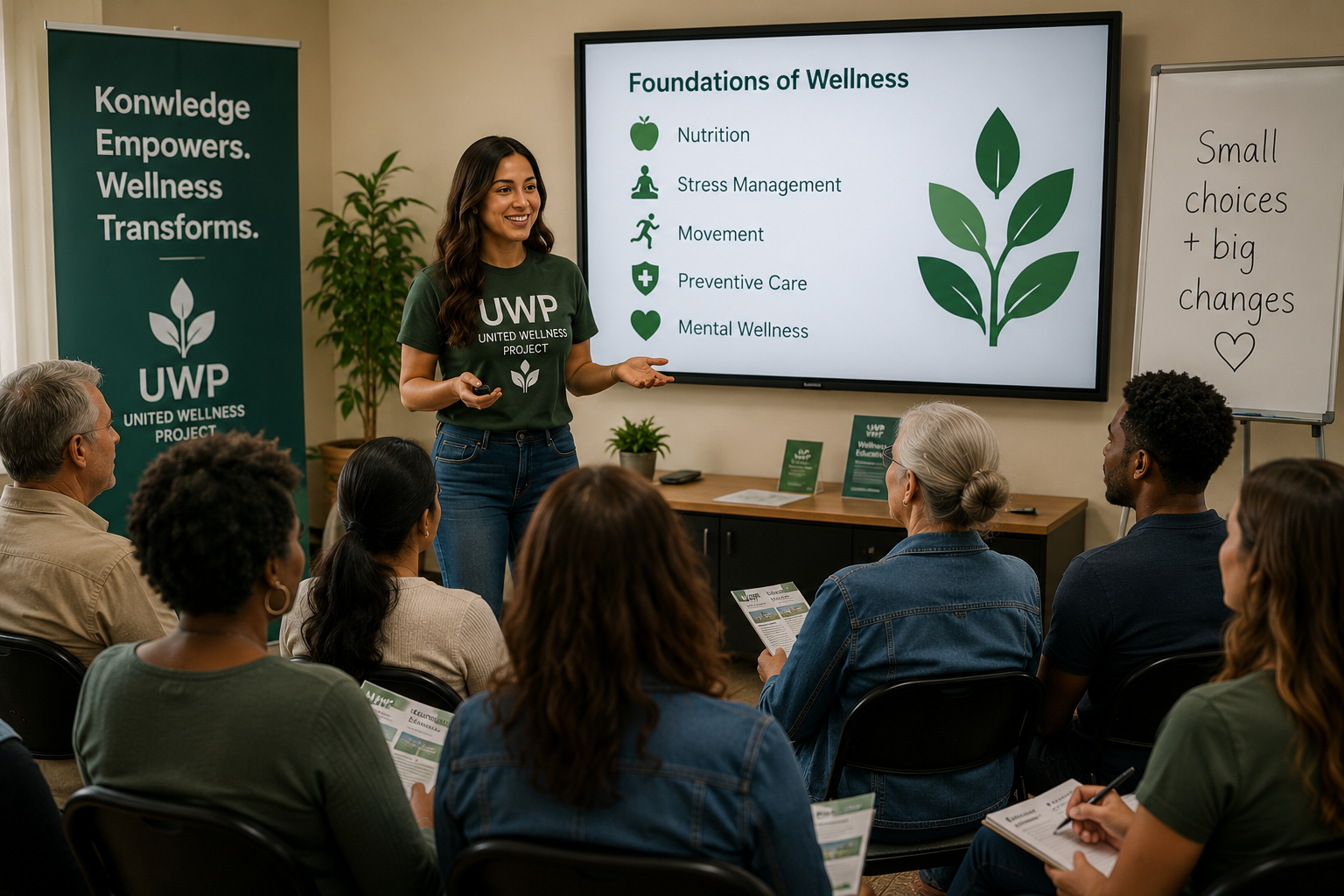
A clear educational role
A family wellness program can create time to learn, ask questions, compare reliable resources, and choose a realistic next step together. It can support everyday topics such as movement, food routines, sleep habits, stress awareness, home safety, prevention information, social connection, and finding community resources.
It should not diagnose conditions, recommend treatment for an individual, promise an outcome, or pressure a household to share private information. When a question needs clinical, legal, crisis, or social-service expertise, a responsible educational program names that boundary and points people toward an appropriate qualified source.
UWP’s Wellness Education, Healthy Living, and Community Outreach pages explain the organization’s broader educational focus.
Useful topic pathways
A focused session is easier to understand and easier to use. These pathways can help a family, school, library, faith community, neighborhood group, or nonprofit define a starting point without assuming that every household has the same needs.
Explore ways family members can add age- and ability-appropriate movement to routines they already have. Keep participation flexible and avoid treating one activity level as right for everyone.
Build skills for planning, shopping, cooking, or reading labels while recognizing culture, budget, allergies, time, food access, and individual guidance from qualified professionals.
Practice finding the source, checking the date, separating general education from personal medical advice, and preparing questions for a qualified provider or community resource.
Use trustworthy public resources to discuss topics such as seasonal safety, emergency planning, smoke-free spaces, hearing protection, or safer medication storage without creating alarm.
Make space for caregiver needs, older relatives, children, chosen family, and households with several generations. Include social connection and respite resources without assuming a family structure.
Help participants locate transportation, food, recreation, education, disability-access, or other community resources. Verify eligibility and contact details before sharing them.
A seven-step planning method
Ask families what they want to understand, what has been confusing, what has helped before, and what would make participation difficult. Offer more than one way to respond so people can share privately if they prefer.
Write a simple sentence describing what participants should be able to understand or do afterward. A narrow purpose helps prevent a session from drifting into individualized advice or unrelated services.
Consider ages, languages, caregiving roles, disability access, literacy, schedules, transportation, culture, technology, and household structure. Families may include relatives, guardians, close friends, or other chosen support people.
Choose a small number of public or peer-reviewed resources, check publication and review dates, preserve important limitations, and avoid turning population-level guidance into a promise for one person.
Use readable materials, plain language, accessible digital files, clear directions, appropriate breaks, and multiple ways to engage. Ask about accommodations early and provide a contact method for requests.
Invite each household to choose a manageable action or a resource to review. Participation should not depend on disclosing private health information, and families should be free to adapt or decline an activity.
Ask whether the information was understandable, relevant, accessible, and usable. Use feedback to improve the format and decide whether another educational topic is appropriate rather than assuming expansion is necessary.
Plain language and access
The CDC’s plain-language guidance recommends putting the most important message first, using familiar words, organizing information in logical chunks, and making content easy to find. Those practices help families discuss information across different reading levels and levels of prior knowledge.
Accessibility also involves communication choices. The U.S. Department of Justice’s effective-communication guidance explains that the appropriate aid or service depends on the nature, length, complexity, and context of the communication and the person’s usual method of communication.
Review UWP’s Accessibility commitment and Resources before planning a public-facing activity. Clear registration information should explain the purpose, audience, format, access contact, and what the activity does not provide.
Reliable starting points
The federal Move Your Way community resources offer materials for helping people understand physical-activity guidance. Facilitators should still consider age, ability, safety, culture, and whether a participant needs individualized professional advice.
Primary resources are most useful when a facilitator explains who published them, what question they address, when they were updated, and where their limits are. Avoid presenting a logo as an endorsement of UWP or a local activity, and review any reuse or attribution instructions before adapting materials.
For additional plain-language education, visit the Community Wellness Journal. Families can also use the UWP resource library as a starting point for trustworthy general information.
Fit before commitment
A clear inquiry helps UWP understand whether a family-focused education idea is mission-aligned and realistic. It does not guarantee availability, sponsorship, a formal partnership, or a particular format.
Community organizations can also review UWP’s partnership guidance and ways to get involved.
Family wellness questions
A family wellness program is an organized effort that helps household members learn about practical well-being topics, build skills, or connect with reliable resources. Programs vary widely. UWP’s potential role is limited to accessible, nonclinical education and community connection.
Topics may include movement, food routines, sleep habits, stress awareness, home safety, prevention information, health literacy, caregiving, social connection, and community resources. The best starting topic comes from family input and trustworthy evidence.
Start by listening to families, choosing one educational purpose, defining the audience and boundaries, planning accessibility, selecting current primary sources, testing one manageable activity, and reviewing feedback before deciding what comes next.
Choose a shared topic but offer age-appropriate explanations, flexible roles, and more than one way to participate. Do not expect a child, adult, caregiver, or older relative to have the same needs or take the same action.
Ask participants what they need and plan for physical access, effective communication, readable materials, captions or interpretation, sensory needs, transportation, timing, technology, and multiple ways to engage. Provide an access contact before the activity.
Not when it is offered as general education. A nonclinical program should not diagnose, treat, prescribe, replace professional care, or promise results. Individual medical questions should go to an appropriately qualified professional.
Yes. A family-serving or community organization may contact UWP to discuss an educational idea, audience, access needs, roles, timing, and mission fit. An inquiry does not guarantee availability, a particular service, or a formal partnership.
Begin with one useful question
Share who you hope to reach, what families want to understand, and the access needs you already know. UWP can review whether a focused educational conversation is a reasonable next step.