A practical family and community guide to active supervision, barriers, water skills, life jackets, emergency readiness, and inclusive access around water.
Water safety for kids works best as a set of overlapping protections. No single adult, lesson, gate, alarm, or flotation device can prevent every emergency. Families and community organizations can instead build a plan in which each layer supports the others: attentive supervision, controlled access to water, age-appropriate skills, properly fitted life jackets, clear rules, and emergency preparation.
This approach applies beyond swimming pools. Children may encounter ponds, rivers, beaches, bathtubs, buckets, fountains, drainage areas, and water at other people’s homes. The CDC drowning-prevention guidance recommends multiple strategies, including basic swimming and water-safety skills, barriers, close supervision, and life jackets. A useful plan turns those principles into actions that everyone understands before an outing begins.
When several adults are present, it is easy for each person to assume someone else is watching. Choose one responsible adult as the active supervisor for a defined period. That person stays close enough to respond, keeps children in view, and is not reading, sleeping, using a phone, preparing food, or drinking alcohol. Use a clear handoff before the role changes.
Supervision should match the child, setting, water depth, crowd, and conditions. Young children and inexperienced swimmers generally need an adult within immediate reach. A lifeguard is an important safety layer at many facilities, but a lifeguard watches many people and does not replace a caregiver’s attention.
Many water incidents happen when no one expected a child to enter the water. At homes with pools or spas, use a barrier that separates the water from the house and yard. Keep gates self-closing and self-latching, remove climbable objects from the fence area, and check whether covers and alarms are working. The U.S. Consumer Product Safety Commission’s Pool Safely guidance describes four-sided fencing and other layers for residential pools and spas.
Empty portable containers after use when practical, secure access to decorative ponds and other water features, and check unfamiliar homes before children begin playing. Barriers reduce access; they do not make unsupervised water play safe. Local building and pool rules may set additional requirements.
Age-appropriate swimming and water-safety instruction can help children learn how to enter and exit, float, turn, move through water, and call for help. Ask an instructor how lessons are adapted for a child’s age, experience, communication needs, mobility, sensory preferences, and comfort. Skills need practice and may not transfer automatically from a calm pool to cold, moving, dark, or crowded water.
A child who has completed lessons still needs supervision and other protections. Avoid language such as “waterproof” or “drown-proof.” Confidence should grow alongside realistic boundaries, not replace them.
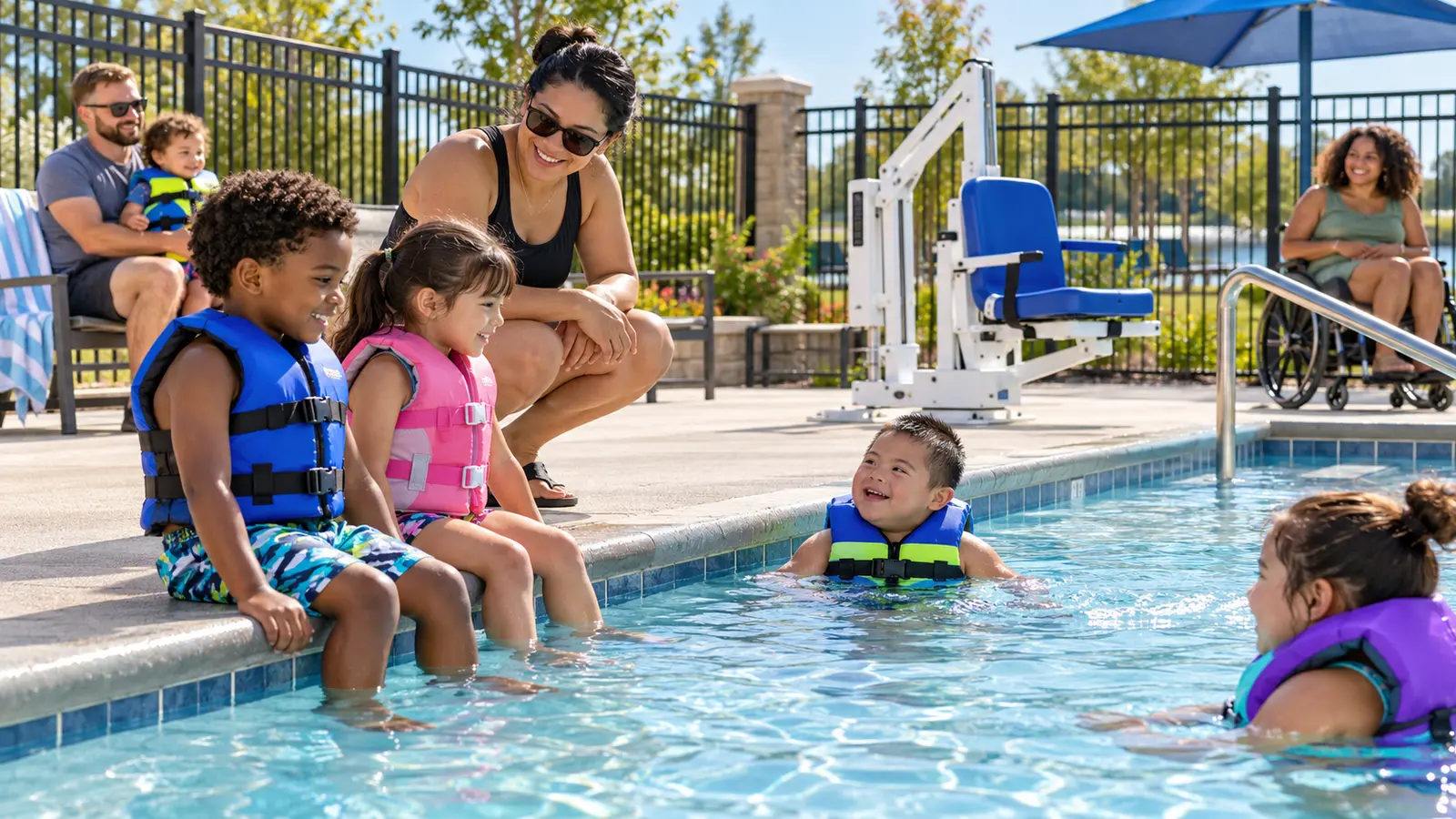
Use a properly fitted, activity-appropriate life jacket when boating and in other settings where it is recommended or required. Check the label for intended use and size, fasten every strap, and test the fit. The jacket should stay secure when lifted gently at the shoulders. Air-filled toys, swim rings, and foam play items are not safety devices.
Rules vary by location, watercraft, age, and activity. Follow posted instructions and current federal, state, and local requirements. Children should wear life jackets near natural water when conditions or ability make that appropriate, even if they do not plan to swim.
Keep the rules short enough to remember. Examples include: ask an adult before entering water; walk near pools; swim only in the agreed area; stay with the group; never push or hold someone underwater; and leave the water when the supervisor says conditions have changed. Explain why each rule exists and apply it consistently.
Before a trip, identify the water type, designated swimming area, lifeguard status, weather, shade, drinking water, accessible entry, bathrooms, and how the group will account for everyone. At natural-water sites, look for currents, drop-offs, changing depth, rocks, vegetation, boat traffic, and local advisories. If the setting is not suitable for a child or the group cannot provide adequate supervision, choose another activity.
Adults who supervise children around water can benefit from current CPR and first-aid training from a qualified provider. Know how to call local emergency services and give the location clearly. At a facility, locate rescue equipment and learn how staff signal an emergency. Do not assume a phone will have service at every beach, trail, or boat launch.
If a child is missing, check the water first while another adult calls for help. A person in distress may be quiet rather than shouting or waving. A rescue attempt should not create another victim; reach or throw appropriate rescue equipment when possible and follow trained responders’ directions.
An inclusive water-safety plan starts with the individual rather than assumptions. Ask families and participants about communication, mobility, medical, sensory, behavioral, and equipment needs they want planners to know. Use plain language, visual rules, demonstrations, interpretation, or other formats as needed. Confirm that accessible routes, changing areas, lifts, ramps, and rest spaces are usable—not merely present.
Some children may wander toward water, remove equipment, become overwhelmed by noise, or communicate distress differently. Plan supervision, transitions, identification, and calming supports with caregivers. A diagnosis alone does not tell organizers what a particular child needs.
Community groups can support safer participation by sharing consistent messages, helping families find reliable resources, and planning accessible activities. UWP’s Healthy Living program, Resources hub, and Community Wellness Journal offer additional plain-language prevention and planning guides. Organizations developing inclusive education can also review UWP’s accessible wellness education page.
No single rule is enough, but close, active adult supervision is essential. Pair it with barriers, skills, life jackets where appropriate, clear boundaries, and emergency readiness.
Swimming and water-safety skills can reduce risk, but lessons do not make a child drown-proof. Supervision and other protections remain necessary in every water setting.
No. Inflatable toys and swim aids are not substitutes for an approved, properly fitted life jacket. Use equipment according to its label and the rules for the activity.
Distance should match the child and conditions. Young children and inexperienced swimmers generally need an attentive adult within immediate reach, with continuous visual attention.
No. Lifeguards add an important layer, but caregivers should continue actively supervising the children in their care and follow facility rules.
Check barriers, supervision plans, rules, water depth, lifeguard coverage, accessible entry, rescue equipment, weather, and how everyone will be counted.
Ask participants what they need, provide accessible routes and entry options, offer information in usable formats, allow support people and breaks, and adapt instruction without lowering safety expectations.
This article provides general safety education, not medical advice, individualized training, or a substitute for local rules and qualified instruction. Call emergency services immediately for a water emergency and follow trained responders’ directions.