Plan a respectful hygiene drive by confirming real needs, publishing an exact wish list, collecting new sealed items, and coordinating a useful handoff.
A hygiene drive can connect community generosity with everyday essentials—but only when the collection is built around what recipients actually request. A large pile of mixed products may create storage, sorting, allergy, privacy, or disposal problems. The most useful drive begins with a confirmed recipient organization and an exact, current list.
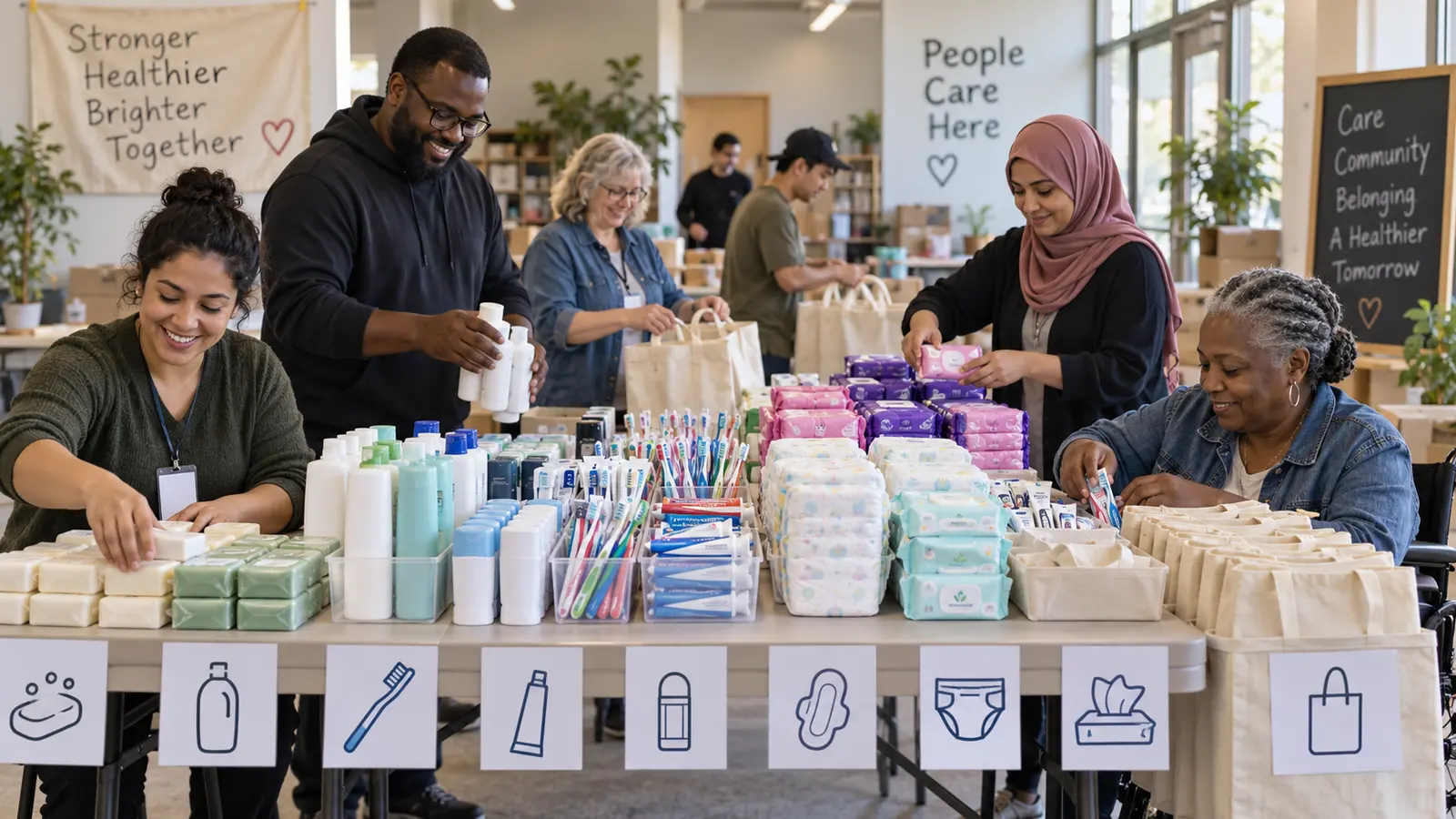
Hygiene items can include soap, shampoo, toothbrushes, toothpaste, deodorant, menstrual products, diapers, wipes, laundry supplies, or other basics. Needs differ by organization, population, season, storage space, and distribution method. Do not assume one universal kit is appropriate.
Contact a shelter, food pantry, school support office, mutual-aid group, community center, or other established organization before announcing the drive. Confirm that it accepts public donations and ask for one named contact. Request written answers to practical questions:
Record the answer and date. If the organization changes its list, update every flyer and online post. Never advertise a partnership, beneficiary, drop-off site, or distribution event without permission.
A useful goal might be collecting the recipient's five highest-priority products during a two-week window. Avoid public promises about how many people will be served. Inventory does not automatically equal completed distribution, and recipient needs may change.
Choose a scope your team can manage. A smaller collection with accurate items, reliable sorting, and an agreed delivery time is better than an ambitious drive that creates overflow.
Use the recipient's language and distinguish required conditions from preferences. Instead of “toiletries,” list “new, sealed, full-size shampoo” or whatever was confirmed. State whether multipacks may be opened, whether glass containers are allowed, and whether trial sizes are useful.
The CDC's hygiene overview explains that hygiene includes practices related to the body, babies, and the home environment. That broad definition is another reason to let the receiving organization define which products fit its work rather than creating a generic list from memory.
Provide the dates, hours, street access, parking or transit information, contact method, and any building-entry instructions. A heavy donation bin on the floor may be inaccessible to some donors and volunteers. Place containers at a reachable height, keep the route clear, and provide a safe alternative for someone who cannot carry items inside.
Offer the information in more than one format when possible: a web page, plain-language text, readable flyer, and phone or email contact. The U.S. Department of Justice guidance on effective communication explains that an appropriate aid or service depends on the person, the communication, and the context.
Use clean, dry, sturdy containers. Label them with the drive name, accepted-item list, end date, and organizer contact. Decide who will check the containers, how often, and where items will be secured between checks. Do not place donation bins where they block an exit, walkway, restroom, or emergency equipment.
Get written permission from every host location. Agree on who handles overflow, spills, abandoned items, and questions. If the site is not staffed continuously, do not collect anything that requires temperature control or special handling.
Describe the need without using humiliating images, personal stories, or stereotypes. Do not photograph recipients or imply that one product will change someone's health or life. Focus on the requested items, the approved recipient, the collection process, and the deadline.
Avoid language that treats donors as rescuers or recipients as a single group. Personal-care preferences vary by age, culture, hair and skin needs, disability, household structure, and individual choice. The recipient organization is best positioned to explain what it can distribute.
Create a short volunteer checklist based on the recipient's rules. Check that each item is accepted, new, sealed, undamaged, and within any requested date guidelines. Set aside questionable items rather than guessing. Do not open, smell, test, repackage, or relabel personal-care products.
Sort by the categories the recipient requested. Keep products dry and away from food, chemicals, pests, extreme heat, and direct sunlight. Volunteers should wash or sanitize hands at appropriate times. The CDC's community hygiene guidance recommends accessible soap, water, drying options, and hand sanitizer where washing is not readily available.
Confirm the delivery time, entrance, vehicle access, contact person, and packaging method before loading. Count by category if the organization wants an inventory, but do not overstate the value or impact. Use boxes volunteers can lift safely and keep a clear path during loading.
Ask for permission before taking photos, naming staff, or posting totals. A quiet, accurate handoff may be more respectful and operationally useful than a public ceremony.
Remove bins and outdated signs promptly. Thank donors, volunteers, host sites, and the recipient without inventing outcomes. Report what was collected in plain terms only if the recipient approves. Document items that were declined, questions that repeated, and changes that would improve a future drive.
Unified Wellness Project's Community Outreach, Get Involved, Volunteer, and Partnerships pages offer pathways for community participation. For related logistics, see the Journal's recipient-first food drive guide and volunteer orientation checklist.
It is a time-limited collection of new personal-care or household-hygiene products for a confirmed recipient organization. The recipient should define the accepted items and delivery process.
Collect only the current items requested by the recipient. Common examples may include sealed soap, shampoo, toothbrushes, toothpaste, deodorant, menstrual products, diapers, or wipes, but no list applies everywhere.
Ask the receiving organization. Travel sizes may fit some kits, while full-size products may be more useful for households. Storage and distribution methods affect the answer.
Usually not. Personal-care donations are commonly required to be new and sealed. Follow the recipient's written policy rather than assuming an item is acceptable.
A focused window of one to four weeks is often easier to communicate and manage, but the right length depends on the recipient's need, your collection sites, and your team's capacity.
Only if the recipient asks for kits and provides the exact contents and packing method. Preassembled kits can create extra work when sizes, products, or quantities do not match distribution needs.
Do not pass them to the recipient anyway. Use a preapproved backup organization when possible, return them if appropriate, or follow local reuse and disposal rules. Explain the accepted list clearly to reduce this problem.
Before designing a flyer or setting out a bin, contact one potential recipient organization and ask for its current accepted-item list, storage limit, preferred delivery date, and permission to name it.
This article provides general community-planning and wellness education. It does not replace a recipient organization's policies, product instructions, public-health guidance, or professional advice.